Independent comparisons. We may earn from shop links. More info

When to feed strawberry plants through the season

Updated: October 2026

You have a bottle or a bag in your hand and strawberries that have started to flower, or a raspberry that looked hungry last July. When to feed strawberry plants is a crop-and-container question, not a weekly habit for every bed. The pack rate comes first. Open the [berry fertiliser comparison](/hub/fertiliser-soil-and-bark-mulch/berry-fertiliser) if you still need to see which listing you bought. Rates below come from the pack, the Neudorff UK brand page, or named UK growing pages. We did not trial these products. A qualifying purchase through our links can earn a commission at no extra cost to you.

You have a bottle or a bag in your hand and strawberries that have started to flower, or a raspberry that looked hungry last July.

Our top picks

On this page

Check the plant before you open the pack

If the plant is a blueberry, use berry fertiliser for blueberries. On strawberries, raspberries, blackberries and currants, the Royal Horticultural Society treats mulched ground plants as a crop that often needs no extra feed. Fertiliser is the exception: last year's harvest was poor, or the plants sit in pots whose compost feed has faded within a few weeks. A June-bearer gets one general feed after the main crop. An everbearer keeps a liquid through flowering, then you stop. Raspberries in pots get a monthly liquid in the RHS notes. Do not scale a farm kilogram-per-hectare table onto a 30 cm pot. If the pack is tomato feed, berry fertiliser or tomato feed holds that decision.

How to apply a granule and a liquid

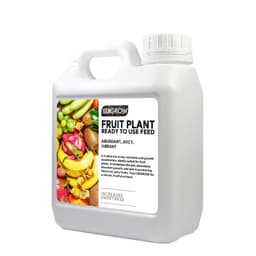
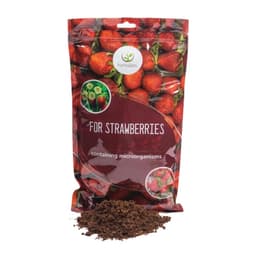
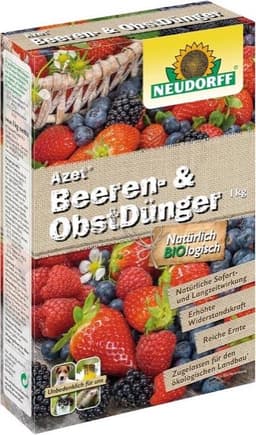
Water first. Dry peat-free compost sheds liquid down the side of the pot. Keep granules off crowns and canes. A heap against a strawberry crown is a rot risk. Azet's listing prints NPK 7-3-10 and no grams. The Neudorff UK brand page gives roughly 12.5-100 g at planting, and 1-10 tablespoons for established plants, raked into the top 5-10 cm and watered in. That is a brand page, not this listing. Naturen claims up to three months and gives no grams. If the bag you hold prints a different rate, the bag wins. Hortulani is mixed into soil at 500 g per 50 m², and in the Amazon reviews a United Kingdom text says the packet has no English. The three UK GROW bottles say dilute with water and none prints a cap dose. In the Amazon reviews one United Kingdom text on the 1 L bottle describes a monthly feed. That is a reviewer habit, not a listing rate. If the bottle has a cap scale, use it. Gardeners' World uses a high-potash or tomato feed every one to two weeks from early spring in pots. Do not stack a full granule rate and a full liquid rate in the same 20 cm pot in the same week.

A UK season in brief

Do not spread manufactured fertiliser on frozen, snow-covered or waterlogged soil, and keep it off ponds and drains. Beds that had a poor crop get the spring granule, raked in and watered. Pots get a diluted can once the compost is moist. Gardeners' World repeats high-potash food every week or two from early spring. Chris Bowers starts high-potash liquid as flowers show, then a more balanced feed after fruiting. Both avoid high nitrogen in late summer. If the pack prints an interval, that interval wins. If it does not, a fortnightly pot can through flowering is a rule of thumb. After a June-bearer, Gardeners' World cuts foliage to about 5 cm and gives a general feed once. Everbearers and autumn raspberries keep a high-potash can while they flower, then you stop. A dormant pot in winter needs water when it is dry, not a weekly liquid.

Mistakes that waste a bag

The wrong crop, dry compost, stacked rates and late nitrogen are the ways a bag is wasted. Feeding blueberries with Hortulani, Azet, UK GROW or tomato feed is the wrong pH story. A pack with no English, a cracked tub or a clumped import is a handling problem. You do not double the rate to compensate. A box foliar or a six-month all-purpose tub is not this category. Call a professional if a child or pet eats the product, or if yellow leaves remain after pH and watering are fixed.

Common questions

Do you feed strawberries after they finish fruiting?
On a June-bearer, yes once: Gardeners' World cuts foliage to about 5 cm and gives a general feed, then stops the high-nitrogen habit. On everbearers, keep the high-potash can while they still flower, then stop. Late-summer nitrogen on plants you want to harden is the waste.
How often do you feed strawberries in a hanging basket?
Treat a basket like a pot whose compost feed fades fast. Water first, then a diluted high-potash or tomato-style liquid every seven to ten days from flowering is the published basket habit. Three to four plants in a 12-inch basket is a planting density, not a reason to double the dose.
How do you apply Azet or Naturen granules?
Water the soil, keep granules off the crown, rake them into the top few centimetres, and water again. Azet's grams sit on the Neudorff UK page, not on this amazon.co.uk listing. Naturen claims up to three months and prints no grams on the listing. The bag in your hand is the rate.
Can you use liquid and granules together?
Not as two full rates in one small pot. If a long-lasting granule is already in the compost, a weekly liquid is a second diet. Choose one leading form. A light liquid later in the season on a bed that had a modest spring granule is a different judgement from emptying both packs into a 20 cm pot.
When should you stop, and should you feed in winter?
Stop high-potash liquids when flowering and fruiting finish, and avoid a late nitrogen push. Do not run a weekly can in winter. Dormant plants need water when the compost is dry, not feed on frozen or waterlogged soil.

Related pages

Sources

Public UK and maker sources used for this page in October 2026. Prices, stars and review counts are from the eight amazon.co.uk listings. Shelf date 21 October 2026. A star line scaled to a score is not a laboratory test. An NPK is quoted only when that listing prints it.

  1. RHS, grow your own strawberries (retrieved 21 October 2026)
  2. RHS, grow your own raspberries (retrieved 21 October 2026)
  3. RHS, grow your own blueberries (retrieved 21 October 2026)
  4. RHS, fertiliser labels explained (retrieved 21 October 2026)
  5. Fertilisers Regulations 1991 (retrieved 21 October 2026)
  6. GOV.UK, rules to prevent water pollution (retrieved 21 October 2026)
  7. BBC Gardeners' World, how to grow strawberries (retrieved 21 October 2026)
  8. Neudorff UK, Azet fruit and berry food (retrieved 21 October 2026)