Will a wattle fence stop rabbits? The gaps say no
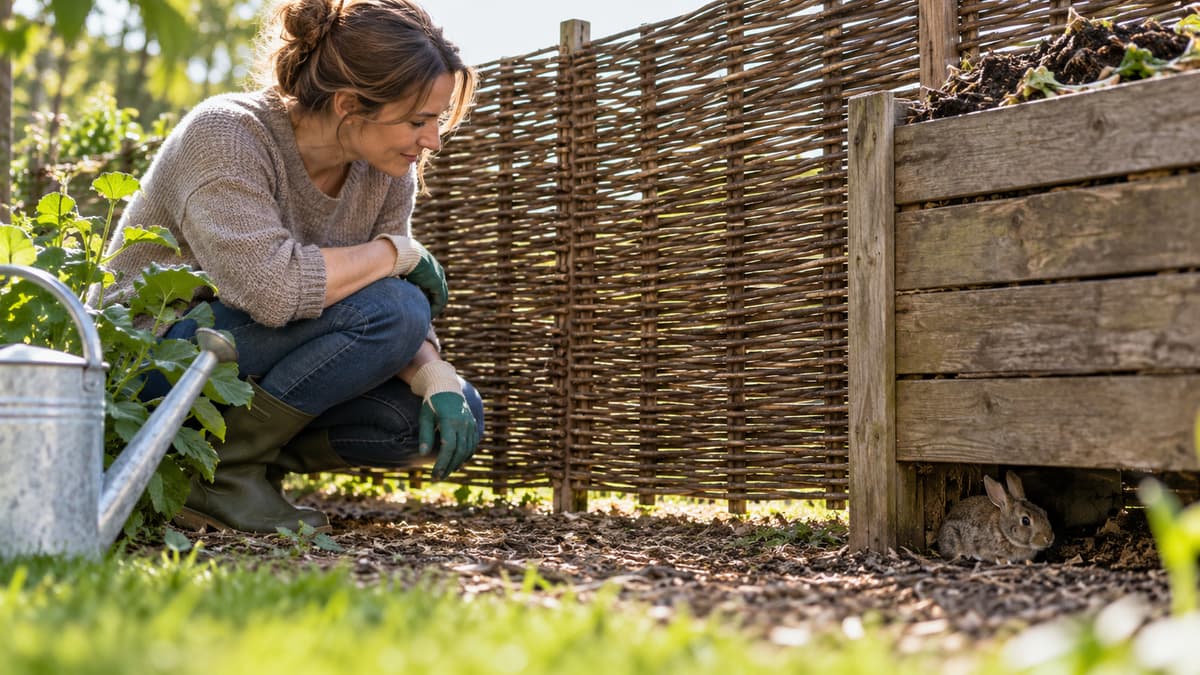
A wattle fence will not stop rabbits or hold a dog. The gaps are intentional, and the bottom stays clear of the soil. Use mesh when containment is the job.
On this page

A rabbit is already under the compost bin, and the willow panel looks dense enough to end the problem. It will not. A wattle fence, whether a willow hurdle, a hazel hurdle or a screening roll, is a screen with gaps. It is not rabbit netting and it is not a dog fence. That limit comes from the comparison digest and from how makers describe the weave. Products Compared did not run an animal test. A qualifying purchase from an Amazon link can earn a commission at no extra cost to you.
In short
Do not buy wattle, willow or hazel hurdles, or the amazon.co.uk willow rolls, to stop rabbits or hold a dog. The gaps let wind through on purpose, and the fitting method keeps the bottom off the soil, which is another way under the panel. Rabbit fencing, in the digest’s account of UK mesh suppliers, is hexagonal wire, often 31 mm, buried or turned out. See the wire mesh comparison.
A weave is a screen, not a pen
The useful test is whether you can see through the panel. If daylight shows between the rods, a rabbit does not need a gate. Hazel Hurdle World says a woven panel is not a solid wall, and that the gaps let some wind pass. Those gaps are why it is a poor animal barrier. No millimetre size was taken from that page, so none is invented here.
Screening rolls are not tighter. The four listings in our wattle fence comparison are canes bound with wire. Abaseen, the top pick there, is £49.99 for 1.5 m by 4 m, with 4.5 from 125 reviews, used on railings, gates and bin stores. Broken canes in that sample are holes. Prime Plus at £44.99 and the Wadan rolls at £46.99 and £59.99, which share one review pool, are the same class. None is sold there as rabbit netting.
A title that says fencing does not change the construction. The willow fence comparison is for a hurdle you want as a screen, once the animal problem is solved another way. It is the wrong place for a guarantee about pets. Name the animal first, and fit mesh before you tie willow to a fence.
What the gaps and the ground clearance are for
The gaps are a structural choice, not a defect. Wind that cannot pass has to be resisted by the posts, so makers leave the weave open and the panel is not a sail. That helps the fence stay up, and it writes off any claim that the panel is closed. You cannot have the wind relief and a rabbit-proof skin in the same rods.
The ground clearance is about rot. Hazel Hurdle World’s fitting guide says to leave an inch or two of daylight under the panel, and not to let the bottom sit in soil, mulch or grass. They call that the difference between a panel that reaches ten years and one that goes at four. A panel on the soil, in their mistake table, rots from the bottom, often within three or four years. The clearance a rabbit uses is the clearance the maker wants.
A ribbon edge or a timber frame does not delete either choice. The frame tidies the outside. The weave inside it is still a weave. Framed sizes and prices sit in framed willow fence panels. Take animal-proofing off that list. Overlapping rods can hide a gap until you step closer, and the fitting method has already left one at ground level.
The contain-animals line on a maker page
Musgrove Willows describes ribbon-edged willow as following traditional hurdle patterns “used for hurdle fencing to contain animals”. That is their wording on a buyer’s FAQ. It is a history of a pattern, not a trial against rabbits and not a statement about dogs. A livestock hurdle and a 6 ft patio panel look related. The fitting instructions still insist on a gap at the bottom and warn you off a board that would close it.
Traditional hurdles were lifted and re-set. A garden hurdle tied to UC4 posts for five to ten years is a fixed screen. Keep it dry if you buy it. Bury it only if you are inventing an animal fix the maker did not write. Those two instructions do not belong on the same rods.
Photographs of sheep beside hurdles are not evidence for a suburban lawn, and this pass did not open a standard for agricultural hurdles. BS 1722-11 says in its public scope note that prefabricated softwood panels are not suitable for animal or personnel loading. That note is about a different fence, so it is not proof that wattle is animal-rated. What BS 1722-11 covers does not certify a weave.
Why burying a hurdle is the wrong fix
The obvious patch is to sink the panel, heap soil against it, or screw a board along the bottom. Hazel Hurdle World says a closing board is the opposite of what a hurdle wants. Soil against the rods is the failure they time in three or four years, and the gaps higher up would still be there.
Pinning chicken wire so the weave sits in the damp repeats the mistake in different materials. The wire may be the right product. The hurdle still needs air underneath. If both go in, the mesh does the containing, buried or turned out as the supplier describes, and the hurdle stays clear of the soil. Mesh at the bottom and a gap at knee height has not stopped a rabbit.
The digest’s description stops at hexagonal wire, often a 31 mm opening, with the bottom buried or turned out. No supplier page was opened here, so there is no burial depth to copy and no brand in that summary. Thirty-one millimetres is “often”, not a rule, and it is not a measurement we took.
The top pick on the wire mesh comparison is a different piece of metal. C&Xanadu is a 200 mm by 3 m roll, welded at 6 mm by 6 mm and hot-dip galvanised, at about £11.58 with 4.7 from 1,168 amazon.co.uk reviews. The listing says those holes block rats and mice over the opening you cover. Wire diameter is not stated, and 200 mm wide is a patch, not a boundary. It is mesh, not a weave, and it is not the digest’s hexagonal rabbit fence.
Do not staple mesh to the bottom canes and call the job finished. The canes move, the staples tear out, and the clearance the maker wanted is gone. You have damaged the screen and you still have no buried skirt.
Dogs, and what this page will not promise
A dog is a different failure. Some nose through a gap, some climb, some lean until a tie slips. No review sample in the wattle file is a dog trial. “It has not moved on an iron gate” is about the roll in the wind, not about an animal.
This page will not give a height for a breed, a latch detail, or a welfare instruction. RSPCA material that was looked at did not yield a mesh specification, so it is not used as one. A collapsing roll or loose wire is a reason to buy a fence specified for pets, not a reason to add wattle and hope.
Want privacy beside a patio, a bin store or a tired but sound fence you are allowed to alter: the roll or the hurdle can be the screen, with the limits in willow screening roll or fence panel. Want rabbits out or a dog in: use mesh, and do not bury the hurdle to fake it. Want both: mesh for the animal, hurdle for the look, kept out of the soil.
Children and ponds are outside this article. A decorative weave is not a safety barrier. If someone could fall, the fence has to be specified for that risk. Wattle was not.
Common questions
Will a wattle or willow fence keep rabbits out of the garden?
Will it keep a dog in?
Is a traditional hurdle the same thing as animal fencing?
Can I bury the bottom of a hurdle to stop rabbits?
What do people use instead when the job is rabbits?
Are the willow rolls on amazon.co.uk any tighter than a hurdle?
Is chicken wire or welded mesh the page I actually need?
Can I add chicken wire along the bottom of a hurdle?

Peter F. is the editor for DIY & tools at productscompared.co.uk. Comparisons in this category are checked against amazon.co.uk listings, review evidence and public UK sources.
Related articles

Willow screening roll vs fence panel: which you need
A roll only covers a sound fence or frame. A hurdle on its own posts is the boundary.

Framed willow fence panels: hurdle, frame or roll
A timber frame does not turn a roll into a fence, and the weave is not animal-proof.

How long do willow hurdles last? Five to ten years
Makers quote about five to ten years if the weave stays off wet soil.