How long do willow hurdles last? Five to ten years

Willow hurdles last about five to ten years in makers' ranges, if the weave stays off wet soil. Those ranges are not a test of amazon.co.uk screening rolls.
On this page

You are choosing between a made-to-order hurdle and a willow roll near the same price. How long willow hurdles last is a range, not a single life. Hazel Hurdle World says five to ten years. Fountain Timber says up to five in a wet, windy site and up to ten if it is sheltered. Musgrove Willows says five to seven if you maintain their panels. None of those ranges is a test of the screening rolls on amazon.co.uk.
Products Compared did not age a panel. Amazon links are affiliate links. A qualifying purchase can earn a commission at no extra cost to you.
In short
For a willow hurdle, use the maker's own range: five to ten years from Hazel Hurdle World if the bottom stays off wet soil, five or ten from Fountain Timber depending on exposure, five to seven from Musgrove with their maintenance. A panel standing in soil is the short end, often three or four years on Hazel Hurdle World's fitting page. A screening roll does not inherit any of those figures. One Abaseen review reports breakup within a year. That is a review, not a test of the ASIN.
The year-counts makers actually publish
Hazel Hurdle World's page on willow hurdle life, dated in its heading as a 2026 piece, states five to ten years in an ordinary British garden, and the same headline range it gives for hazel. Hazel, in their account, is thicker coppice wood that softens and stays whole. Willow is more likely to dry, lose flex and snap. For garden screening they say to treat the two as equivalent and choose on looks.
Where livestock lean on the panel, they call hazel the sturdier panel. That is not a reason to use either as a rabbit fence. The gaps are dealt with in will a wattle fence stop rabbits.
Their fitting guide says to leave an inch or two of daylight under the panel. A panel sitting on the soil rots from the bottom edge up, often within three or four years. Get the clearance wrong and four or five years is likely whatever else you do. Get clearance, four fixings per upright and air on both sides right, and ten years is realistic in their account. Those conditions are the top of the range, not a certificate.
Fountain Timber says life varies with position, geography, exposure and how the hurdle was put up. As a very rough guide, expect up to five years in very wet and windy conditions and up to ten in a drier, sheltered location. Do not paste that rough guide onto a named Amazon roll. Musgrove Willows says five to seven years if properly maintained, and less in direct sun or a wet spot. That is a second maker, with a second regime, not a correction of five to ten.
What moves a hurdle toward five or ten
Clearance comes first. An inch or two is Hazel Hurdle World's figure, not a measured optimum from a lab. Soil, mulch and long grass against the bottom edge all count as contact. When you mulch, stop short of the rods, or a careful fitting is undone the next spring.
Air on both sides is the second condition. A hurdle flat against a north-facing wall sits at the bottom of their five-to-ten range, because the weave cannot dry. A skin on a shed wall is a different microclimate from a boundary with a gap behind it. If you only have a wall, accept the short end of their range.
Fixings are the third. Four stainless steel cable ties to each upright, eight per panel, pulled firm rather than so tight that they bite a slim rod. Two ties let the panel rock. Wire snaps at the twist, usually in the second or third winter. Screws through the uprights split them. The post count is one per panel plus one. A 6 ft panel wants their 2.4 m UC4 post, not the 1.8 m post they specify only up to 4 ft.
Movement and standing water are what they say kills a woven panel, not age by itself. A hurdle that racks because the posts are loose will fail inside a range that a still panel can finish. Concrete, if you need it, has to cure before the panel loads the posts. None of this guarantees ten years. Price the posts with the panel, using the figures in willow hurdle fence cost.
Oil, stain, or leave it
The makers disagree, and the disagreement should stay visible. Hazel Hurdle World says staining or painting traps moisture, and that the hurdles are meant to be left alone. Weathering to grey is the expected look on that method, not a defect.
Fountain Timber says linseed oil diluted in turpentine, or a suitable off-the-shelf preserver, will help prolong life considerably, in their words. Musgrove specifies boiled linseed oil and turpentine up to twice a year, plus a product it calls Fence Panel Protector. Direct sun and wet are what it says shorten the five to seven years.
You cannot follow all three. Oiling a Hazel Hurdle World panel because Musgrove says so mixes two regimes. Pick the seller you bought from and use that seller's care note. If you bought a roll from amazon.co.uk, none of these regimes was written for that ASIN. There is no trial here that ranks oil against nothing for a stated number of extra years.
Why a screening roll does not inherit that range
The rolls in our wattle fence comparison are canes on wire, tied to a fence that already exists. They are not the hand-woven panels those year-counts describe. Hazel Hurdle World's screening page uses a roll as the short-life option, a season or two on a sound fence. That contrast is theirs. It is not a clock we started on Prime Plus, Wadan or Abaseen.
Abaseen B089QYB5RJ is the top pick at £49.99 because the title and the specification both say 1.5 m by 4 m, with 4.5 from 125 reviews on that listing. Inside the 24 texts read for the comparison, one owner says these screens fall apart within a year, and others say the cane is thicker than flimsy rolls and stronger than bamboo they used before. A within-a-year line is not the life of every roll. A praise line is not five years. There is no average to print.
Prime Plus at £44.99 has one review pleased with the condition and one saying the willow is thin and breaks easily. The Wadan titles at £46.99 and £59.99 share a single 4.7-from-94 pool, with broken bottom canes recurring, so that is one durability impression, not two. Broken canes in year one are a reason to inspect the delivery. They are not a published lifespan.
If you want five to ten years, you want a hurdle on posts, off the soil. A roll is a cover for a bin store or a sound panel, and its life is a different conversation. The form test is in willow screening roll or a fence panel.
What to check in the second winter
Hazel Hurdle World says to check the ties after the first winter. The second winter is when their mistake table expects wire, if you used it, to have snapped. Each upright should still have four ties, firm, not cutting into the rod. A panel that rocks needs the posts looked at before you blame the willow. Mulch over the bottom edge needs pulling back, not a new coat of oil.
Look at the top edge for the brittle snaps they describe, and at the bottom edge for softness if soil contact has started. One snapped rod is a repair. A soft bottom edge is the three-to-four-year failure starting, and oil will not dry a rod that is already in the ground. If the upright split because it was screwed, the panel needs a different fixing.
Rolls get a simpler check. Look for broken canes, rust or slack in the binding wire, and any pull on the fence behind. If that fence has started to fail, you will be taking both down. A spare hurdle should sit flat and dry until the posts are in. Musgrove says laying a panel flat for a few days can ease warping from moisture. That is a delivery note, not a lifespan.
Common questions
How long do willow hurdles last in a British garden?
Do willow hurdles last as long as hazel?
What shortens the life to four or five years?
Should I oil, stain or leave the weave alone?
How long do the willow screening rolls on amazon.co.uk last?
Does a broken cane in the first year mean the whole run is finished?
Will lifting the panel off the soil add years?
Is five to ten years a guarantee?

Peter F. is the editor for DIY & tools at productscompared.co.uk. Comparisons in this category are checked against amazon.co.uk listings, review evidence and public UK sources.
Related articles

What a willow hurdle fence costs
The panel price is not the posts, and a roll near the same pounds is not a hurdle.

Willow screening roll or a fence panel
A roll covers a sound fence. It does not inherit a hurdle's year-count.
Will a wattle fence stop rabbits?
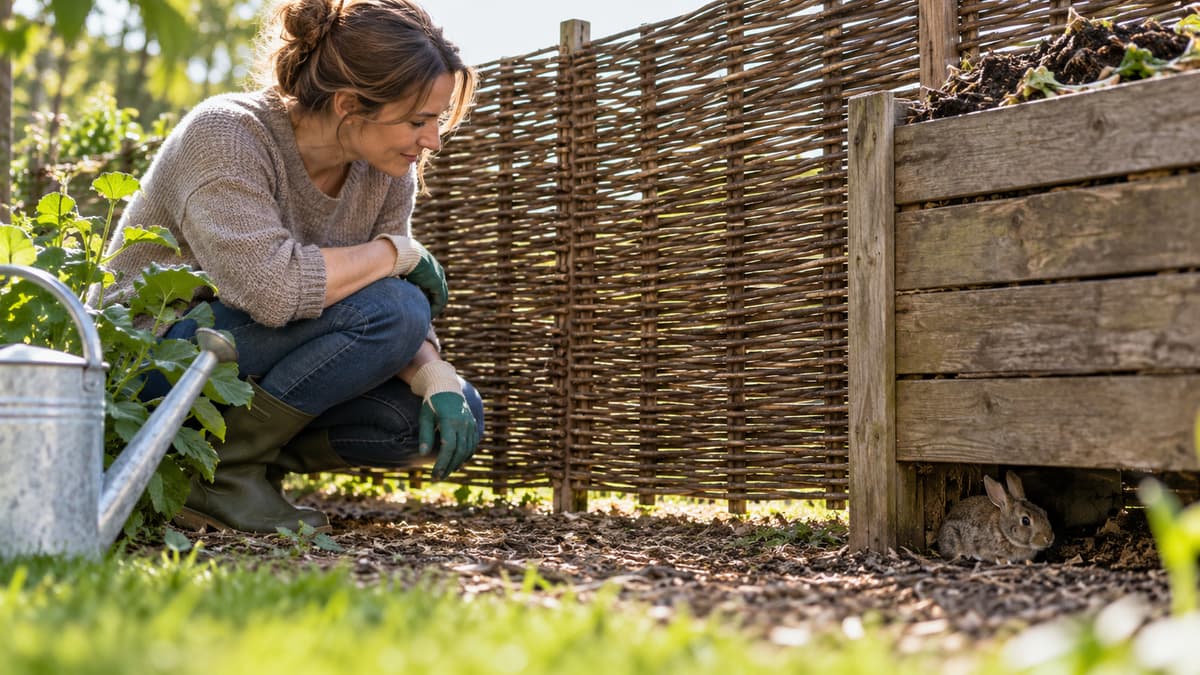
The ground gap that helps a hurdle last is also a gap a rabbit can use.