Independent comparisons. We may earn from shop links. More info

How to charge a leisure battery

Updated: October 2026

The battery is in the locker, or it has just arrived, and the box did not include a charger. How to charge a leisure battery depends on the chemistry already in the case. Flooded, AGM, gel, and LiFePO4 do not share one voltage, and a desulphate cycle is the wrong button on lithium. A flat battery is a job for a controlled mains charger, not for the alternator alone. The rows are the [Leisure battery comparison](/hub/electrical-equipment/leisure-battery). Listings were captured on 21 October 2026. We did not charge a battery on a bench. A qualifying purchase can earn a commission at no extra cost to you.

The battery is in the locker, or it has just arrived, and the box did not include a charger. How to charge a leisure battery depends on the chemistry already in the case.

Our top picks

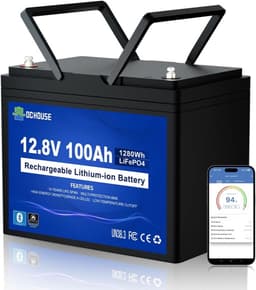
DC HOUSE DC HOUSE Group 24 100 Ah

Best overall

DC HOUSE DC HOUSE Group 24 100 Ah
9.6/10about £179.99
DC HOUSE DC HOUSE 100 Ah

Best value

DC HOUSE DC HOUSE 100 Ah
9.2/10about £159.99
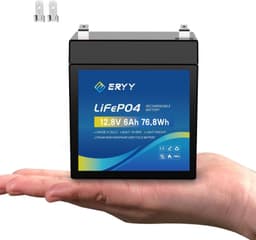
ERYY ERYY YD1206 6 Ah

Rank 3

ERYY ERYY YD1206 6 Ah
9.2/10about £28.49
On this page

Mains, hook-up, and the alternator

Most of the time a leisure battery is filled in one of three ways, and they are not equal. On a pitch with a hook-up, an onboard mains charger does the work while you are plugged in. On a motorhome, the alternator can top the battery up while you drive, if a split-charge path is fitted and the profile matches the chemistry. A caravan does not get that path from the tow car unless someone has installed a proper feed. The AA’s warning is the one to keep: do not recover a battery that is already flat from the alternator alone. A flat 100 Ah battery, on The AA’s own average, is about 10 to 12 hours on a 10 A charge. If the battery is flat, use a voltage-controlled mains charger you can set. A hot or swollen case is where you stop and call someone who works on that system.

Set the charger to the chemistry

There is no single safe voltage for every leisure battery on a UK pitch. Gel is generally kept to about 14.2 V, and AGM to about 14.4 V, unless that maker prints a different ceiling. Flooded lead-acid still wants a controlled charger. The Caravan and Motorhome Club’s example is not to charge a flooded battery above about one tenth of its ampere-hour rating, so their illustration is 6 A for a 60 Ah battery. That is a current example, not a setting you paste onto lithium. If the only charger you own has no chemistry switch, do not guess. The ERYY listing prints 14.2 V ± 0.2 V at 1.5–3 A, and only from 0 °C to 45 °C. The two DC HOUSE 100 Ah listings ask for a dedicated lithium charger and do not print a bulk voltage. One cuts charge off below -7 °C. The Group 24 listing prints that cut-off in Fahrenheit. Which chemistry you should have bought is on lithium or lead-acid.
DC HOUSE DC HOUSE Group 24 100 Ah

Testsieger

DC HOUSE DC HOUSE Group 24 100 Ah
9.6/10about £179.99

Desulphate, equalise, and winter storage

Desulphate, recondition, and equalise modes push the voltage up to break sulphate on a lead-acid battery. The Camping and Caravanning Club states that this permanently damages lithium. Turn that mode off before you connect a LiFePO4 pack, including the small ERYY and ECO-WORTHY packs and the larger DC HOUSE and PUPVWMHB cases. Do not add distilled water to a sealed battery or to any lithium pack. Leave a lead-acid battery discharged and it sulphates. You can leave a battery on a maintainer through winter only when that maintainer matches the chemistry and stays in a maintenance mode.

What the listings actually say

None of the six boxes includes a charger. The ERYY page is the only listing here that prints a charge window: 14.2 V ± 0.2 V, 1.5–3 A, and 0 °C to 45 °C. The DC HOUSE 100 Ah pages say dedicated lithium charger. One stops charge below -7 °C. The Group 24 page prints the cut-off in Fahrenheit. The ECO-WORTHY page and the PUPVWMHB page also leave the charger out. The PUPVWMHB listing names no degree threshold, and reviews did not describe a heater. The Varta listing has no charge profile. Treat that battery as lead-acid, use a leisure charger for that chemistry, and do not invent a voltage for it. Stop when the work leaves the clamps. A hot or swollen case, or a battery that sits at zero volts the way one ERYY review described, goes back to the seller rather than onto a higher current.

Common questions

Can I use a car battery charger?
Only if it has a leisure or lithium setting that matches the battery, and only with desulphate switched off for LiFePO4. A basic car charger may hold the wrong voltage, or run a repair cycle that permanently damages lithium. If the charger has one dial and no chemistry label, do not use it on these packs.
Will hook-up charge it fully?
Hook-up runs whatever charger is already fitted in the van. Many of those units are power supplies, not a proper leisure charge, which is why the Camping and Caravanning Club suggests removing the battery about every six weeks. If the onboard unit has no chemistry setting, it will not know that you swapped a gel battery for lithium.
What is desulphate mode, and why does it matter?
Desulphate, recondition, and equalise are lead-acid repair cycles. They raise the voltage to break up sulphate. On a LiFePO4 battery that rise can cause permanent damage. Switch it off before you connect the ERYY pack, either DC HOUSE battery, or the 300 Ah listing.
Can I leave it on charge all winter?
You can leave it on a maintainer that matches the chemistry and stays in a maintenance mode. A lead-acid battery stored flat will sulphate. A lithium battery left on a desulphate cycle is being taken above the voltage it was built for. Do not add water to a sealed case or a lithium case.
Where do I stop and call someone?
Stop if you are about to rewire 230 V, if the case is hot or swollen, or if you need to change a split-charge system on a smart alternator. Also stop if the battery will not take a charge. Buying a charger is normal, because none of these six listings includes one.

Related pages

Sources

Public UK sources are listed below. Shelf prices and star lines are the amazon.co.uk figures checked on 21 October 2026.

  1. Camping and Caravanning Club: leisure batteries (retrieved 21 October 2026)
  2. Camping and Caravanning Club: charging a leisure battery (retrieved 21 October 2026)
  3. The AA: caravan leisure batteries (retrieved 21 October 2026)
  4. Yuasa UK: how to choose a leisure battery (retrieved 21 October 2026)
  5. NCC verified battery list (retrieved 21 October 2026)
  6. GOV.UK: batteries (retrieved 21 October 2026)
  7. GOV.UK: recycling batteries and electrical waste (retrieved 21 October 2026)
  8. Caravan and Motorhome Club: batteries (retrieved 21 October 2026)