How to drill into tile
You have a towel rail to fix and a glazed tile already on the bathroom wall, and you want the hole to stay a hole. This is how to drill into tile, from the Products Compared editorial team on 15 October 2026. It follows public UK how-to pages and the limits in our [tile drill bits](/hub/drilling-and-accessories/tile-drill-bit) comparison. A purchase through our links can earn us a commission at no extra cost to you. Find what is behind the tile, mark the glaze, drill on rotary only while you cool the bit, then change bit before you touch the brick. Which family to buy sits on the [tile drill bit buying guide](/hub/drilling-and-accessories/tile-drill-bit/sub/tile-drill-bit-buying-guide).
You have a towel rail to fix and a glazed tile already on the bathroom wall, and you want the hole to stay a hole. This is how to drill into tile, from the Products Compared editorial team on 15 October 2026.
You have a towel rail to fix and a glazed tile already on the bathroom wall, and you want the hole to stay a hole. This is how to drill into tile, from the Products Compared editorial team on 15 October 2026. It follows public UK how-to pages and the limits in our tile drill bits comparison. A purchase through our links can earn us a commission at no extra cost to you. Find what is behind the tile, mark the glaze, drill on rotary only while you cool the bit, then change bit before you touch the brick. Which family to buy sits on the tile drill bit buying guide.
Our top picks
| Badge | Product | Bit type | Cooling | Machine | Note | Price | Offer |
|---|---|---|---|---|---|---|---|
| Best overall |  QWORK QWORK 5-piece carbide spear set, 6–12 mm | Carbide spear | Water for glass, porcelain floor, marble, or granite | Drill chuck | 8.5 | about £6.98 | View offer |
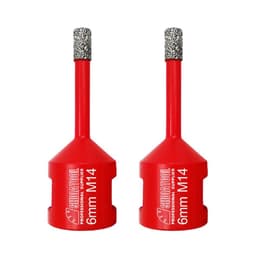
 SHDIATOOL SHDIATOOL 6 mm M14 dry diamond cores, pack of 2 | Dry diamond core | Wax in the core; wet use stated to prolong life | Angle grinder. Drill use needs an adapter, not included | 8.8 | about £15.99 | View offer | |
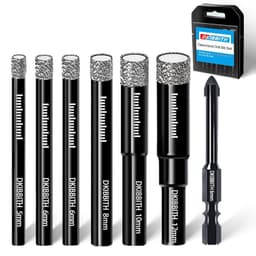
| Alternative |  DKIBBITH DKIBBITH 7-piece dry diamond set, 5–12 mm | Dry diamond core set | Wax inside; listing says cool the bit after each hole | Drill chuck. Angle grinder is claimed; no adapter is in the box | 8.3 | about £12.99 | View offer |

On this page
Check the wall, then mark the glaze
Start the hole so the bit cannot skate
Keep the bit cool without soaking the drill
Change bit when the tile is through
When this sequence is the wrong job
Common questions
Do you put masking tape on the tile?
What speed do you use to drill tile?
When do you dip the bit in water?
Can you turn hammer mode on once the glaze is broken?
Do you keep the same bit for the brick?
Related pages
Sources
Public UK sources and the amazon.co.uk listings in this comparison. Last checked 15 October 2026.
- Topps Tiles: what type of drill bit for tiles (retrieved 15 October 2026)
- Homebuilding: drilling into tile without cracking (retrieved 15 October 2026)
- Screwfix: how to drill into tile (retrieved 15 October 2026)
- Bosch Professional GB: EXPERT HEX-9 hard ceramic drill bit (retrieved 15 October 2026)
- HSE CIS36: silica dust when drilling and coring (retrieved 15 October 2026)
- BSI: BS EN 14411 ceramic tiles (retrieved 15 October 2026)
- Rubi: porcelain tile drill bits (retrieved 15 October 2026)
- amazon.co.uk listing B0751893Y2 (QWORK), checked 15 October 2026 (retrieved 15 October 2026)