Eye protection drilling metal: bare hands at the chuck
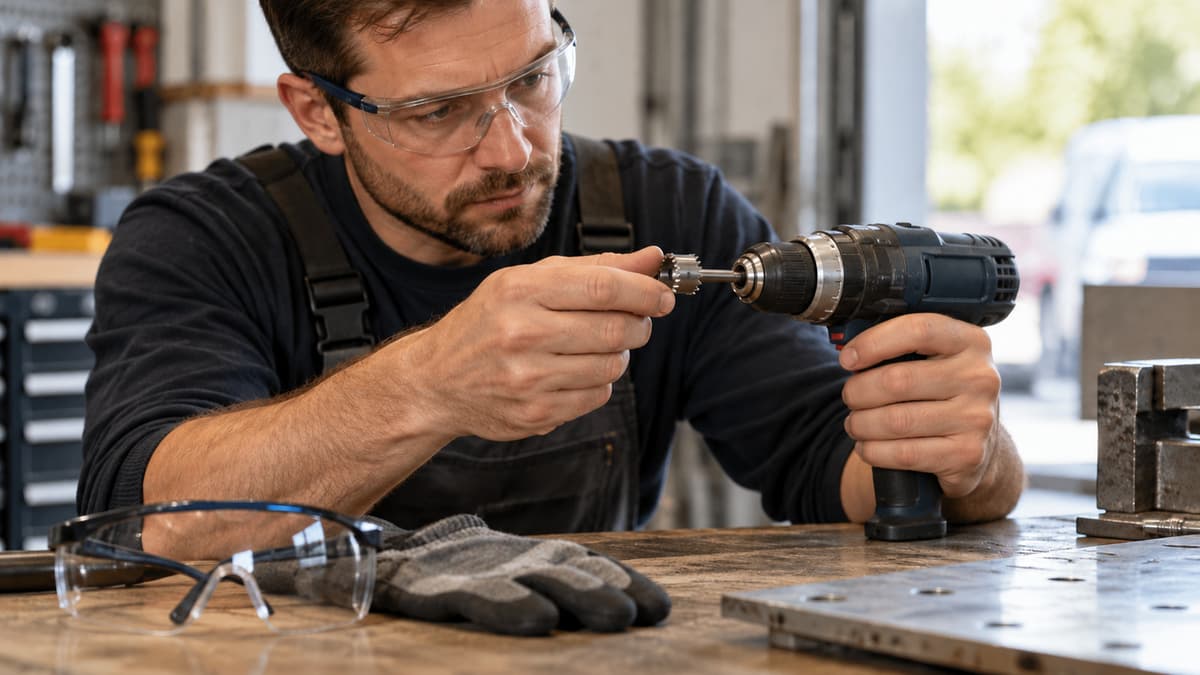
While a metal bit turns, use spectacles, goggles, or a visor. Gloves belong on a sharp stopped cutter, and bare hands belong beside the spinning chuck.
On this page
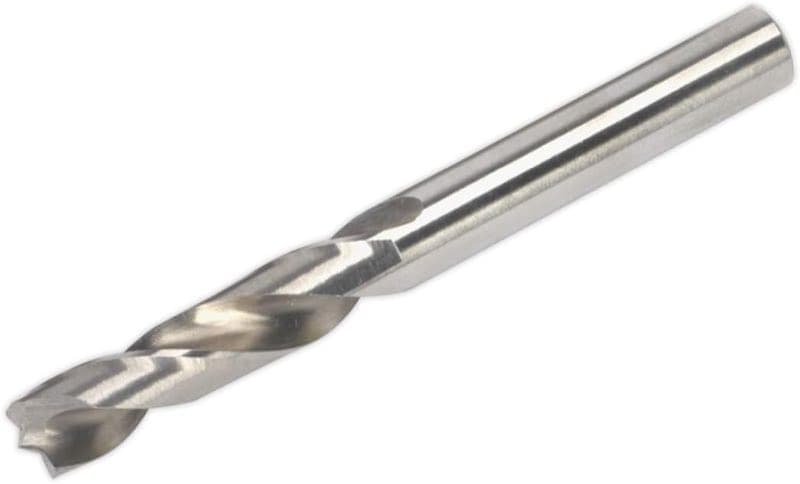
You are about to chuck a spot weld cutter into a drill. A packet tells you to wear gloves and goggles for the whole job. That sentence mixes two jobs. Eye protection drilling metal stays on while the bit turns, because the harm is swarf in the eye. The glove comes off before the chuck spins. HSE's drilling-machine sheet allows gloves for sharp edges and bans them where a glove can catch.
The Products Compared editorial team drew on HSE's PPE page, engineering sheet EIS16, the PUWER overview, a Construction Safety note of an HSE prosecution, Frost's eye-protection line, and the BGS sentence on gloves and goggles for sharp cutters. BGS is that sentence only, not a UK price. Those pages were read in October 2026. We did not run a lab test. A qualifying purchase can earn us a commission at no extra cost to you.
In short
Wear spectacles, goggles, or a visor while the cutter turns, because the hazard is projectiles and metal particles. Wear a glove to handle the sharp crown, the swarf, and the cutter only when the drill is stopped. Take the glove off before your hand is near a spinning chuck. If the drill is work equipment, add HSE's PUWER overview. A private job on your own car keeps the eye and glove rules, and it does not by itself become that work-equipment duty.
Eyes while the bit is turning
HSE's page on using the right type of PPE names spectacles, goggles, and visors where people face projectiles and metal particles. That list is the eye protection for a cutter or a twist bit in steel. Spectacles sit in front of the eyes. Goggles close around the socket. A visor covers a wider part of the face. The page names the hazard and the types. It does not award a brand or an impact grade.
A spot weld cutter works in sheet steel. Chips and swarf leave the crown while it turns, from the side, from below, or straight on. Spectacles pushed up, or a visor flipped up, miss the only moment they are needed. Put them on before the trigger, and leave them on until the chuck has stopped.
Spectacles with open sides can let a chip past when your face is close to the panel. Goggles close that gap, and a visor worn up covers nothing. Frost's set says "Always wear eye protection," which supports the eye rule without choosing the type. BGS says wear gloves and goggles because the cutters are sharp: goggles for the metal particles, the glove for the stopped cutter. The spot weld drill comparison sets the cutters out. That table does not choose your eye protection.
Can you wear gloves with a spot weld cutter?
You can wear gloves while the drill is stopped, and you work with a bare hand once the chuck turns. EIS16 is the source of that split. Gloves protect a sharp crown, a cut nugget, and swarf. The same sheet bans gloves where a glove can catch in a drilling machine. A spinning chuck is that machine. Spot weld cutter safety is that change of hands.
BGS says wear gloves and goggles because the cutters are sharp. The edge really is sharp. If you follow that line for the whole job, you arrive at a live chuck wearing the thing EIS16 says can catch. Read the maker's line as the bench rule. Read EIS16 as the rule that takes the glove off.
A coated fingertip or a loose cuff meets the chuck, the fabric grips, and the drill pulls the hand in. A Construction Safety note, drawing on an HSE prosecution, records an amputation after a glove was entangled on a rotating drill. This article does not add a firm name, a year, or a fine. One case is not an injury rate. It is the severe end of the ban.
EIS16 still wants a glove for the edge. Put it on when the drill is stopped and unable to start, and take it off before the chuck is allowed to turn. A thin coating can wind in as readily as a floppy cuff. Gloves and a drill belong together only in that stopped window.
Work equipment versus a hobby garage
PUWER, the Provision and Use of Work Equipment Regulations, is the regime on HSE's PUWER overview. Use that page when the drill is work equipment. The question is whether this drill is work equipment today, not whether the tool looks serious.
On your own car, with your own drill, and with nobody paying you, this article treats the drill as outside that regime. The eye rule and the glove split still stand. They are controls from the PPE page and from EIS16, not a work-equipment duty. These sources do not turn a hobby lapse into a named offence or a fine.
If you cut welds as the job, or the drill is provided for that work, the overview is the page for who holds the duties. This article does not copy those duties out and does not name a penalty. Covered eyes and a bare hand at a turning chuck still apply, including if you are self-employed and the drilling is paid work.
Whether a sill, a pillar, or steel the repair method treats as high-strength should be cut in a body shop is separate from PPE. That judgement sits in When a body shop should cut the welds and on the car panels page. PUWER does not tell you the panel is yours to drill. The panel page does not tell you to keep a glove on a spinning chuck.
A car wing throws metal particles
The wing is sheet steel. The debris is a chip or fine swarf. Eye protection is the control while the bit turns. When the drill has stopped, that swarf is a sharp edge, which is when the glove goes back on. Once something is in the eye, stop the drill and get proper care. This page is not first-aid advice.
Control notes call CN3 is silica and concrete. A mask for that dust belongs on masonry, not on a steel wing. It leaves the path to your eyes open, and it says nothing about a glove in a chuck. For sheet steel, stay with spectacles, goggles, or a visor, and with the glove split.
UKCA, and the product-safety note for Northern Ireland, belong in A faulty drill bit and your rights. A mark on a box does not decide whether your hand is gloved at a live chuck. Paint, seam sealer, and a little steel dust are a reason to keep your eyes covered. They are a poor reason to treat the wing as a silica task.
One rule for each moment
Use this order each time you handle the cutter. It is the two rules in the order your hands actually move.
- With the drill stopped and unable to start, put a glove on and handle the sharp crown: fit it, remove it, or set it down.
- Take the glove off, clear of the chuck, before you allow the drill to start.
- Put spectacles, goggles, or a visor over your eyes for the whole time the bit is turning.
- Cut with a bare hand near the chuck, and keep cuffs and spare gloves out of the rotating parts.
- When the chuck has stopped, put the glove back on to clear swarf and change the cutter.
That order is silent on speed, on the punch, and on which crown to pick. How you centre the cutter and how you work the weld sit on the how to use a spot weld drill page. If the cutter skates because the pin has nowhere to sit, that is Centre-punch the weld before you cut. Sets are compared in the buying guide. None of those pages cancels EIS16.
The glove stays on because the bench is cold. The glasses go up so you can see the mark, and the trigger follows. Each one uses the other moment's rule. On a sill or on high-strength steel, the order still describes eyes and hands. It does not decide that you should make the cut.
Common questions
What eye protection is HSE talking about?
Why are gloves both recommended and warned against?
Does PUWER apply in a home garage?
What happened in the gloved-hand drill cases?
Is concrete-dust respiratory protection the rule for a car wing?
When do you put a glove on?
Who is responsible if this is paid work?

Products Compared publishes British-English buying guides based on amazon.co.uk listings and public UK sources. We do not run a lab and we do not invent test scores.
Related articles

When a body shop should cut the welds
A hobby wing and a structural joint need different decisions. Read this for a sill, a pillar, or high-strength steel.

A faulty drill bit and your rights
A bent shaft or a bit that was dull on the first weld raises a quality question. The description and the price both matter.

Centre-punch the weld before you cut
The cutter skates when the pin has nowhere to sit. Centre-punch the weld before you try to cut it.