Centre punch spot weld: dimple the weld before you cut

Punch a dimple in the spot weld so the cutter has a seat. If it still skates, add a shallow pilot, then take speed and the stop from the how-to.
On this page
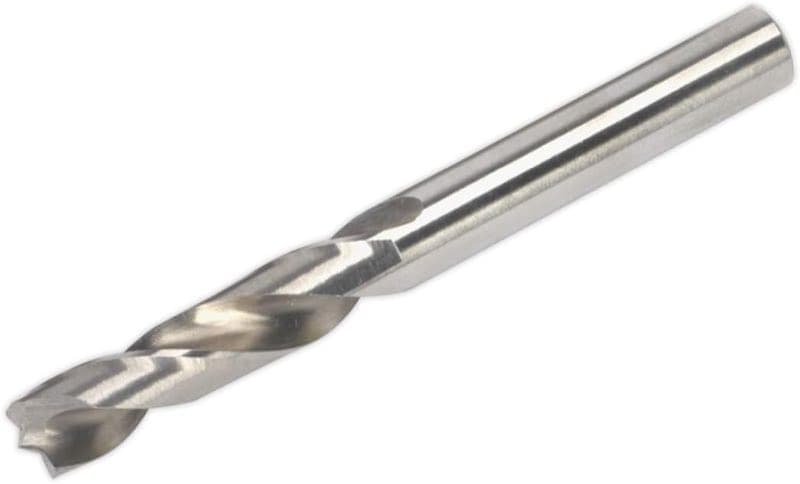
The cutter has just sung across the paint and left a bright scratch beside the weld. The crown never bit, because the pin or the nib had nowhere to sit. A centre punch spot weld mark is the dimple that gives that point a seat before you cut. Mig Tig Arc tells you to punch that dimple before the AK4734 so the bit does not slip. If the cutter still walks, add a shallow pilot, the seat Laser Tools gives the spring pin, and the step one Topcloud reviewer needed when a punch was not enough.
This page is from the Products Compared editorial team and was updated on 15 October 2026. It follows Mig Tig Arc's AK4734 page, Laser Tools' cutter guide, Frost's spot weld removal set at £41.99, a MIG Welding Forum thread, and review notes on a Topcloud cutter. We did not run a lab test. A qualifying purchase can earn us a commission at no extra cost to you.
In short
Punch a dimple in the middle of the weld so the cutter's pin or nib has a seat, which is what Mig Tig Arc specifies before the AK4734. If the bit still skates, drill a shallow pilot for the spring pin, then cut, and treat Laser Tools' stop, when the panel pops, as the limit of this method. A tidy mark can still leave a trace on the lower sheet.
Why the cutter skates
A spot weld cutter is a short crown of teeth with a point in the middle. Paint gives that point nothing to bite, so spot weld cutter skating is the scratch you already have: the crown slid because the pin or the nib had nowhere to sit. Review notes on a Topcloud cutter say the bit walks if you do not punch. The teeth are trying to start a circle, and until they have a groove they scrape. A spring loaded guide pin is meant to drop into a hollow and hold the crown over the nugget. A fixed nib does the same locating job with no spring.
Mig Tig Arc's page for the AK4734 puts the dimple first so the bit does not slip. That order is a maker instruction for that bit. It is a weak rule if you treat it as a measured depth: the page gives no punch size, no hammer weight, and no result for the sheet underneath. A weld buried under filler, or a nugget you cannot trace, still lets the crown start on paint. If the cutter walks on the first touch, stop and look at the seat before you lean on the drill. A missed punch is one way a bit starts to look finished when the teeth have barely cut. What a tired crown looks like is on when a spot weld bit goes blunt.
Punch, then a pilot if it still moves
Two published sequences sit side by side. Mig Tig Arc starts with a punch dimple before the AK4734. The MIG Welding Forum thread pairs a punch with a small dimple drill. Laser Tools starts with a shallow pilot, seats the spring pin, and tells you to stop when the panel pops. Topcloud review notes add the case those pages skip: a punch was not enough, and a pilot held the cutter.
Punch first. If the crown stays on the nugget, take the speed and the moment you stop from how to use a spot weld drill. If the crown still walks, put a shallow pilot where the dimple is. That pilot hole for the spot weld is the seat Laser Tools gives the spring pin.
A conventional centre punch needs a hammer, held upright on the middle of the nugget, deep enough for a fingertip or the pin to find. Frost's spot weld removal set includes an automatic centre punch so you do not swing a hammer at the panel, listed at £41.99. That set sits outside the cutters in the spot weld drill comparison. If the cutter still skates, you still need the shallow pilot.
- Find the middle of the weld you can see and set the centre punch upright on it.
- Make one dimple with a hammer punch, or with an automatic centre punch so the hammer stays off the panel.
- Seat the pin or nib and continue only while the crown stays over the nugget.
- If the cutter skates, drill a shallow pilot in the dimple and seat the spring pin in it.
- Leave speed and the stop for the how-to page. Laser Tools stops when the panel pops, and that still allows a mark on the sheet below.
A harder second blow will not fix a dimple that was off the nugget. Move the punch to the middle you can see. Drilling the pilot before you try the dimple is reasonable when you already know this cutter walks on a punch alone, which is what that Topcloud reviewer found.
What the pin and the nib are for
The spring loaded guide pin sits in the hollow you made. On a punched weld that hollow is the dimple. When the dimple lets the crown walk, Laser Tools puts a shallow pilot there and the spring pin sits in the pilot. The pin holds the crown over the nugget and the teeth cut the weld. A nib is the fixed point on a cutter with no spring, and the hollow does the same job. Match the seat to the point in the chuck. Which listing describes a spring pin, and which a fixed point, is on the spot weld drill buying guide. A dimple that suits the AK4734 is that maker's step for that bit.
Laser Tools calls the pilot shallow, and the forum's extra hole is a small dimple drill. A hole through both sheets is a different operation. A wide, deep well can let the pin rattle so the crown walks inside it. Keep the pilot as a pocket for the point you have. The second sheet can still show a ring or a bright spot. When the panel pops, Laser Tools says stop: the upper sheet has let go, and an extra second reaches the sheet you hoped to keep. How fast to spin the cutter stays on what speed to run a spot weld cutter. Use a speed the listing prints. A silent listing stays a gap.
Where to put the mark
Put the dimple in the middle of the nugget you can see. The crown cuts a circle around the pin, so a mark on the edge puts half the teeth on paint and the cutter skates. Spot welds are often oval, doubled, or partly hidden. Mark the centre of the patch you can outline. A tail of weld outside that circle is another mark and another cut after the first cutter has stopped. Leaning a spinning cutter off the dimple to catch the tail puts the pin back on paint.
The punch has to reach metal. A crease that only stars the paint leaves the pin on the film. Thick seam sealer hides the edge of the nugget, and a dimple you cannot outline is a guess the crown can start beside. Scrape only enough to see the outline. Chips from the punch and the cutter are why eye protection belongs on before you strike or drill. Glasses, and gloves near a chuck, are on eye protection and gloves when you drill metal.
A punch is not the whole job
A centre punch starts the cut. Laser Tools still seats the spring pin and stops when the panel pops. The forum still adds a small dimple drill. The Topcloud notes still include a cutter that walked after a punch and held after a pilot. A dimple, a shallow pilot, and a stop when the upper panel pops can still leave a mark on the second sheet. If that sheet has to stay clean, this method is the wrong result to expect. Which panel you are willing to open sits on spot weld drills on car panels and on when a body shop should cut the welds.
A box can list a long run of pieces and still omit the punch that suits a thin panel. What those counts include is on what a spot weld set actually contains. Once the pin has a seat, follow the cut on the how-to page and use a speed that listing prints. A borrowed figure from a different bit is how a careful mark turns into a burnt crown.
Common questions
Why does a spot weld cutter skate?
Is a centre punch enough on a spot weld?
What does the spring loaded guide pin sit in?
Do you need a hammer punch or an automatic centre punch?
Where do you mark a spot weld that is not round?
Can you centre-punch a spot weld through paint?
Which page has the rest of the spot weld cutting sequence?

Products Compared publishes British-English buying guides based on amazon.co.uk listings and public UK sources. We do not run a lab and we do not invent test scores.
Related articles

When a spot weld bit goes blunt
When a spot weld crown stops cutting, a missed punch can look the same as a tired bit.
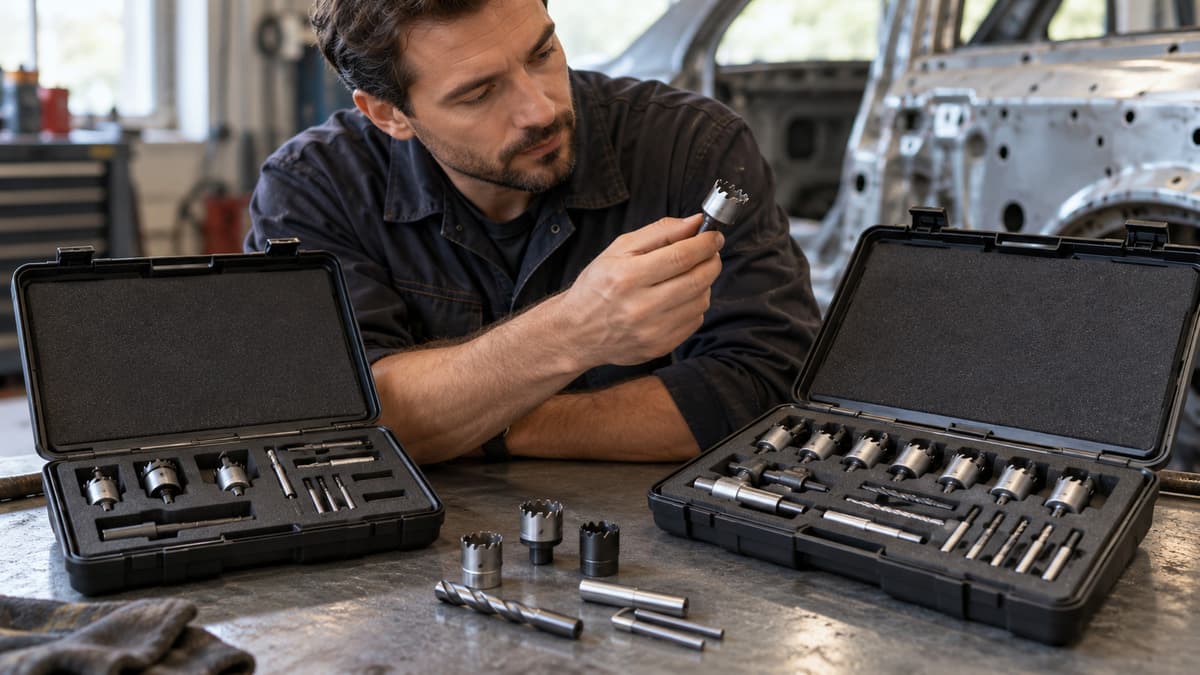
What a spot weld set actually contains
A higher piece count can include hole saws and openers, so check what the box really holds.

What speed to run a spot weld cutter
Copy a speed only when that listing prints one. The dimple is a separate step from the rpm.