Spot weld drill bit blunt: heat, punch or soft steel

A spot weld drill bit blunt after two welds may be heat, a missed punch, or a soft bit. See how UK reviews separate those causes before you buy another set.
On this page
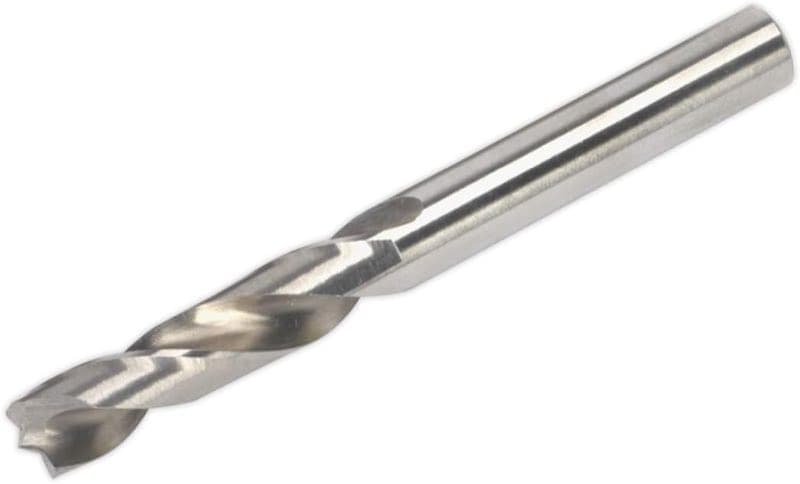
Two welds in, the ring in the paint has turned into a shiny rub and the panel has not let go. A spot weld drill bit blunt this early feels like a bad purchase. Heat, a cutter that was never square, a centre punch you skipped, and a soft bit all leave that same dull rim. The next bit helps only once you know which of those you had.
The Products Compared editorial team used amazon.co.uk review themes for the bits named here, plus public notes from the MIG Welding Forum, The Mini Forum, Wielander+Schill UK, and Laser Tools. There is no lab cut in this guide. A qualifying purchase can earn a commission at no extra cost to you. Replacements sit on the spot weld drill comparison.
In short
A spot weld drill bit blunt after two or three welds can be heat, a crown off square, a missed centre punch, or steel that was soft from the start. Sealey notes run from a chip or a snap after about three welds to tens of welds, and those stay as separate estimates. One kit's printed speed belongs on that kit alone.
What UK reviews actually report
UK review themes keep two Sealey stories apart. Some reviews describe a cutter that chips and snaps after about three welds. Others describe tens of welds from a bit on the same kind of listing. Each figure is that reviewer's estimate of their own panel. A thin wing and a harder sill are different jobs, so both reports can be honest. Folding them into one average would invent a duty cycle nobody published.
Heyung is a short file: 3.4 from three reviews, and the only UK text says the bits do not cut. That single review is a reason to pause before you treat the pack as the cure for a spot weld drill not cutting. Topcloud reviews in the same set include stripped threads. The crown can still look sharp while the arbor no longer holds it true, and a cocked crown then sheds teeth.
Bohaner puts the material complaint in the reviewer's words: "this is no HSS". That denies a steel claim, and it is still one judgement of one bit. On The Mini Forum, several owners say cheap gold-coloured bits do not last, and several call hole-cutter styles poor. Those posts sit outside the amazon.co.uk star line. Keep the gold-bit remark and the hole-cutter remark apart. None of this is a timed cut on a known sheet thickness.
Heat, a missed punch, and a cutter off square
Wielander+Schill, writing about their own spot-weld drill, say a high-speed drill blunts the edges. They ask for a centre punch, cutting oil, and a speed ceiling on that machine. The ceiling stays on their drill. A marketplace bit that never printed a speed does not inherit it. Too much speed makes heat, the edge goes, and the dull rim rubs, which makes more heat. Oil and a punch will not harden a bit that was soft in the packet.
The MIG Welding Forum thread from 2015 blames that heat and a cutter that is not square to the panel. One user sheared the teeth on a Sykes-Pickavant cutter. Paste is those users' practice, as oil is Wielander+Schill's practice on their drill.
Laser Tools describe hardened metal around the weld. The sheet and the nugget differ for the few seconds you are cutting, so a bit that marked the paint cleanly can dull on the nugget. These sources give no hardness figure for that zone. A missed punch makes the rub worse. With nowhere for the pin to sit, the crown walks, the ring goes off-centre, and one side of the teeth takes the load. The order of the cut, including when to stop pushing, is on the how to use a spot weld drill page.
When a review says this is no HSS
A blue rim is where heat and a soft bit look identical. High speed can colour the edge. A soft bit can colour while it rubs, even if the speed was never fair. These sources include no colour chart, so reconstruct the cut: first weld or tenth, punched or skating, a speed you can name or a speed you guessed.
"This is no HSS" is one Bohaner reviewer's denial of the steel they expected. That is what an HSS bit soft search usually means: the edge folded where a high-speed-steel cutter should have started. Heyung's UK line, that the bits do not cut, and the Mini Forum remarks on cheap gold bits, sit in the same family. None of them is a lab reading of the alloy. If every crown dies on weld one while you are punched, square, and slow, the material complaint gets stronger. If it dies after a skipped punch and a heavy lean, the complaint gets weaker. Hole-cutter remarks on that forum are about shape, and one denial does not stand in for the whole listing.
Why crown teeth snap
A blunt rim has rubbed. A snapped tooth was loaded sideways. A crown that enters at an angle loads one or two small teeth, they break, and the stump rubs. Someone whose spot weld cutter teeth broke is often in that angled cut, the same pattern as the sheared Sykes-Pickavant teeth on the 2015 forum thread.
Some Sealey reviews chip and snap after about three welds. That can be a cocked cutter or a brittle edge, and the scar still helps. An oval ring, with the punch off to one side, points to angle. A round scar and a polished chip, on a cut you kept square, points to the edge and the steel. Topcloud's stripped threads do the same damage with steady hands, because a loose crown cocks and the teeth strike.
A spot weld bit snapped might be the shank, the crown, or the pilot, so note which piece broke before you order. A new crown on a stripped arbor repeats the cocking. Once the edge is dull, leaning harder bends teeth or strips what thread remains. If the teeth have already left the crown, stop. Another pass with the stump opens the panel further and tells you nothing new about the steel.
What to change before you buy another set
Change the cut before you change the brand. Centre-punch so the point has a seat, and keep the cutter square for the whole ring. That is harder on a sill flange than on a flat wing, and it is the condition MIG Welding Forum users were missing when teeth sheared. Use oil or paste the way the maker of your drill describes. Wielander+Schill specify oil on their machine, and a forum user may use paste. A listing that mentions neither still leaves you the punch and the square.
The BGS set is the listing here that states 700 to 2000 rpm, and that range is for that set alone. A Sealey bit, a Heyung pack, a Topcloud crown, and the Sykes-Pickavant cutter from the 2015 thread stay outside it. Running near the top of someone else's range is the high-speed blunting Wielander+Schill describe on their own tool. With no rpm display you trust, use a slower gear and a lighter feed.
Move to another shape when a punched, square, slower cut still walks, strips the thread, or sheds teeth. Several Mini Forum owners call hole-cutter styles poor, which is a reason to compare a crown with a solid bit on the cutter and solid bit comparison. A solid bit that still rubs flat on weld two, slow and square, is a reason to doubt the steel. Listing sentences sit in the spot weld drill buying guide. If the panel is structural, or you cannot name the steel, another cheap crown answers the wrong question. Hardened metal around the weld, which Laser Tools flag, is a harder spot on ordinary sheet, and these notes give you no home test for high-strength steel.
Talk to the seller when the cutter would not cut on a fair first weld, or when the bit matches the Bohaner line, "this is no HSS". A blunt edge after high speed, a missed punch, or a cocked crown is also how a sound cutter dies. Where the comparison's top pick is a single bit, read the short-life estimates before you assume the new edge will outlast the one you blunted.
Common questions
Why is the edge gone after two or three welds?
Is a blue edge heat or a soft bit?
Why do crown teeth snap?
Does a centre punch stop the wear?
Should you claim the bit was faulty?
What speed makes a spot weld bit hot?
When should you buy a different cutter shape?
What if the spot weld drill is not cutting at all?

Products Compared publishes British-English buying guides based on amazon.co.uk listings and public UK sources. We do not run a lab and we do not invent test scores.
Related articles

Centre-punch the weld before you cut
Give the cutter a seat so the crown does not skate across the paint and load one tooth.

What speed to run a spot weld cutter
Only one set in this comparison prints a speed range. Keep that range on that set.

A faulty drill bit and your rights
A bit that was dull on the first weld is a different complaint from an edge you heated.