Bodyshop spot weld drilling: when a body shop should cut

A rusty wing and a high-strength sill need different decisions. See when bodyshop spot weld drilling stays at home, and when the joint goes to a body shop.
On this page
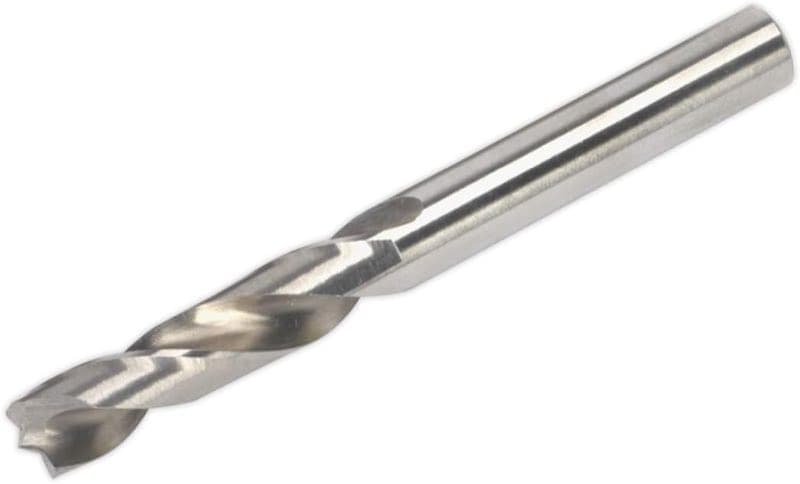
The outer wing is a lace of rust along the arch, and the spot welds are still in the flange. A sill a short way forward can look the same and still be a different decision. Bodyshop spot weld drilling is that split: a mild-steel skin a home cutter is described for, or a high-strength joint that belongs with a body shop. The line below comes from UK maker pages and one joining note, read for October 2026.
In short
Bodyshop spot weld drilling fits a classic mild-steel skin, such as a wing an 8 mm cutter is described for. It does not fit boron or ultra-high-strength steel, a torn flange, or a sill or pillar the repair method calls high-strength. Sealey’s carbide AK4740 carries the boron sentence, at a list price of £47.94, and it is not one of the twelve bits in this comparison.
Where bodyshop spot weld drilling still belongs
A rusty wing is not automatically a body-shop job. Mig Tig Arc’s page for an 8 mm spot weld drill bit puts that cutter on mild steel, and it says the bit is not for boron. If the wing is a mild-steel outer skin, the flange is still intact, and the repair method does not call the steel high-strength, the spot weld drills for car panels page is the place for that skin.
Eight millimetres is a size you can hold against a nugget you can see. It is not a test of the steel. Paint, filler, and rust hide the edge, and a brown wing skin does not tell you what the inner flange was stamped from. If the method sheet or the panel name says high-strength, especially where the wing meets a pillar, the mild-steel sentence has run out. The twelve bits in this comparison are the wrong shelf once the joint matches a boron or ultra-high-strength description. The same wing becomes a body-shop job when rust has eaten the flange you would need to leave intact, or when you would be cutting blind into a boxed section.
Sill spot welds and the Saturday limit
A sill stops being a Saturday drill earlier than a wing. You are looking at a long flange, often an outer skin over a stronger inner section, and the repair method may already call that steel high-strength. Sill spot welds on a rusty outer skin are easy to mistake for last year’s wing. The photograph of the rust is not a grade. Hand the sill over when any one of these is true.
- The method names high-strength or ultra-high-strength steel.
- The flange is already torn.
- A fuel line, brake pipe, or airbag part sits in the cut.
- You cannot see the inner face.
An older sill can still be mild steel. This page will not pretend every British sill is boron. You cannot grade it from surface rust, and these sources give no home test. If the method is silent and the section is structural, a body shop is the conservative call. Pillars sit with sills: a high strength steel panel there is meant to hold shape in a crash. The how to use a spot weld drill sequence is for a joint you have already decided is in scope.
High-stress wording and the boron bit
Sealey sells two 8 mm bits that are easy to fold into one product. The AK4734 page carries a high-stress claim. The AK4740 page says ultra-high-strength steel, also known as boron. Boron sits on the AK4740, a solid carbide bit, 8 mm across and 44 mm long, at a maker list price of £47.94. That figure is not an amazon.co.uk shelf price, and the bit is not in the twelve. Sharing a diameter with a cheaper HSS cutter does not share the sentence. The spot weld drill buying guide is about what those pieces actually cut. It will not turn the twelve into a boron kit.
Mig Tig Arc’s 8 mm bit is for mild steel, not boron. Wielander+Schill say boron needs carbide. Nothing here gives the AK4734, or any other HSS bit, the AK4740’s job. A gold-coloured coating, a cobalt line, or the words high-stress are not an upgrade to ultra high strength spot welds. There is no best value choice for boron among the twelve, because the carbide bit with that sentence is outside the set. For a mild-steel skin, the spot weld drill comparison is the relevant shelf. A qualifying purchase through Products Compared can earn a commission at no extra cost to you. That comparison includes no lab ranking, and it does not include the AK4740.
What a specialist drill is specified to do
Wielander+Schill’s UK page is about their own machine. Boron needs carbide, at no more than 1,200 rpm, with a punch, oil, a 90-degree angle, and a G-clamp. Those are requirements of that setup, not a list you can paste onto a cordless drill and an HSS bit from amazon.co.uk. Miss one of them and you are no longer following the page.
Their material includes an 80-weld boron figure. Leave it there. Copying it onto an Amazon HSS bit invents a life that maker did not print. A punch, a drop of oil, or a slower trigger does not change the steel grade. The G-clamp and the square angle are there because a cutter that walks cuts the sheet beside the nugget. On a sill or a pillar that skate can break into a closed section. A carbide bit the same diameter as the AK4740 still does not hand you a home method. £47.94 is a list for one carbide bit, not a machine that matches the Wielander page.
Why grinding replaces the cutter
Volkswagen’s public ID.3 joining page says three things together. Do not weaken the sheet that stays. High-strength joints may be ground. A hard cutter is not a hand-drill job. A drill that bites past the nugget thins the sheet you are supposed to keep. That note is for that car, not every shell in a British garage. A mild-steel wing can still be a drill job, which is why the Mig Tig Arc mild-steel line exists. Do not grind every spot weld because one manufacturer allows grinding on high-strength joints.
This is not a home grinding guide. The sources name the idea, not a disc, a guard, or a speed for your angle grinder. Use a cutter where the bit’s page and the panel’s method agree, which in this research means mild steel and a sound flange. Where the method moves the joint to grinding, or calls the steel ultra-high-strength, put the cutter back. The 1,200 rpm ceiling on the Wielander machine does not become a grinding speed, and it does not rescue an HSS bit on boron.
When to use a body shop
Use a body shop when the panel is a sill or a pillar the repair method calls high-strength, when the steel is described as boron or ultra-high-strength, or when you only have an HSS bit and a pistol drill. Use one when the flange is already torn, when fuel, brakes, or airbags are in the joint, or when you would copy Wielander’s carbide, speed, clamp, and 80-weld figure onto a bit that was never given that job. A rusty wing with a mild-steel description and a sound flange can stay at home.
A torn flange is not a small extra cut. The sheet that stays is already ripped, and the joining note says not to weaken it further. Drilling the remaining nuggets opens a larger tear. Sharpness of the bit is irrelevant once the edge has failed. Fuel pipes, brake pipes, and airbag looms are often out of sight, and a cutter can break the second sheet. These sources print no clearance in millimetres, so none is printed here. If you are not sure the section is empty, that uncertainty is the decision.
The pages behind this update are Sealey’s UK pages for the AK4734 and the AK4740, Mig Tig Arc’s 8 mm bit page, Wielander+Schill’s UK machine page, and Volkswagen’s public ID.3 joining note. The Products Compared editorial team did not run a lab test. If your car’s method names a grade these pages do not, follow that method and the body shop.
Common questions
Is a rusty wing a body-shop job?
When is a sill no longer a Saturday drill?
What does high-stress steel on the AK4734 not mean?
What does Sealey list for boron, and what does it cost?
Why might grinding replace drilling on a high-strength joint?
What if the flange is already torn?
Where do fuel, brakes, and airbags sit in the decision?
Can I drill boron steel with an HSS bit?

Products Compared publishes British-English buying guides based on amazon.co.uk listings and public UK sources. We do not run a lab and we do not invent test scores.
Related articles
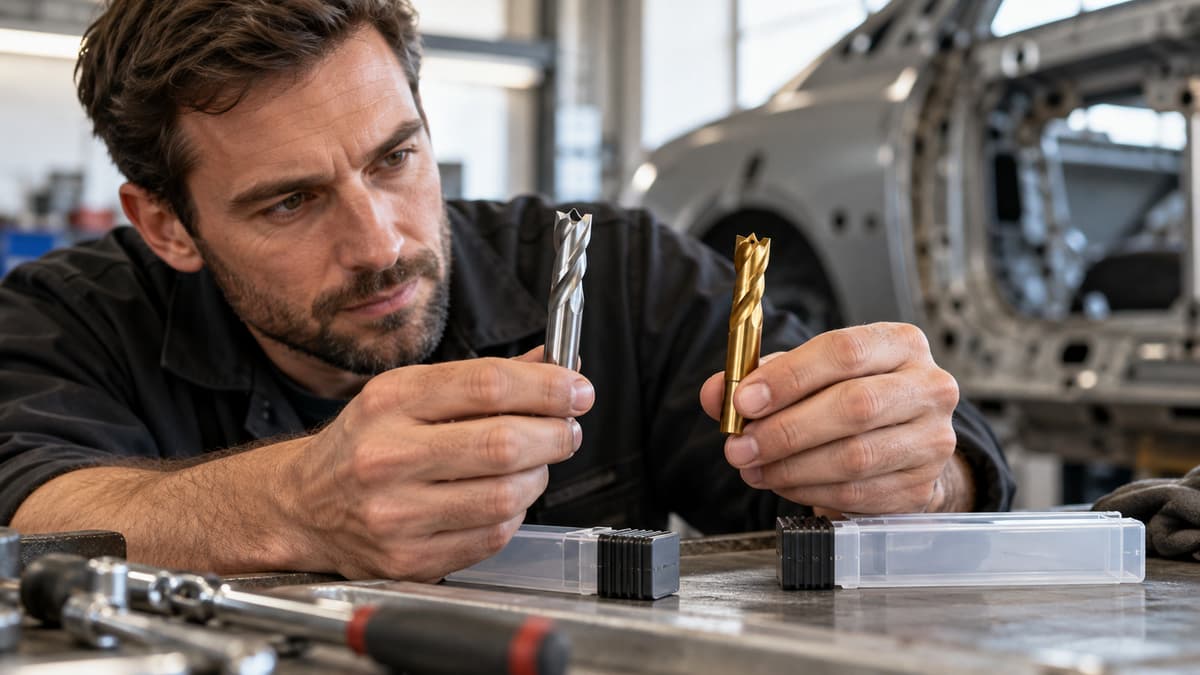
Cobalt or a gold coating
A gold colour is a finish. Five percent cobalt is a sentence in the listing.

Centre-punch the weld before you cut
If the cutter skates on the paint, the pin or the nib has nowhere to sit.

What speed to run a spot weld cutter
One listing prints a speed. Do not copy that number onto a bit that never stated it.