Independent comparisons. We may earn from shop links. More info

Porthole in a fire door

Updated: October 2026

A flat internal door that might be FD30 or FD60 is not a leaf you finish with a marketplace porthole. A porthole in a fire door is allowed only when that vision panel sits inside the door's own test evidence. If you cannot tell whether the door is a fire door, you do not cut it. The listings are on the [porthole comparison](/hub/door-and-window-security/porthole). Peter F. used British Woodworking Federation guidance, Approved Documents B and K, and the listings saved on 19 October 2026. We did not test a door. A qualifying purchase can earn a commission at no extra cost to you.

A flat internal door that might be FD30 or FD60 is not a leaf you finish with a marketplace porthole. A porthole in a fire door is allowed only when that vision panel sits inside the door's own test evidence.

Our top picks

MLS MLS porthole B4000

Best overall

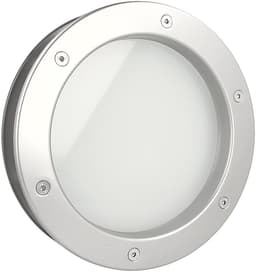
MLS MLS porthole B4000
7.8/10about £77.42
On this page

A fire door is not a DIY cut

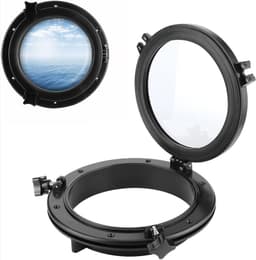
The British Woodworking Federation's installation guidance, and Fact Card 1 on certification, say never to cut glazing apertures on site. Fact Card 12 goes further for the BWF scheme: even an approved cutter does not cut the aperture on site, and a glazed fire door should carry a permanent label or plug that identifies the glass and the door. The glass, the glazing system and the door blank are one piece of evidence. Approved Document B is the fire-safety guidance for England. Scotland and Wales have their own technical handbooks. BS 8214:2026, in the commentary fire-safety readers use, treats apertures as something the door was tested with. A cut-out outside that evidence can invalidate the approval. If the door has a fire-door label, a coloured plug, or a closer and cold smoke seals, ask the building manager or the door maker before anyone marks a circle. None of the twelve listings claims a fire rating. The MLS B4000 at about £77.42 states an interior door of 40 mm plus or minus 2 mm and still does not claim FD30 or FD60. The HouYeen, the top pick, and the GAESHOW, the best value, are ABS portlights. Specify a vision panel tested with that door design.

What has to be tested together

The tested package is the glass, the glazing tape or seal, the liner or bead, and the door blank, in the sizes and positions the evidence allows. Change the glass, leave out the intumescent liner, or cut a circle the evidence never had, and you no longer have the door that was tested. Fact Card 12 expects a licensed processor and a label or plug. ZEROplus sells circular porthole kits whose glass, tape and liner were tested together, in stated thicknesses such as 40, 44, 50 and 54 mm, with fire-rated and non-fire-rated options. Those kits are not ASINs in this comparison, and this page is not a review of them. A 40 mm Amazon unit is the wrong guess for a 44 mm fire-door blank.
MLS MLS porthole B4000

Testsieger

MLS MLS porthole B4000
7.8/10about £77.42

Laminated is not fire-rated

The MLS page describes the pane as VSG, laminated glass, with a matte finish. Fire performance is the whole doorset holding for a stated period, with the glazing system that was tested. A laminated line does not add intumescent tape, a liner, or evidence that this circle was in the furnace test. No listing in the set prints a BS EN 12600 class. Tempered 4 mm on a boat portlight is not a fire-door glass system, and a mirror is not a vision panel. Skip the MLS for a fire door, and skip the portlights, the hatch and the wall hangings with it. The 4.6 from 157 on the MLS has no UK review text in the sample. Those reviews would still not be a fire test.

Ordinary internal doors

A normal internal door that is not a fire door is a different job. Approved Document K, requirement K4, treats glazing in doors as a critical location, because people walk into it. Safe breakage for a pane no wider than 900 mm is tied to BS EN 12600 Class 3. Class 2 is the wider-pane case. A 250 mm porthole is the narrower case, and Class 3 is still not printed on any listing here. VSG supports a question to the seller. It does not let you write Class 3 into the order. If the door is ordinary, about 40 mm, and you have checked the label and the building, the sequence is on how to fit a porthole in a door. Hollow leaves, uPVC, an external sealed unit and a boat hull stay with a professional. If the door might be a fire door, leave the jigsaw in the box.

Common questions

Can you cut the MLS porthole into a fire door?
No. The MLS B4000 does not claim a fire rating, and British Woodworking Federation guidance says not to cut glazing apertures on site. A fire-door vision panel has to be inside that door's test evidence. Clamping a ring at about £77.42 into a new circle does not recreate the test.
What if you do not know whether the door is a fire door?
Do not cut it. Look for a label or plug, cold smoke seals, a closer, or paperwork for a flat entrance. Ask the landlord, the managing agent or the door manufacturer. Guessing that it is only a bedroom door is how certificated doors get a hole they were not tested with.
Does laminated glass make it fire-rated?
No. VSG on the MLS listing means laminated, and the page does not state a fire period, an intumescent liner, or a door-blank approval. Laminated glass can be relevant to impact on an ordinary door. Fire performance is the tested doorset, not the word VSG.
What should a proper fire-door vision panel include?
Glass, glazing tape or seal, and a liner or bead, in a door blank that was tested with that aperture, plus a label or plug that identifies the glass. Fact Card 12 describes the scheme version of that package. A marketplace porthole in this set lists none of those fire-door parts.
What about a normal internal door that is not a fire door?
Then you are outside this refusal, and you still need glass that is safe if someone walks into it. Approved Document K applies to door glazing. None of these listings prints a BS EN 12600 class. The fitting steps for that ordinary door are on the how-to page, after you have confirmed the door is not certificated.
Does Approved Document K apply to a 250 mm pane?
Yes. Glazing in a door is a critical location even when the circle is small. Class 3 is the safe-breakage class named for panes up to 900 mm wide. Class 2 is the wider-pane case. The MLS pane is about 250 mm across the frame, and the listing still does not print a class, so you cannot claim Class 3 from the letters VSG.
Who should do the work?
A competent joiner or a fire-door specialist should handle a fire door, an unknown leaf, uPVC, a security door, or an external door that needs a sealed unit. A householder who has confirmed a normal interior door, and has the stated thickness, can follow the ordinary fitting page. The fire door is not that page with extra care.

Related pages

Sources

Public UK sources for glazing and craft rules, plus the MLS catalogue for the cut-out. Shelf figures are the amazon.co.uk files used on 19 October 2026. Euro prices in the catalogue are not the UK price.

  1. Approved Document K, protection from falling, collision and impact (retrieved 19 October 2026)
  2. Approved Document B, fire safety (retrieved 19 October 2026)
  3. British Woodworking Federation, machining of apertures (retrieved 19 October 2026)
  4. BS 8214:2026 commentary on fire-door glazing (retrieved 19 October 2026)
  5. Recreational Craft Regulations 2017, Schedule 2 (retrieved 19 October 2026)
  6. GOV.UK guide to the Recreational Craft Regulations 2017 (retrieved 19 October 2026)
  7. ISO 12216:2020 windows, portlights, hatches and doors (retrieved 19 October 2026)
  8. MLS catalogue, porthole 0180-0160-A6 (retrieved 19 October 2026)