Independent comparisons. We may earn from shop links. More info

How to fit cabinet hinges

Updated: October 2026

You are hanging a cupboard door and the packet is either a 35 mm cup or a flat plate. How to fit cabinet hinges starts there. A concealed hinge needs a bored cup. A surface hinge in this set screws to the face, with no adjustment screws to rescue a bad gap. Peter F. wrote this in October 2026 from UK fitting notes and the amazon.co.uk listings in our [hinges comparison](/hub/door-and-window-security/hinges). We did not hang the doors ourselves. A qualifying purchase through our links can earn us a commission at no extra cost to you. The millimetres below are one fitter's method or a named listing. Still choosing the family? Use the [cabinet hinges buying guide](/hub/door-and-window-security/hinges/sub/hinges-buying-guide) first.

You are hanging a cupboard door and the packet is either a 35 mm cup or a flat plate. How to fit cabinet hinges starts there. A concealed hinge needs a bored cup.

Our top picks

On this page

Look at the hinge before you drill

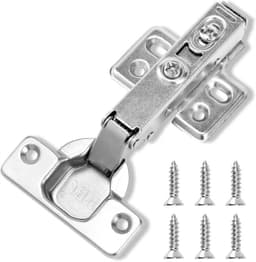
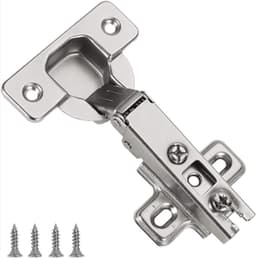
Take the old hinge off before you drill. Match cup diameter, listed cup depth, screw pattern, clip-on or slide-on, overlay, and angle. Häfele UK separates 45/9.5 mm, 48/6 mm and 52/5.5 mm, so a hinge that misses the old screws is the wrong pattern. If the holes are already there, you are matching them, not choosing a new layout. The plate has to suit the arm. The top pick, HBL, is clip-on with three-way adjustment, and it does not print 35 mm in the bullets. Furniware's 110° pair is slide-on with a 35 mm cup and needs its own plate. A clip plate under a slide arm leaves the door in your hand. The Furniware 90° and 170° packs have no cup, so skip the Forstner bit.

A concealed cup, as one fitter does it

DIY Doctor's method for a 35 mm concealed hinge marks centres about 85–100 mm from the top and bottom, sets the cup about 22 mm in from the edge, and bores with a 35 mm Forstner bit to about 11–12 mm. Stop there. An about 18 mm door has little timber left under that bore. Eurofit Direct's own hinges use 21.5 mm in and 12 mm deep. Furniware's 110° pair lists cup depth 11.5 mm and doors of 14–22 mm. That 11.5 mm is their listing, not a universal drill depth. AOLISHENG states doors of 16–20 mm. Häfele's check is to drill slowly and sit the hinge in the hole before you go deeper. Use a Forstner bit, because a spade bit leaves a point.

Hang the door and use the three adjustments

A concealed hinge with three-way adjustment moves the door up, sideways and in. Bosch DIY's UK page names those three directions and says to level the cabinet first. If the carcase is racked, the screws cannot square the door. Häfele and Eurofit disagree on which screw moves which way, so follow the hinge in your hand. On Eurofit, height is on the plate, side is the front arm screw, and depth is the rear arm screw. Turn one screw, close the door, and read the gap. If the door still misses the edge or will not share a stile, the crank is wrong. That split is on the full overlay and half overlay page. Damping belongs on the soft-close cabinet hinges page.

A surface hinge is screws, not a cup

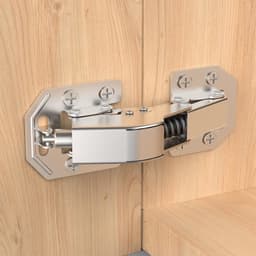
Furniware's 90° and 170° packs screw to the door and the frame, with no cup. The 170° pack states doors of 16–30 mm and a 15 kg load. Reviews of the 90° pack say you cannot adjust the gap. A card packer can nudge a small gap, and it will not true a twisted carcase. Offer the door up on the gap you want, mark both leaves, pilot, and fix. AOLISHENG's 90° hinge is a concealed cup for a blind corner, so a flat plate will not copy that swing. Call a fitter if the run is out of square, if the face is already broken, or if the door is a fire door or a flat entrance. The best value in the wider comparison, the APACALI 24-pack, does not print a cup depth, so it is the wrong packet to learn a bore from.

Common questions

How do I fit a concealed cabinet hinge?
Confirm it is a cup hinge, then mark, bore, and test the cup before you screw it. DIY Doctor's 35 mm example uses centres about 85–100 mm from the ends, a cup about 22 mm in, and a depth of about 11–12 mm. Eurofit Direct uses 21.5 mm in and 12 mm deep on their range, which includes 26 mm and 40 mm cups. Existing holes should be matched rather than redrawn.
How deep can I drill the cup before I break through the door?
DIY Doctor stops near 11–12 mm on an about 18 mm door, because little timber remains. Eurofit Direct states 12 mm for their cups. Furniware's 11.5 mm on the 110° pair is that listing's cup depth, not a depth for every door. Häfele says drill slowly and try the hinge before you go deeper. Once the face breaks, that door is scrap.
What if the new hinge does not match the old screw holes?
The pattern or the plate is wrong for that door. Häfele treats 45/9.5 mm, 48/6 mm and 52/5.5 mm as different layouts, and adjustment screws will not pull the arm across to missed holes. Match cup, pattern, clip or slide, overlay and angle first. A new row of holes beside the old ones weakens the edge. If nothing fits, change the door or ask a fitter to set the hinges out again.
How do I adjust a concealed hinge up, sideways and in?
Use the three directions only if the hinge has them, one screw at a time, after the cabinet is level, as Bosch DIY (UK) describes. Eurofit sets height on the plate, side on the front arm screw and depth on the rear screw. Häfele's screws are arranged differently, so use the diagram in your hand. When the screws run out, Eurofit blames plate height, an out-of-square carcase, too few hinges, or mixed series.
Can I adjust a surface-mount cupboard hinge the same way?
Only a hinge that actually has adjusters can be tuned that way. Reviews of Furniware's 90° surface pack say the gap cannot be adjusted, which matches screws-only fixing. You can move the leaves before you drive the screws, or slip a thin packer under one side. A packer will not square a twisted carcase. Eurofit's 90° surface hinge caps the door at 18 mm. Furniware's 170° pack states 16–30 mm.
When should I stop and call a fitter?
Stop when the run is out of square, the face is already broken, or the leaf is a fire door or an entrance. More hinges will not straighten a racked carcase, and this is not a fire-door method. A single matched door is fair work if you pilot and test the depth. If every door needs the same shove, the units need a fitter.

Related pages

Sources

Public sources from the research digest, last checked on 21 October 2026. Prices and review counts are amazon.co.uk listings, not a laboratory test.

  1. GAI guide to BS EN 1935:2002 (retrieved 21 October 2026)
  2. HOPPE: BS EN 1935 coding (retrieved 21 October 2026)
  3. London Fire Brigade GN92 (retrieved 21 October 2026)
  4. GOV.UK: fire safety England regulations 2022, fire door guidance (retrieved 21 October 2026)
  5. Häfele UK: cabinet hinge FAQs (retrieved 21 October 2026)
  6. ABC Home: kitchen cabinet door hinge types (retrieved 21 October 2026)
  7. e-Hardware: gate hinges guide (retrieved 21 October 2026)
  8. Consumer Rights Act 2015 (retrieved 21 October 2026)