Mortice door knobs: what to settle before the finish
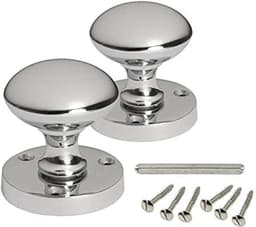
You are standing in front of an internal timber door whose round knob has gone loose, and the polished pair in the photo is the one you want. Mortice door knobs only work if the latch, the spindle and the backset already match that door. The finish is the last decision, and choosing it first is what sends sets back. This page is the order: set type, what is in the box, the bar through the latch, then spring, grip and the front-door limit. Prices for the eleven amazon.co.uk listings are on the [doorknob comparison](/hub/door-and-window-security/doorknob). Peter F. checked those listings in October 2026. A qualifying purchase can earn a commission at no extra cost to you.
You are standing in front of an internal timber door whose round knob has gone loose, and the polished pair in the photo is the one you want.
You are standing in front of an internal timber door whose round knob has gone loose, and the polished pair in the photo is the one you want. Mortice door knobs only work if the latch, the spindle and the backset already match that door. The finish is the last decision, and choosing it first is what sends sets back. This page is the order: set type, what is in the box, the bar through the latch, then spring, grip and the front-door limit. Prices for the eleven amazon.co.uk listings are on the doorknob comparison. Peter F. checked those listings in October 2026. A qualifying purchase can earn a commission at no extra cost to you.
Our top picks
| Badge | Product | Set type | Latch in the box | Sprung on the listing | Note | Price | Offer |
|---|---|---|---|---|---|---|---|
| Best overall |  CML Hardware CML keyed entry ball set | Keyed entry set | Yes, adjustable latch | Not stated as sprung furniture | 8.0 | about £7.90 | View offer |
 HANDLESTORE Handlestore polished chrome sprung pair | Mortice pair | Not named; a review says none | Yes | 8.6 | about £10.99 | View offer | |
| Best value |  Sterling Sterling SRL8BK black rim pair | Rim pair | No; spindle and screws are named | Not stated | 8.2 | about £6.99 | View offer |


On this page
Start with the door, not the finish
What the box must contain
Spindle, backset, and spring
Finish, grip, and the front door
Common questions
Do mortice knobs come with a latch?
Why is a short latch awkward with a round knob?
When is a dummy the right buy?
Can a keyed ball knob stand in for a BS 3621 lock?
What should I measure before I order?
Related pages
Sources
Public UK and manufacturer sources from the research digest, used for this page in October 2026. Prices, stars and review counts are the amazon.co.uk figures in this comparison. None of these knobs is treated as BS 3621, BS 8621 or Secured by Design.
- BSI, BS EN 1906:2012 (retrieved October 2026)
- HOPPE UK: BS EN 1906 (retrieved October 2026)
- Approved Document M, Volume 2 (retrieved October 2026)
- Approved Document Q, 2015 (retrieved October 2026)
- Guild of Architectural Ironmongers, accessibility guide (2021) (retrieved October 2026)
- Secured by Design: doors, front and back (retrieved October 2026)
- More Handles, tubular latch guide (retrieved October 2026)
- Suffolk Latch Company: door knobs with locks (retrieved October 2026)