How to fit door hinges
The door is on the floor, or one hinge has pulled, and you want to know how to fit door hinges without a second trip for longer screws. This sequence is for a non-fire internal timber door and a butt hinge. Mark both leaves together, cut only as deep as the leaf, pilot the screws, and stop if the door is certified. A 35 mm cupboard cup is a different job. The positions below are a domestic rule of thumb, not a fire-door certificate. Shelf packs are on the [door hinges comparison](/hub/door-and-window-security/door-hinges). Which family to buy is the [door hinges buying guide](/hub/door-and-window-security/door-hinges/sub/door-hinges-buying-guide). Peter F. used UK hanging guides and the kept listings, updated October 2026. This is not a lab test. A qualifying purchase can earn a commission at no extra cost to you.
The door is on the floor, or one hinge has pulled, and you want to know how to fit door hinges without a second trip for longer screws. This sequence is for a non-fire internal timber door and a butt hinge.
The door is on the floor, or one hinge has pulled, and you want to know how to fit door hinges without a second trip for longer screws. This sequence is for a non-fire internal timber door and a butt hinge. Mark both leaves together, cut only as deep as the leaf, pilot the screws, and stop if the door is certified. A 35 mm cupboard cup is a different job. The positions below are a domestic rule of thumb, not a fire-door certificate. Shelf packs are on the door hinges comparison. Which family to buy is the door hinges buying guide. Peter F. used UK hanging guides and the kept listings, updated October 2026. This is not a lab test. A qualifying purchase can earn a commission at no extra cost to you.
Our top picks
| Badge | Product | Finish | Stated load | Screws | Note | Price | Offer |
|---|---|---|---|---|---|---|---|
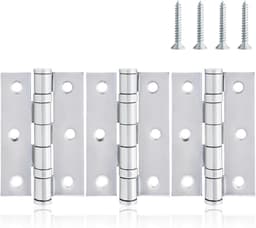
| Best overall |  XFORT XFORT 3 inch polished chrome, 3 pack | Polished chrome | 40 kg | Yes, 18 | 9.4 | about £9.99 | View offer |
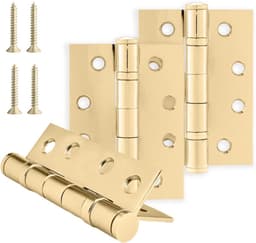
| Best value |  XFORT XFORT 4 inch polished brass, 3 pack | Polished brass | 80 kg | Yes, 24 | 9.4 | about £12.99 | View offer |
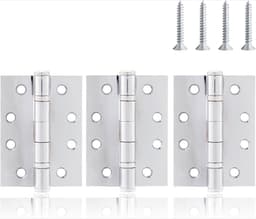
 XFORT XFORT 4 inch polished chrome, 3 pack | Polished chrome | 80 kg | Yes, 24 | 9.4 | about £12.99 | View offer |
On this page
Mark the door and the frame together
Cut a flush mortice and drill pilots
Hang, test, and stop
When to stop
Common questions
How far from the top should the first hinge sit?
How deep do I cut the recess?
Should I drill pilot holes?
Can I reuse the old screw holes?
When should I stop and call a joiner?
Related pages
Sources
Public sources from the research digest, last checked on 21 October 2026. Prices and review counts are amazon.co.uk listings, not a laboratory test.
- ASSA ABLOY UK: hinges, key facts and features (retrieved 21 October 2026)
- Lloyd Worrall: BS EN 1935:2002 single-axis hinges (retrieved 21 October 2026)
- BWF Fire Door Alliance: fire door hardware (retrieved 21 October 2026)
- DHF/GAI code of practice: hardware for fire and escape doors, issue 5 (retrieved 21 October 2026)
- GOV.UK: Approved Document B fire safety frequently asked questions (retrieved 21 October 2026)
- Titus UK: a specifier's guide to soft-close cabinet hinges (retrieved 21 October 2026)
- Wickes: how to fix door problems (retrieved 21 October 2026)
- Ian Firth: hinge FAQ (retrieved 21 October 2026)