Ball bearing door hinges or a plain butt
Two hinges can look the same on the edge of the door: leaves, a pin, and a row of knuckles. One is plain, one has washers, and one has ball bearings. The ball bearing door hinges question is which your door needs, not which title sounds heavier. Bearings earn their place on a heavy leaf or when a closer is pulling the door shut. A light internal door can live on a plain or washered knuckle. A ball-bearing line is still not a fire grade, and a title can be wrong. Leaf size is the [door hinges buying guide](/hub/door-and-window-security/door-hinges/sub/door-hinges-buying-guide). The packs that state a bearing are on the [door hinges comparison](/hub/door-and-window-security/door-hinges). Peter F. used UK hinge guidance and the kept listings, updated October 2026. We did not cycle-test a knuckle. A qualifying purchase can earn a commission at no extra cost to you.
Two hinges can look the same on the edge of the door: leaves, a pin, and a row of knuckles. One is plain, one has washers, and one has ball bearings.
Two hinges can look the same on the edge of the door: leaves, a pin, and a row of knuckles. One is plain, one has washers, and one has ball bearings. The ball bearing door hinges question is which your door needs, not which title sounds heavier. Bearings earn their place on a heavy leaf or when a closer is pulling the door shut. A light internal door can live on a plain or washered knuckle. A ball-bearing line is still not a fire grade, and a title can be wrong. Leaf size is the door hinges buying guide. The packs that state a bearing are on the door hinges comparison. Peter F. used UK hinge guidance and the kept listings, updated October 2026. We did not cycle-test a knuckle. A qualifying purchase can earn a commission at no extra cost to you.
Our top picks
| Badge | Product | Bearing | Stated load | Hinge type | Note | Price | Offer |
|---|---|---|---|---|---|---|---|
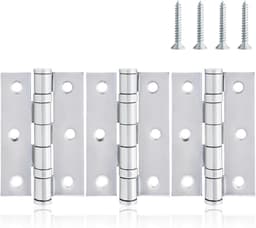
| Best overall |  XFORT XFORT 3 inch polished chrome, 3 pack | Ball bearing | 40 kg | Butt | 9.4 | about £9.99 | View offer |
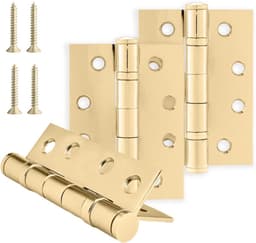
| Best value |  XFORT XFORT 4 inch polished brass, 3 pack | Ball bearing | 80 kg | Butt | 9.4 | about £12.99 | View offer |
 GBACHOOSE GBACHOOSE 4 inch stainless, 10 pieces | Disputed | n/a | Butt | 9.2 | about £22.29 | View offer |

On this page
What is actually in the knuckle
When bearings are worth it
What a listing can still get wrong
Bearings do not fix the finish
Common questions
Do I need ball bearings on a hollow internal door?
Will bearings stop a squeak forever?
Is a washered hinge a middle option?
What if the title says ball bearing and a review says it is not?
Should a door with a closer use a plain knuckle?
Related pages
Sources
Public sources from the research digest, last checked on 21 October 2026. Prices and review counts are amazon.co.uk listings, not a laboratory test.
- ASSA ABLOY UK: hinges, key facts and features (retrieved 21 October 2026)
- Lloyd Worrall: BS EN 1935:2002 single-axis hinges (retrieved 21 October 2026)
- BWF Fire Door Alliance: fire door hardware (retrieved 21 October 2026)
- DHF/GAI code of practice: hardware for fire and escape doors, issue 5 (retrieved 21 October 2026)
- GOV.UK: Approved Document B fire safety frequently asked questions (retrieved 21 October 2026)
- Titus UK: a specifier's guide to soft-close cabinet hinges (retrieved 21 October 2026)
- Wickes: how to fix door problems (retrieved 21 October 2026)
- Ian Firth: hinge FAQ (retrieved 21 October 2026)