How to fit a barrel bolt
You have a surface bolt and a timber door, and the job fails in one of two ways: the shoot binds, or a screw head shears before the keep is even on. How to fit a barrel bolt is mostly alignment. One screw goes in loosely, the body is levelled, and the keep is marked with the shoot already thrown. This page is that sequence, plus the two failures reviewers actually report. It is not a ranking of the twelve listings on the [door bolt comparison](/hub/door-and-window-security/door-bolt). Peter F. followed DIY Doctor and Handle King, with the review pattern from those amazon.co.uk listings, updated October 2026. A qualifying purchase can earn a commission at no extra cost to you.
You have a surface bolt and a timber door, and the job fails in one of two ways: the shoot binds, or a screw head shears before the keep is even on. How to fit a barrel bolt is mostly alignment.
You have a surface bolt and a timber door, and the job fails in one of two ways: the shoot binds, or a screw head shears before the keep is even on. How to fit a barrel bolt is mostly alignment. One screw goes in loosely, the body is levelled, and the keep is marked with the shoot already thrown. This page is that sequence, plus the two failures reviewers actually report. It is not a ranking of the twelve listings on the door bolt comparison. Peter F. followed DIY Doctor and Handle King, with the review pattern from those amazon.co.uk listings, updated October 2026. A qualifying purchase can earn a commission at no extra cost to you.
Our top picks
| Badge | Product | Type | Screws included | Operation | Note | Price | Offer |
|---|---|---|---|---|---|---|---|
| Best overall |  SAYAYO SAYAYO padlock-hole slide bolt | Slide bolt with padlock hole | Yes | Hand slide | 9.2 | about £8.49 | View offer |
| Best value |  JelKen JelKen 75 mm slide bolt, silver | Slide bolt | Yes, 6 | Hand slide | 9.0 | about £3.79 | View offer |
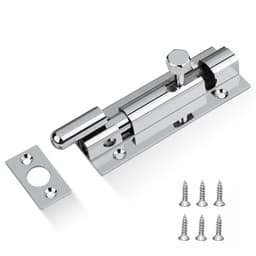
 n/a Necked barrel bolt 75 mm, chrome | Necked barrel bolt | Yes, count n/a | Hand slide | 8.8 | about £4.99 | View offer |


On this page
Before you drill
Fix the bolt
Fix the keep
If it sticks or the screw snaps
When to stop
Common questions
How big a pilot hole?
How do I mark the keep?
What if the architrave sticks out?
The bolt sticks. Is it the bolt or the timber?
The screw head snapped. What then?
Related pages
Sources
Public UK sources from the research digest, used for this page in October 2026. Prices, stars and review counts are the amazon.co.uk figures on the twelve listings. No BS EN 12051 grade is claimed, because none of the listings prints the code.
- DHF: bolts to BS EN 12051:2000 (retrieved October 2026)
- Secured by Design: locks and associated hardware (retrieved October 2026)
- ProtectUK: security at home (retrieved October 2026)
- Secured by Design: secure sheds and outbuildings (retrieved October 2026)
- IronmongeryDirect: which type of door bolt (retrieved October 2026)
- The Crime Prevention Website: other door locks and bolts (retrieved October 2026)
- DHF: requirements for escape doors (retrieved October 2026)
- Master Locksmiths Association: minimum security requirements, January 2025 (retrieved October 2026)