Independent comparisons. We may earn from shop links. More info

Decking pedestals for a shed base on a hard pad

Updated: 23 October 2026

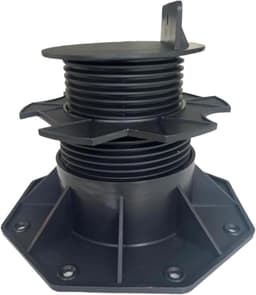
The concrete pad under the shed is out of level, the old bearers have softened, and you want the new timber floor off the damp surface. Decking pedestals for a shed base, in this comparison, are the same screw-adjustable plastic joist feet used for a low deck. They can level a small timber frame on that pad. They are a different product from a steel shed-jack kit, and they are a poor footing on grass. The [pedestal comparison](/hub/diy-supplies/pedestals) lists the eight amazon.co.uk packs. This page stays on the shed. We read the UK review text and the public shed-base pages on 21 October 2026. We did not load-test a cabin. A qualifying purchase can earn a commission at no extra cost to you.

The concrete pad under the shed is out of level, the old bearers have softened, and you want the new timber floor off the damp surface.

Our top picks

On this page

What reviewers actually stood on them

The jobs in the saved listings are small and they are on hard surfaces. Ceta reviews, shared across the 30–60 mm and 60–140 mm ASINs, describe a shed on an uneven concrete pad with feet at about 300 mm spacing, an 11×7 shed base, and planters lifted off wet concrete. One of those jobs had been in place for about a year when the review was written. Nicoman reviews mention a shed base. UGEBROGH reviews mention small sheds on paving or a slab. BURMONG reviews mention a shed and, separately, a 5×5 m deck. That is the evidence for these exact listings. It is a set of owner notes, not a structural calculation. The pad has to be the base. Reviewers are compensating for an uneven slab, not replacing a missing one. A cracked pad that rocks will let a plastic foot settle after you have levelled the joists. “No preparation” on some steel-base product pages is that maker’s claim for a hard surface that is already sound. It is a weak reason to ignore a hollow or broken slab. The plastic does not treat the timber. A pedestal lifts the wood off the concrete. It does not turn untreated timber into a ground-contact specification.

Height and how many pieces a small floor needs

Measure the gap under the bearer at the high corner and the low corner, in millimetres. Many shed pads only need 30–60 mm. That is the Ceta ten-pack at £23.99, the UGEBROGH 24-pack at £43.99, the Jevervd 24-pack at £55.99, or the BURMONG 24-pack at £79.99. If the low corner is nearer 100 mm, because the pad falls away or the old slab was poured to a slope, the 60–140 mm title is the one that reaches. The short collar runs out of thread. The adjustable decking pedestals buying guide separates those bands, including the Ceta bullets that name three heights on one ASIN. Count the supports before you trust the carton. A reviewer needed 12 pedestals for an 11×7 shed base, so a pack of ten was short by two, with nothing left if a tab snaps. An 8×6 shed is about 2.4 m by 1.8 m. At the 300 mm spacing one reviewer used, you are in the teens of feet along each bearer line, and a single ten-pack is a gamble. Ceta’s seller line of six to eight per square metre, applied to an 8×6, is roughly 27 to 36 feet. Those two methods disagree. Lay the bearers out, mark each support, and buy to the marks, with a spare. The 300 mm figure is one shed. It is not a span table.

Plastic feet or a steel shed base

Search “adjustable shed base” in the UK and you often land on steel, not on polypropylene joist heads. QuickJACK HS is sold as a steel bracket for concrete, paving and tarmac. A1 Sheds states a test of 150 kg per bracket, and the adjustment is described as up to about 100 mm. Shedstore describes kit 1 for sheds about 4×3 to 6×5, with a 10-year warranty on that page. You build a timber frame and the brackets fix to it. That is a corner-and-side system for a shed, with a stated test those pages publish for their own product. It is not a rating you can move onto Ceta or BURMONG. Swift Leveller Mini is sold for concrete and tarmac with a 50–70 mm void and a stated 1,800 kg. Swift Leveller Flexi is the soft-ground version, for grass, soil and hardcore, with 35–175 mm and a stated 2,500 kg. Those kilograms belong to Swift’s pages. They are not evidence for an amazon pedestal. Choose the plastic pack when you already have joists, the pad is sound, and the gap fits a title band. Choose a steel kit when you want a shed-specific bracket and a published bracket test. Paying BURMONG’s £79.99 because 480 kg sounds like Swift’s 1,800 kg mixes two sellers’ claims.

Grass, a dug-in foot, and a cabin

Grass is outside the evidence. On the Ceta listing the grass question appears as a prompt, and the reviews that describe a finished job are on concrete. Jouplast, writing about joist pedestals generally, says joists should not lie on the ground and that unprepared soil or lawn can move. A plastic foot pressed into turf will settle with the soil, and the shed door that closed in April will bind by autumn. Swift’s Flexi is the product sold for that ground. These eight ASINs are not. Digging the pedestal in, or burying the base to chase a level, removes the hard bearing the reviews rely on. The foot is meant to sit on the pad, with the collar doing the millimetres. A hole in the lawn is a post foundation, and a post is a different design. A cabin is the other refusal. One review mentions a subframe on a cabin of about 4.3 m. That is a single note. It is not a design for log cabins, and it does not license the seller load lines as a cabin footing. For a small timber shed on a sound, uneven pad, with enough pieces that a ten-pack does not run out, the plastic pedestal is a fair way to level the frame.

Common questions

Can I put these under a timber shed on a concrete pad?
Yes, when the pad is sound and the gap fits the title band. Ceta reviews describe a shed on an uneven concrete pad and an 11×7 base. Nicoman, UGEBROGH and BURMONG reviews also mention sheds. You still want Use Class 4 joists, screws for the cradle unless the box is Jevervd, and a count that matches the supports you marked. A rocking or hollow slab should be repaired before the feet go down.
How many will an 8×6 or an 11×7 need?
One reviewer used 12 under an 11×7, so a pack of ten was short. An 8×6 at that reviewer’s 300 mm spacing also runs past ten. Ceta’s six to eight per square metre, on an 8×6, is roughly 27 to 36 feet. The two methods disagree because one is a shed the reviewer built and the other is a seller’s area claim. Mark the bearer supports and buy to the marks, with a spare for a snapped tab.
Is 30–60 mm enough?
It is enough when both corners of the pad sit inside 30–60 mm under the bearer. A gentle unevenness on a garage-side slab often does. If the low corner is nearer 100 mm, you need a 60–140 mm title, such as the taller Ceta ten-pack at £33.99. The short packs cannot wind up to that. Measure before you choose the cheaper 30–60 mm box.
Will they work on grass?
The reviews that describe a finished shed are on concrete or paving. Grass appears as a question prompt on the Ceta listing, not as a completed job. Unprepared soil moves. A steel product such as Swift Leveller Flexi is sold for grass and soil, with that maker’s own load line. These plastic packs are the hard-pad option.
Do I still need treated joists?
Yes. The pedestal lifts the bearer off the concrete and leaves an air gap. It does not preserve the timber. TDCA guidance for deck joists is Use Class 4, with C16 as a minimum for the spans they publish. A shed floor in a damp UK garden is the same exposure. Untreated timber on plastic feet can still rot at the screw holes.
Can the same packs carry a log cabin?
One review mentions a cabin subframe of about 4.3 m. That single note is not a foundation design. Seller lines of 1,662 kg/m² and 480 kg are not a British Standard test in these files, and they are not a cabin specification. A small timber shed on a pad is the job the reviews support. A cabin needs its own foundation advice.

Related pages

Sources

Public UK sources and the amazon.co.uk listings compared on this page. Listings captured 21 October 2026. Updated 23 October 2026.

  1. Planning Portal: decking planning permission (retrieved 21 October 2026)
  2. GOV.UK: permitted development rights technical guidance (retrieved 21 October 2026)
  3. GPDO 2015, Schedule 2, Part 1 (retrieved 21 October 2026)
  4. mygov.scot: add decking to a house (retrieved 21 October 2026)
  5. Scottish Government: Circular 1/2024, Class 3D (retrieved 21 October 2026)
  6. GOV.WALES: planning permission for decking (retrieved 21 October 2026)
  7. TDCA: The Timber Decking Handbook 2022 (retrieved 21 October 2026)
  8. TDCA: what to know about deck joists (retrieved 21 October 2026)
  9. Wallbarn: decking pedestals (retrieved 21 October 2026)
  10. Consumer Rights Act 2015, section 9 (retrieved 21 October 2026)