Independent comparisons. We may earn from shop links. More info

Adjustable decking pedestals: which height to buy

Updated: 23 October 2026

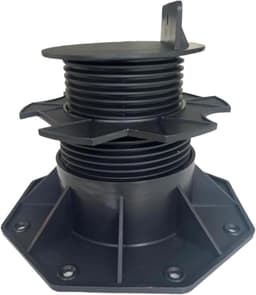
You have a sound slab or a run of paving, a timber or composite joist, and a gap that changes from one end of the run to the other. Adjustable decking pedestals in this set are screw-height plastic feet for that gap. They hold the joist off the hard base so you can level the frame and leave room for water to drain. This page is the order of the decision: measure the void, pick a band, then count pieces. The [pedestal comparison](/hub/diy-supplies/pedestals) holds the eight amazon.co.uk packs, with prices in GBP. We read those listings and the UK review text on 21 October 2026. We did not run a laboratory load test. A qualifying purchase can earn us a commission at no extra cost to you.

You have a sound slab or a run of paving, a timber or composite joist, and a gap that changes from one end of the run to the other. Adjustable decking pedestals in this set are screw-height plastic feet for that gap.

Our top picks

On this page

Measure the gap, not the deck height

Start with a tape at the high spot and the low spot, from the hard surface to the underside of the joist, in millimetres. That void is the number the collar has to cover. The finished floor is a different measurement: pedestal, plus joist, plus board. If you only write down the walking height you want, you will order a band that never reaches the low corner. A patio that looks flat often drops 15–20 mm over a couple of metres once a straight edge is on it. Write both numbers on the joist before you look at a brand. If they sit in different bands, the low end sets the taller pack, and the high end may need a shorter one, or a small packer on the slab. A collar with only 10 mm of travel, which is what the 18–28 mm range amounts to, cannot swallow a 20 mm fall. A collar that starts at 60 mm cannot wind down to a 40 mm gap. Old paving that rocks is a different problem from a true slab.

What each band in this set can and cannot do

Three bands are stocked in the eight kept listings. NBYTLT is the only 18–28 mm pack: 25 pieces at £39.99, about £1.60 each, with 5.0 from two reviews. That range is a thin slice under a joist that already sits close to the slab. Turning the ring further will not turn it into a 60 mm riser. Two reviews are a thin sample. The 30–60 mm packs are the ones the shed and paving reviews describe. Ceta’s ten-piece box is £23.99. UGEBROGH’s 24-pack is £43.99. Jevervd’s 24-pack is £55.99, and it is the row that lists screws. BURMONG’s 24-pack is £79.99. The 60–140 mm ten-packs are Ceta at £33.99, Vpukveer at £34.99, and Nicoman at £34.99. They do not wind down to 30 mm. On both Ceta ASINs the bullets also list 18–30 mm, 30–60 mm and 60–135 mm. Use the title range, and check the carton against that title when it arrives. None of these eight listings says the head is self-levelling. Both Ceta ASINs show 4.6 from 211 reviews, and many of the same UK texts appear in both files. Count that once. Once the band is fixed, best decking pedestals sorts who each pack is for.

How many pieces to order

Piece count is not one UK number. Ceta’s seller line says at least six to eight supports per square metre for its 1,662 kg/m² claim. Alpha Decking states about seven per square metre for its own plastic pedestals. EnviroBuild’s MESA guide derives the count from joist centres, about 3.5, 5.5 or 8 per square metre for its own 50×150, 50×100 and 50×50 mm bearers. Wallbarn’s own note is a maximum of 600 mm between its pads. One Ceta reviewer needed 12 pedestals for an 11×7 shed base, so a pack of ten ran out. Set the joist centres first, put a support at each crossing you need, and keep a spare for the low corner. “About seven” is one maker’s line, and it is a poor layout if your bearers are spaced differently.

Load claims and the 30 cm line

BURMONG states up to 480 kg per pedestal. Ceta states 1,662 kg/m² if you use at least six to eight supports per square metre. Treat both as seller bullets. The reviews you can read are sheds on pads, small decks, paving and planters. A hot tub, a cabin, or a roof membrane is outside that record. The kilogram line is not a footing design. Finished height differs by nation. In England the Planning Portal says a deck more than 30 cm above the ground is a raised platform. Further tests sit beside that one: not more than 50 per cent of the garden, not forward of the principal elevation, and houses rather than flats, with extra limits on designated land. A 140 mm pedestal under a 150 mm joist and a 25 mm board is already over 300 mm before you add a fall. Scotland’s Class 3D uses a 0.5 m floor limit. Wales has its own 30 cm page. In Northern Ireland, ask the council. Building regulations do not generally apply to ordinary decking, and you should assume they apply if planning permission is required.

Common questions

Do I need 30–60 mm or 60–140 mm?
Measure the void under the joist at the high spot and the low spot. If both numbers sit between 30 and 60 mm, a 30–60 mm pack is the one that can reach them, such as the Ceta ten-pack at £23.99 or a 24-pack if you need more feet. If the low spot is around 100 mm, the 60–140 mm title is the range that can reach it, and a 30–60 mm collar runs out of thread. One pack does not cover both bands. Ceta’s bullets name several ranges on one ASIN, so the title is the variant you are ordering.
Why do Ceta bullets list three heights on one title?
Ceta’s own site sells 18–30 mm, 30–60 mm and 60–135 mm as separate products. On amazon.co.uk the 30–60 mm ASIN and the 60–140 mm ASIN both carry bullets that list 18–30, 30–60 and 60–135 mm. The model field on both can read China 60-140. That is a catalogue clash. Order by the title range, and check the carton against that range when it arrives. The brand site sometimes copies the wrong range into a description, which is why the title check matters more than the bullet list.
Will the head take a 6x2 joist?
A Ceta reviewer said the head suits about 45 mm timber and will not centre a much wider joist. A 6x2 is often about 47 mm thick and 150 mm deep, so the thickness may be close and the depth is a span question for the timber. Wallbarn describes its own universal head as about 55 mm for a 4x2. Those are two makers’ notes, not a measurement of every head in this set. These listings are joist cradles, not slab heads for paving flags, and none states a self-levelling head.
Are screws in the box?
Jevervd’s included-components line names screws, on the £55.99 24-pack. Ceta reviews say screws are not supplied. NBYTLT, UGEBROGH, BURMONG and Vpukveer do not list them, even where the text tells you to screw the joist on. NBYTLT also says tool-free, which conflicts with that screw instruction. Buy exterior screws for your joist unless you have confirmed the Jevervd carton.
How many pedestals do I buy for a small deck?
There is no single UK count. A 3 m by 2 m frame at six per square metre is 36 pieces, which is more than one 24-pack: two 24-packs with a few left over, or four ten-packs. One reviewer used 12 under an 11×7 shed, so a pack of ten was short. Set the joist centres first, place a pedestal at each support, and add a spare for the low corner.
Does 1,662 kg/m² or 480 kg mean a hot tub is fine?
Both figures are seller bullets. Ceta’s 1,662 kg/m² assumes at least six to eight supports per square metre. BURMONG’s 480 kg is per pedestal. The amazon files do not include a British Standard test for either number. The UK reviews describe sheds, small decks and planters. A hot tub, a cabin or a roof membrane needs a design these listings do not provide. Consumer Rights Act 2015 section 9 still covers a collar that will not turn. It does not turn a seller load line into a certificate.

Related pages

Sources

Public UK sources and the amazon.co.uk listings compared on this page. Listings captured 21 October 2026. Updated 23 October 2026.

  1. Planning Portal: decking planning permission (retrieved 21 October 2026)
  2. GOV.UK: permitted development rights technical guidance (retrieved 21 October 2026)
  3. GPDO 2015, Schedule 2, Part 1 (retrieved 21 October 2026)
  4. mygov.scot: add decking to a house (retrieved 21 October 2026)
  5. Scottish Government: Circular 1/2024, Class 3D (retrieved 21 October 2026)
  6. GOV.WALES: planning permission for decking (retrieved 21 October 2026)
  7. TDCA: The Timber Decking Handbook 2022 (retrieved 21 October 2026)
  8. TDCA: what to know about deck joists (retrieved 21 October 2026)
  9. Wallbarn: decking pedestals (retrieved 21 October 2026)
  10. Consumer Rights Act 2015, section 9 (retrieved 21 October 2026)