Corrugated sheets for a shed roof
The felt has lifted along one edge and the timber feels soft, so you are looking at corrugated sheets for a shed roof. A metal skin can replace a failed cover when the frame will hold the screws. It does not replace rotten timber, and it does not answer planning for a building you have not put up yet. The packs on the [corrugated iron sheets comparison](/hub/diy-supplies/corrugated-iron-sheets) are short galvanised sheets, about 110 cm or 115 cm long, each stating 0.25 mm, with no anti-condensation fleece. Peter F. used those listings, the Planning Portal and UK maker notes. We did not re-roof a shed. A qualifying purchase can earn a commission at no extra cost to you.
The felt has lifted along one edge and the timber feels soft, so you are looking at corrugated sheets for a shed roof. A metal skin can replace a failed cover when the frame will hold the screws.
The felt has lifted along one edge and the timber feels soft, so you are looking at corrugated sheets for a shed roof. A metal skin can replace a failed cover when the frame will hold the screws. It does not replace rotten timber, and it does not answer planning for a building you have not put up yet. The packs on the corrugated iron sheets comparison are short galvanised sheets, about 110 cm or 115 cm long, each stating 0.25 mm, with no anti-condensation fleece. Peter F. used those listings, the Planning Portal and UK maker notes. We did not re-roof a shed. A qualifying purchase can earn a commission at no extra cost to you.
Our top picks
| Badge | Product | Colour | Claimed cover | Fixings | Note | Price | Offer |
|---|---|---|---|---|---|---|---|
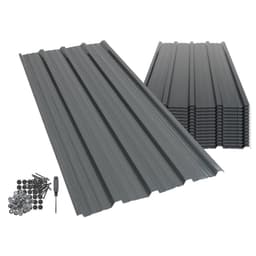
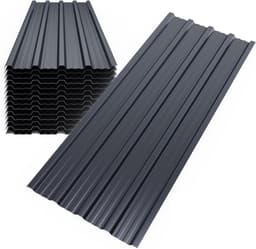
| Best overall |  Harbour Housewares Harbour Housewares anthracite 14-sheet pack | Anthracite | Up to 7 m² | Not in the bullets; reviews mention bolts | 7.4 | about £57.99 | View offer |
| Best value |  Mondeer Mondeer dark grey 14-sheet pack | Dark grey | 7 m² | Not in included components | 7.3 | about £53.99 | View offer |
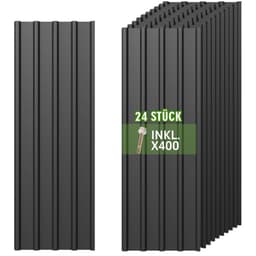
| Alternative |  Warmfay Warmfay black 24-sheet pack with screws | Black | 12.42 m² in the bullets; 11.88 m² unit count | 400 screws and washers stated | 5.7 | about £73.99 | View offer |
On this page
Felt that has failed
Over the felt or off
Pitch, laps and a small shed
Condensation
Planning and building regulations
Common questions
Can metal go over felt?
Will steel stop the felt blowing off?
Do I need planning permission to re-roof a shed?
What if the new shed is near the fence?
Why is the inside wet if the roof does not leak?
Related pages
Sources
Public UK sources and the amazon.co.uk listings compared on this page. Updated 22.10.2026.
- Planning Portal: Outbuildings (retrieved 22.10.2026)
- Planning Portal: Building regulations for an outbuilding (retrieved 22.10.2026)
- legislation.gov.uk: Class E outbuildings (retrieved 22.10.2026)
- Cladco: 13/3 corrugated datasheet (retrieved 22.10.2026)
- Cladco: Corrugated installation guide (retrieved 22.10.2026)
- HSE: Fragile surfaces (retrieved 22.10.2026)
- HSE: Using the right type of PPE (retrieved 22.10.2026)
- Briarwood: 13/3 declaration (retrieved 22.10.2026)
- Cladco: 13/3 galvanised corrugated roofing sheets (retrieved 22.10.2026)