Independent comparisons. We may earn from shop links. More info

Auger drill bit for fence posts

Updated: October 2026

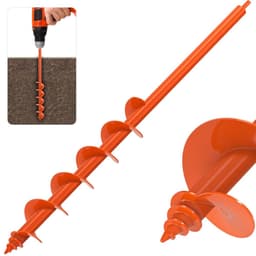
A listing called a post hole digger is how an auger drill bit for fence posts ends up in a chuck. The bit can loosen soil you have already judged clear of services. It does not, by itself, make the hole a fencing supplier describes. You still need depth, width, and a base for concrete or gravel, usually finished with a spade. The product cards are on the [Earth auger drill bit comparison](/hub/digging-tools/earth-auger-drill-bit). Nothing here is a building regulation, and nothing here was a site test of concrete. Peter F. compared the listings and the supplier notes in October 2026. A qualifying purchase can earn a commission at no extra cost to you.

A listing called a post hole digger is how an auger drill bit for fence posts ends up in a chuck. The bit can loosen soil you have already judged clear of services.

Our top picks

On this page

What a post hole is meant to be

Jacksons Fencing describes a typical UK garden post hole as about 600 mm deep and about three times the width of the post, and it tells you to check for mains before you dig. BSW Timber’s fencing guide is in the same region: roughly 600 mm deep, about three times the post width, gravel for drainage, then concrete. CE Clarke and DIY Doctor offer 600 mm, or about one-third of the above-ground height, as a starting rule of thumb, and they say gates and poor ground need more. That one-third line is a project-page rule of thumb, not a clause in the Building Regulations. Measure the timber you bought. A 1.8 m panel and a short picket are not the same hole. Width is the part a drill bit most often misses. A 100 mm post, at three times the width, wants a hole around 300 mm across. The widest flights in this set are about 8 to 10 cm, a bore for a stake, not a concrete collar. Jacksons and BSW assume aggregate can sit beside the timber. Six hundred millimetres is advice for a typical run, not a promise for every gate. Measure it against the number on the bit, not the advert. Diameter and shank are in the garden auger drill bit buying guide.

What these bits can reach

The green WORKPRO pair is 22 cm and 30 cm. The longer black WORKPRO pair prints 42 cm and 40 cm. K-Brands prints 41 cm. Suewidfay’s longest stated piece in the three-bit set is 37 cm. None of those reaches 600 mm in one pass. You can start a hole, lift the spoil, and dig the rest by hand, which is an honest use of a short bit in soil without large stones. The long singles are titled 60 cm (LYFETC 8 × 60 cm), 61 cm (BeneLabel), and 81 cm (Insaga, also written as 32 inches in the bullets). A 60 cm title can meet the Jacksons depth if the bit actually cuts that far and the hole stays open. It still leaves a narrow shaft. An 8 or 10 cm hole, 600 mm deep, is not the three-times-width footing. One K-Brands review describes a hole about 24 inches for a 3×3 post, using both bits. Twenty-four inches is about 610 mm, inside the supplier’s depth region, and it is one reviewer’s result with two 41 cm bits, not a specification. WORKPRO reviewers mention fence posts where the stones were not substantial. A deep narrow hole is still not a footing.

Clay, roots, and kickback

Reviews do not support a clean fence line through every garden. Stones stop the cut on the WORKPRO pages. BeneLabel reviewers also describe a rock that stops the bit and twists the wrist. K-Brands reviewers who got into stony ground said the small bit first, then the wider bit, and they warn about kickback and soil flung at high revs. No side handle comes in that box. Hands and clutch are on how to use a garden auger drill bit. If the flight packs clay instead of lifting it, you are polishing a socket. Stop and take the rest out with a spade. Gravel at the base, where BSW describes it, needs a hole you can get a trowel into. A 4 cm bulb bit will not place that layer.

When the drill bit is the wrong tool

Put the drill down for a gate, a tall fence on an exposed boundary, or ground you cannot read. CE Clarke and DIY Doctor already say gates and poor ground need more than the starting figure. A chuck bit that stalls in rubble will not become the right tool if you buy a longer one. Put it down when LSBUD, a meter, a cover, or a scar across the lawn says a service may be in the line. Jacksons tells you to check mains before digging. Call a fencer when the fence holds a gate, when the ground is roots or rubble, or when the work is under site rules. A powerhead, which GardenScout separates from a chuck bit, is the other tool for many holes in consistent soil. Keep the drill bit for loosening a short run of light posts, with a spade beside you. A 30 cm set can start the hole. It cannot be the whole footing. A 60 cm title might reach the depth and still leave you widening. Tulip spacing stays on bulb planting with an auger drill bit.

Common questions

How deep should a UK garden fence post hole be?
Jacksons and BSW describe about 600 mm for a typical hole, and about three times the post width. DIY Doctor’s one-third of the above-ground height is a rule of thumb, and gates or poor ground need more. It is supplier guidance, not a building regulation. Measure your post, then the hole. A dwarf picket and a 1.8 m panel are not the same job.
How wide should the hole be?
About three times the post width, so concrete or gravel has room beside the timber. A 100 mm post points towards something like 300 mm across. The bits in this set are about 4 to 10 cm wide. They can bore a pilot. They do not cut a 300 mm footing. Widen with a spade after the auger has loosened the middle.
Can a 30 cm auger set a 1.8 m fence?
Not as the finished hole. A 30 cm bit is half of a 600 mm depth, and an 8 cm flight is far narrower than three times a normal post. You can break the surface and lift some soil, then dig on by hand. Treating the 30 cm bit as the whole footing is how posts lean.
Will a 60 cm bit pour the concrete footing?
No. A bit titled 60 or 81 cm may reach the depth if it actually cuts, and the hole is still the width of that flight, often 8 to 10 cm, unless another field on the page says something smaller. Concrete and a hole wide enough for it are a spade job after the auger stops. Post hole digger on a title is not a poured foundation.
Do I still need a spade?
Yes, for almost every post that needs width and a clean base. The auger lifts a core. The spade brings the hole out to the supplier’s width, takes stones out, and lets you place gravel. A drill-only hole the width of the bit is a socket, not the hole Jacksons describes.
What do I check before the first hole?
The post against about 600 mm and about three times its width, the length printed on the steel, and the ground for services. If the cutting diameter disagrees with the title, do not start a row of holes on the larger number. Clay, roots, and a twisting drill are reasons to stop and call a fencer rather than to force the next post.

Related pages

Sources

Public UK sources from the research digest. Last checked in October 2026.

  1. HSE HSG47: Avoiding danger from underground services (retrieved 19 October 2026)
  2. HSE: Excavations and underground services (retrieved 19 October 2026)
  3. GOV.UK: General Product Safety Regulations 2005 (retrieved 19 October 2026)
  4. Consumer Rights Act 2015, goods contracts (retrieved 19 October 2026)
  5. LSBUD: Line search before you dig (retrieved 19 October 2026)
  6. RHS: Planting bulbs (retrieved 19 October 2026)
  7. Jacksons Fencing: How deep to dig fence posts (retrieved 19 October 2026)
  8. Electrical Safety First: Drills (retrieved 19 October 2026)