Independent comparisons. We may earn from shop links. More info

How to use a wet tile cutter

Updated: October 2026

The first time you put a tray saw on a kitchen table, the worry is water next to a 230 V lead, not the brand on the guard. How to use a wet tile cutter is a short sequence: sit the saw level, test an RCD, wet the rim, let the blade reach speed, then feed the tile without forcing it. The [wet tile cutter comparison](/hub/cutting-tools/wet-tile-cutter) is for choosing a machine. This page is the procedure for a hired saw or a compact tray. Porcelain chipping gets one pointer, not the whole argument. If you still need the type, go back to the [wet tile cutter buying guide](/hub/cutting-tools/wet-tile-cutter/sub/wet-tile-cutter-buying-guide). A qualifying purchase can earn a commission at no extra cost to you. Peter F., DIY & tools editor, 20 October 2026. This is not a lab test.

The first time you put a tray saw on a kitchen table, the worry is water next to a 230 V lead, not the brand on the guard.

Our top picks

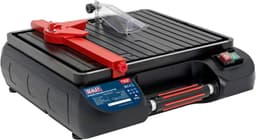
Sealey Sealey TC115

Alternative

Sealey Sealey TC115
6.4/10about £90.99
On this page

Set the saw up before you fill it

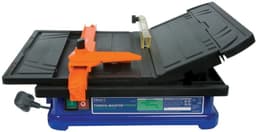
Put the saw on a level, wipe-clean bench that can take slurry. A folding wallpaper table that rocks will twist a cheap fence and throw the cut. Route the mains lead away from the tray and away from the floor you are about to wet. If the saw is the Einhell, there is no lead; keep the battery pack out of standing water and treat the tank the same way you would treat a tray. Fit the guard and the fence before any water goes in. Doncaster Tool Hire’s tile-saw leaflet, written for hired 230 V machines, tells you to wear goggles and hearing protection, to use an RCD, and to keep the rim in the water. HSE’s electrically powered equipment page says a residual current device at not more than 30 mA is additional protection and must be tested with the button before you switch on. That is the home check as well as the site check. Press the test button. If the RCD does not trip, do not fill the tray. Check the blade is the right way round, the lock is tight, and the fence is square to the disc. The Vitrex has a mitre guide, a rip guide and a splash guard that lifts for a plunge. The Sealey has a parallel fence and a 45° guide. The Einhell has a parallel stop and an angle stop. Set those dry. Unplug a mains saw before you change a blade or move a guard. The Einhell is a battery tool: take the pack off before you put a spanner on the disc. A handheld hose saw is a different set-up. The MXBAOHENG listing includes a 5 m hose and a removable nozzle. Plan where the water will run before you open a tap. Do not drape a 220 V lead, if that is what arrived, across the puddle. Only then add water.

Wet the rim, then start the blade

Clean water only. DeWalt’s UK manual for a different pump saw says fill until the pump is submerged and use no other liquid. That is method, not a spec for the Vitrex. On a tray saw the rule is simpler: the diamond rim must run in the water for the whole cut. If the disc is spinning dry, you are grinding glaze and making dust the water was meant to knock down. Fill to the mark, not to the brim. Einhell UK reviews are blunt on this: less than half a tank, guard fully down, drain plug seated in a clean hole. A full reservoir soaks the user. A raised guard throws a jet across the room. The Vitrex throws a fine spray even when it is set up; give it space and a sheet under the feet. The Sealey has a 3.5 litre reservoir and a sump plug that reviewers say can drip. Seat that plug before you pour. Switch on and let the blade reach full speed before the tile meets it. The Vitrex states 4,600 rpm; the Einhell 3,800 rpm. You are not stalling a cold disc into the glaze. If you need to top up, unplug the mains saw first, or take the Einhell pack off. Doncaster’s leaflet says the same: unplug before you add water or change a blade. Do not lean over a spinning disc with a jug. Water on the blade is the control that removes the visible dust cloud. HSE’s wet-cutting guidance says that; it does not say the job is dust-free. For high-silica masonry, HSE still specifies RPE at assigned protection factor 20. A bathroom ceramic cut is not a stone-saw demolition, but you still do not run the disc dry to keep the kitchen tidy.

Feed the tile; do not force it

Mark the glaze. Sit the tile against the fence so the line meets the blade, not so the tile sits crooked and you steer it by hand. Topps Tiles says check voltage, guard and water, then do not force the tile. A labouring motor is the signal to ease off, not to push harder. Forcing a compact 110 mm saw is how you chip the exit edge and how you heat a cheap motor. Let the diamond do the work. On ceramic a steady walk through the cut is enough. On porcelain the feed is slower; the blade is harder and the glaze chips if you rush the last 10 mm. If the exit chip is already the problem, stop this page and read cutting porcelain with a wet saw. The how-to here is the feed, not a blade lecture. Keep both hands on the tile, not on the guard, and keep fingers outside the kerf. Wait for the blade to stop before you lift the offcut. Doncaster’s leaflet says that for a reason: a coasting disc will grab a tile you thought was done. The Einhell has an emergency stop; know where it is before you start the first cut. Most of the mess in the reviews is an overfilled tank or a guard left up. The Vitrex spray is the other pattern: the saw is light, the water recirculates, and a fine mist lands on the bench. That is a placement problem, not a reason to run dry. If you are cutting an L around a socket, make two meeting cuts rather than twisting the tile on the disc. A twist binds the blade and throws the fence out.

Stop, unplug, and clear the slurry wet

When the last tile is through, let the blade stop, then unplug the mains saw or remove the battery. Do not reach for the disc while it is spinning down. Lift the tile away from the kerf, not up through it. Empty the tray into a bucket, not down a household sink if you can avoid it. Tile slurry is cement-fine and sets. Rinse the table and the fence while the dust is still wet. HSE’s point on wet cutting is that water stops the visible cloud; dry-sweeping the same sludge later puts it back in the air. Wipe, bag the sludge, and wash the blade with clean water so the next session does not start on a glazed rim. Check the drain plug on the Einhell and the sump plug on the Sealey before you put the saw away. A slow drip on a garage floor is how those reviews start. Do not store a tray with water in it; the Vitrex reviewers already complain about spray, and standing water does not help a steel disc. Stop and call a tiler when the tile is large-format or 20 mm porcelain and the compact table cannot support it, when a wrong cut cannot be replaced, or when the saw arrived with a broken fence or a snapped guard screw. Stop if employees will use the machine and you have not sorted an RCD, water control, and training. A manual cutter still covers most straight ceramic cuts; that argument sits on wet tile cutter vs manual tile cutter. This page does not tell you to buy a wet saw. It tells you how to switch one on without soaking the lead.

Common questions

How full should the water tray be?
Deep enough that the diamond rim stays in the water for the whole cut, and no deeper than the mark. Einhell reviewers say less than half a tank. A brim-full tray on a compact saw soaks you. If the disc runs dry, stop and top up after you have unplugged.
Do I need an RCD at home?
HSE advises a 30 mA RCD as extra protection on 230 V equipment and tells you to test it before use. A bathroom extension lead without one is the wrong set-up for a wet saw. The Einhell avoids the mains lead; you still keep the battery out of the puddle.
When do I unplug?
Before you fill, before you change a blade, before you move the fence in a way that puts a hand near the disc, and when you finish. Doncaster’s hire leaflet says unplug before a top-up. Take the Einhell pack off for the same jobs.
Why is water spraying onto me?
The tank is too full, the guard is up, or the saw is a light tray that throws a mist. Einhell reviews name the first two. Vitrex reviews name the spray. Seat the drain plug and drop the guard fully before you blame the design.
How hard should I push the tile?
No harder than a steady walk. If the motor notes drop, you are forcing it. Topps Tiles says do not force the tile. A labouring compact saw chips the exit and heats the motor.
Can I cut dry if the nozzle comes off?
The MXBAOHENG listing allows the nozzle to be removed for dry cutting. Do not do that on stone or porcelain for a dust shortcut. Water is the visible-dust control. Dry cutting silica-bearing material is the job HSE writes RPE notes for.
How do I clean slurry without making dust?
Empty it wet into a bucket, wipe the table, and bag the sludge. Do not dry-sweep a dried tray. Rinse the blade so the rim does not glaze before the next cut.
When should I stop and call a tiler?
When the slab is too big for the table, when a wrong cut cannot be replaced, when the saw arrives broken, or when you are asking a first-time user to mitre an expensive porcelain floor. Hire or hand the job on.

Related pages

Sources

Public UK sources used for this comparison. Listing prices, stars and review counts are the amazon.co.uk figures saved for this set on 20 October 2026.

  1. HSE: Wet cutting (retrieved 20 October 2026)
  2. HSE: Silicosis and respirable crystalline silica (retrieved 20 October 2026)
  3. HSE CN6: Cut-off saws on silica-bearing masonry (retrieved 20 October 2026)
  4. HSE: Electrically powered equipment (retrieved 20 October 2026)
  5. Control of Noise at Work Regulations 2005, regulation 4 (retrieved 20 October 2026)
  6. BS EN 13236:2019 diamond wheel safety requirements (retrieved 20 October 2026)
  7. Topps Tiles: A basic guide to cutting tiles (retrieved 20 October 2026)
  8. amazon.co.uk: Vitrex Torque Master B000C74Y6M (retrieved 20 October 2026)