Independent comparisons. We may earn from shop links. More info

Manual tile cutter for porcelain

Updated: October 2026

The box says porcelain, and the first offcut has burst instead of snapped. A manual tile cutter for porcelain is sometimes the right tool and often not. Thickness, texture and the cutter’s stated limit decide, not the word porcelain on a rail. The eight listings are on the [hand tile cutter comparison](/hub/cutting-tools/hand-tile-cutter). What follows uses UK retailer guides and those amazon.co.uk claims as of October 2026. Products Compared has not run a lab test. A purchase through our links can earn a commission at no extra cost to you.

The box says porcelain, and the first offcut has burst instead of snapped. A manual tile cutter for porcelain is sometimes the right tool and often not.

Our top picks

On this page

Why the thickness numbers do not match

UK guides do not share one porcelain limit. Topps Tiles treats about 8 mm as the easy manual range. Walls and Floors puts textured porcelain over about 10 mm toward a wet saw. Wickes sends porcelain over 15 mm to a diamond wet saw. Screwfix’s manual band runs up to about 16 mm. A 20 mm slab is outside every cutter here. Speedy Hire’s “not for porcelain” is one hire firm’s view, not a statute. Do not average those figures because two rails stop at 12. Bed length is the manual tile cutter buying guide.

What these listings claim

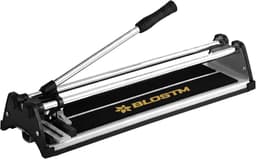
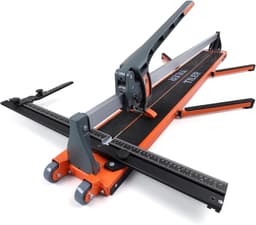
Only three listings claim porcelain with a stated thickness. The TILER 1200 mm states porcelain and marble up to 1,220 mm and 16 mm, at about £225.00, 3.7 from nine reviews. Very hard porcelain still needs one careful score. Both 430 mm rails claim porcelain inside 12 mm. The TILER is about £40.99, 3.9 from 33 reviews, and not for large-format tiles. Reviews of a 630 mm TILER are a different machine. The BLOSTM is about £25.99, 5.0 from four reviews, first available on 22 September 2026, and it excludes granite and marble. Neither states a diagonal in millimetres. The Faithfull, the Draper, the Amtech nipper and both Vitrex tools do not give a porcelain thickness you can trust. One Faithfull review reports no mark on porcelain bathroom tiles.

A spare tile is the test

Take one tile from the same batch. Score it once, face up, through both edges, then snap along that mark. Topps says a second score is likely to break the tile. If the spare leaves no mark, stop. A faint line on smooth 8 mm porcelain can still be a real score. If it marks and then shatters, the tile can be inside the millimetre claim and still too hard or too textured. Polished porcelain can hide a score. Textured porcelain around 10 mm gives the snap a ridge to wander. A failed spare ends the hand-tool trial. A 630 mm success is not your 430 mm wheel.

When to leave the hand tool

Leave the rail when the spare will not mark, when two spares have shattered, or when the tile is thicker than the listing. Leave it for textured porcelain around 10 mm and up, and when the piece, including the diagonal, will not fit the bed. The 1,220 mm TILER is the only bed here with that length, from nine reviews. Porcelain over 15 mm is Wickes’s wet-saw line. A 12 mm claim does not cover a 20 mm slab. Consumer Rights Act 2015, section 9, judges quality against the description. The next step is a wet saw or a tiler, not a dry grinder. Hire and dust sit on manual tile cutter vs wet saw.

Common questions

Can any manual cutter cut porcelain?
No. Some smooth, thinner porcelain can be scored and snapped. Textured and thicker porcelain often cannot. Speedy Hire says not to use a manual cutter on porcelain at all. Topps still allows a heavy-duty cutter with the right wheel. A spare tile is the check.
Why do the guides disagree on thickness?
They are talking about different tiles. Topps puts the easy range at about 8 mm. Walls and Floors moves textured porcelain over about 10 mm toward a wet saw. Wickes sends porcelain over 15 mm to a diamond wet saw. None of those figures is a British Standard, and they should not be averaged.
Does a listing that says porcelain guarantee my tile?
It states the seller’s claim, not your batch. The long TILER claims porcelain to 16 mm, from nine reviews. Both 430 mm rails claim porcelain to 12 mm, and the BLOSTM still excludes granite and marble. If a spare will not mark, stop.
What if the wheel leaves no mark?
Stop scoring the tiles you need. One Faithfull review reports no mark on porcelain bathroom tiles. A second pass is how the face chips. Change cutter or change to a wet saw. A faint scuff at the edge is not a full score.
Are textured and polished porcelain the same job?
No. Polished porcelain can hide a score, so check a spare under a good light. Textured porcelain gives the snap a ridge to run off, and Walls and Floors is more likely to send that tile, around 10 mm and thicker, to a wet saw.
When is a wet saw the next step?
When the spare will not mark or snap, when the tile is over the stated thickness, when it is textured porcelain around 10 mm or more, or when the cut is longer than the bed. The saw is water and a blade, not a harder push on the same rail.

Related pages

Sources

Public UK sources used for this comparison. Listing prices, stars and review counts are the amazon.co.uk figures saved for this set on 20 October 2026.

  1. Topps Tiles — how to cut tiles (retrieved 20 October 2026)
  2. Walls and Floors — which tile cutter (retrieved 20 October 2026)
  3. B&Q — how to cut wall tiles (retrieved 20 October 2026)
  4. Screwfix — tiling tool buying guide (retrieved 20 October 2026)
  5. Wickes — how to cut tiles (retrieved 20 October 2026)
  6. HSE — cutting roofing tiles (retrieved 20 October 2026)
  7. HSE ST3 — respirable crystalline silica (retrieved 20 October 2026)
  8. Consumer Rights Act 2015, section 9 (retrieved 20 October 2026)