How to use a manual tile cutter
The tile has cracked across a corner, and the rail is on the bathroom floor. How to use a manual tile cutter comes down to one continuous score through both edges, then a steady snap, on a bed longer than the cut. This page assumes you already own a rail. The listings are on the [hand tile cutter comparison](/hub/cutting-tools/hand-tile-cutter). The steps follow Topps Tiles, B&Q and Walls and Floors, plus the practise-on-scrap line on the TILER listings. Products Compared has not run a lab test. A purchase through our links can earn a commission at no extra cost to you.
The tile has cracked across a corner, and the rail is on the bathroom floor. How to use a manual tile cutter comes down to one continuous score through both edges, then a steady snap, on a bed longer than the cut.
The tile has cracked across a corner, and the rail is on the bathroom floor. How to use a manual tile cutter comes down to one continuous score through both edges, then a steady snap, on a bed longer than the cut. This page assumes you already own a rail. The listings are on the hand tile cutter comparison. The steps follow Topps Tiles, B&Q and Walls and Floors, plus the practise-on-scrap line on the TILER listings. Products Compared has not run a lab test. A purchase through our links can earn a commission at no extra cost to you.
Our top picks
| Badge | Product | Cutting length | Max thickness | Rails | Note | Price | Offer |
|---|---|---|---|---|---|---|---|
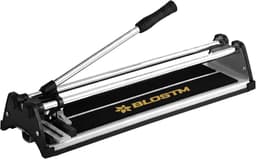
| Best overall |  BLOSTM BLOSTM 430 mm manual tile cutter | 430 mm | 12 mm | Count not stated | 7.4 | about £25.99 | View offer |
| Best value |  TILER TILER 430 mm manual tile cutter | 430 mm | 12 mm | Dual chrome-plated rails | 7.5 | about £40.99 | View offer |
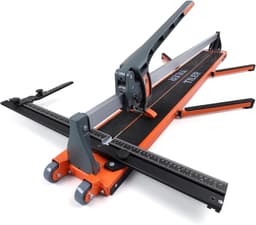
| Alternative |  TILER TILER 1200 mm manual tile cutter | 1220 mm | 16 mm | Single rail in reviews | 6.9 | about £225.00 | View offer |

On this page
Set the tile up
Score once
Snap and tidy the edge
When this method is the wrong tool
Common questions
Do I score once or several times?
Which face of the tile goes up?
How hard do I press to snap?
What if the score looks faint?
Can I cut a curve on this rail?
Should I practise on a spare tile?
Related pages
Sources
Public UK sources used for this comparison. Listing prices, stars and review counts are the amazon.co.uk figures saved for this set on 20 October 2026.
- Topps Tiles — how to cut tiles (retrieved 20 October 2026)
- Walls and Floors — which tile cutter (retrieved 20 October 2026)
- B&Q — how to cut wall tiles (retrieved 20 October 2026)
- Screwfix — tiling tool buying guide (retrieved 20 October 2026)
- Wickes — how to cut tiles (retrieved 20 October 2026)
- HSE — cutting roofing tiles (retrieved 20 October 2026)
- HSE ST3 — respirable crystalline silica (retrieved 20 October 2026)
- Consumer Rights Act 2015, section 9 (retrieved 20 October 2026)