Independent comparisons. We may earn from shop links. More info

How to use a Bluetooth thermometer

Updated: October 2026

A Bluetooth thermometer is a small sensor that measures the temperature of the air around it and sends that figure to your phone. Plenty of models sold for home climate checks also measure relative humidity, so the same setup covers a thermo-hygrometer. You pair the sensor once, leave it in the spot you care about, and read the result without standing beside it. This guide covers the battery, the app, pairing, placement, alerts, and a simple check that the number is worth trusting. Model choice stays on the [Bluetooth thermometer comparison](/hub/climate-measuring/bluetooth-thermometer). A qualifying purchase can earn a commission at no extra cost to you.

A Bluetooth thermometer is a small sensor that measures the temperature of the air around it and sends that figure to your phone.

Our top picks

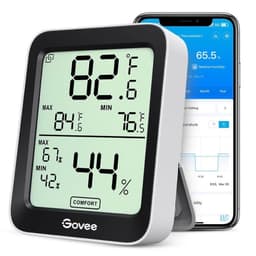
Govee Govee H5075

Best overall

Govee Govee H5075
9.2/10about £9.98
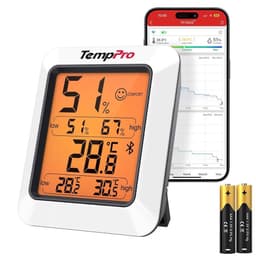
TempPro TempPro TP357

Best value

TempPro TempPro TP357
8.8/10about £8.99
TempPro TempPro TP350

Alternative

TempPro TempPro TP350
8.8/10about £12.59
On this page

What to have ready

You need the sensor, a phone with Bluetooth on, and the app named on the leaflet. Install that app from the App Store or Google Play. An app with a similar name will not pair the unit you bought. Fit a button cell the right way up, or charge a rechargeable unit until it shows ready. Keep the sticker with the serial number or QR code, and match it to the device the app lists. Give the phone permission to use Bluetooth when the app asks.

Pair it close, then name it after the place

Hold the phone within about a metre for the first connection. Distance is the usual reason a new unit never appears. Open the app, choose add device, and wait for the scan. If the list stays empty, press the button on the sensor once. Some units advertise only after that press. Match the on-screen name, or the last characters of the code, to the sticker. Rename the sensor after the place, not the brand. Greenhouse shelf, nursery, or loft is easier to read than a factory string. Finish pairing on an open table. A unit that connected in the kitchen can disappear in a steel cabinet.
Govee Govee H5075

Testsieger

Govee Govee H5075
9.2/10about £9.98

Put it where the air matters

The reading is the air around the sensor, not the average of the room. A sunny windowsill, a radiator, or the top of a fridge runs warmer. Place it near the plant canopy, on a middle fridge shelf, or around cot height, and out of a draught unless that draught is what you want. Metal, foil-backed plasterboard, and thick masonry shorten the range. A sensor in damp compost may log and still fail to reach the phone. A greenhouse across the garden is in the greenhouse guide. After you move the sensor, wait at least half an hour.

How the app shows the temperature

The home screen shows the latest temperature and, on combined units, relative humidity. The sensor often wakes every few minutes and sends a batch when the phone is in range. A stepped curve is that interval, not a fault. The daily minimum matters more than one glance. The distance on the box is open air. When the phone leaves range, a Bluetooth-only sensor stops refreshing the live tile. If the listing does not mention memory, a hole in the graph is a hole in the record.

Set alerts you will still pay attention to

Watch a normal day before you set limits. A band tighter than the room's ordinary swing will ping you for a kettle, and you will silence the app. A living-room start near 16°C to 24°C can be tightened once the graph shows the real swing. Humidity that stays high for days is when mould risk rises. A spike after a shower is ordinary. Test the alert by dropping the high limit just under the current reading, then restore it. Without a hub, Bluetooth will not alert you at work. That choice is on the Bluetooth or Wi-Fi thermometer page.

Common questions

Why does Android ask for location when I pair it?
On many Android phones the system asks for location so an app can scan for nearby Bluetooth Low Energy devices. That prompt does not mean the thermometer is recording where you go. Allow Bluetooth as well. On an iPhone, keep the app open for the first pairing if iOS asks.
Can I leave the sensor in a fridge or outdoors?
Read the listing first. IP65 means the case can take water sprayed from a nozzle. It does not mean you may immerse it, and it does not by itself mean the electronics are happy in a freezer. If the page does not say the unit suits a fridge or a freezer, keep it out of both. Do not trap a lead in the door seal, or the reading describes the leak.
What fridge temperature should the alert use?
UK food safety guidance is to keep the cabinet below 5°C. Place the alert a little above the temperature you see on a normal day, so a short door opening stays quiet and a door left ajar does not. For a freezer, alert on a clear rise above the setpoint in that appliance's handbook. A wine fridge checked in the first minute after the door shuts still looks like the kitchen.
What does a mains gateway change?
A mains gateway stays in range of the sensor and forwards samples over your Wi-Fi, so the history is available when you are away. Pair it as the leaflet describes. Without a hub, Bluetooth will not push an alert to your phone at work. If the listing says the sensor has memory, it can still fill the graph when you return.
How do I check the reading against 0°C?
If the app allows an offset, use melting ice. Crush ice in a glass with a splash of cold water, stir, and wait until it is slush. Seal a sensor that is not waterproof in a thin bag, and rest the sensing end in the slush. It should lie close to 0°C. Set the offset to match. Do not stack corrections against a second cheap sensor. Then set the real alert on day three, after you have seen a minimum and a maximum.

Related pages

Sources

Public UK sources used for this comparison. Listing prices, stars, and review counts are from amazon.co.uk on 19 October 2026.

  1. NHS — sudden infant death syndrome (retrieved 19 October 2026)
  2. The Lullaby Trust — room temperature (retrieved 19 October 2026)
  3. GOV.UK — damp and mould health risks (retrieved 19 October 2026)
  4. East Herts Council — damp and mould (retrieved 19 October 2026)
  5. RHS — greenhouse ventilation (retrieved 19 October 2026)
  6. GOV.UK — UKCA and CE by sector (retrieved 19 October 2026)
  7. Consumer Rights Act 2015, section 22 (retrieved 19 October 2026)
  8. amazon.co.uk listings B086YYL439, B093PT1NL1, B0CRY35J2R, B0C8N43JL6, B0D1G2LK9P (retrieved 19 October 2026)