Where to put an outdoor thermometer: shade, not sun

Met Office air temperature comes from a shaded screen at 1.25 metres. A sensor on a sunny fence reads the fence. Put yours in moving shade, off the wall.
On this page
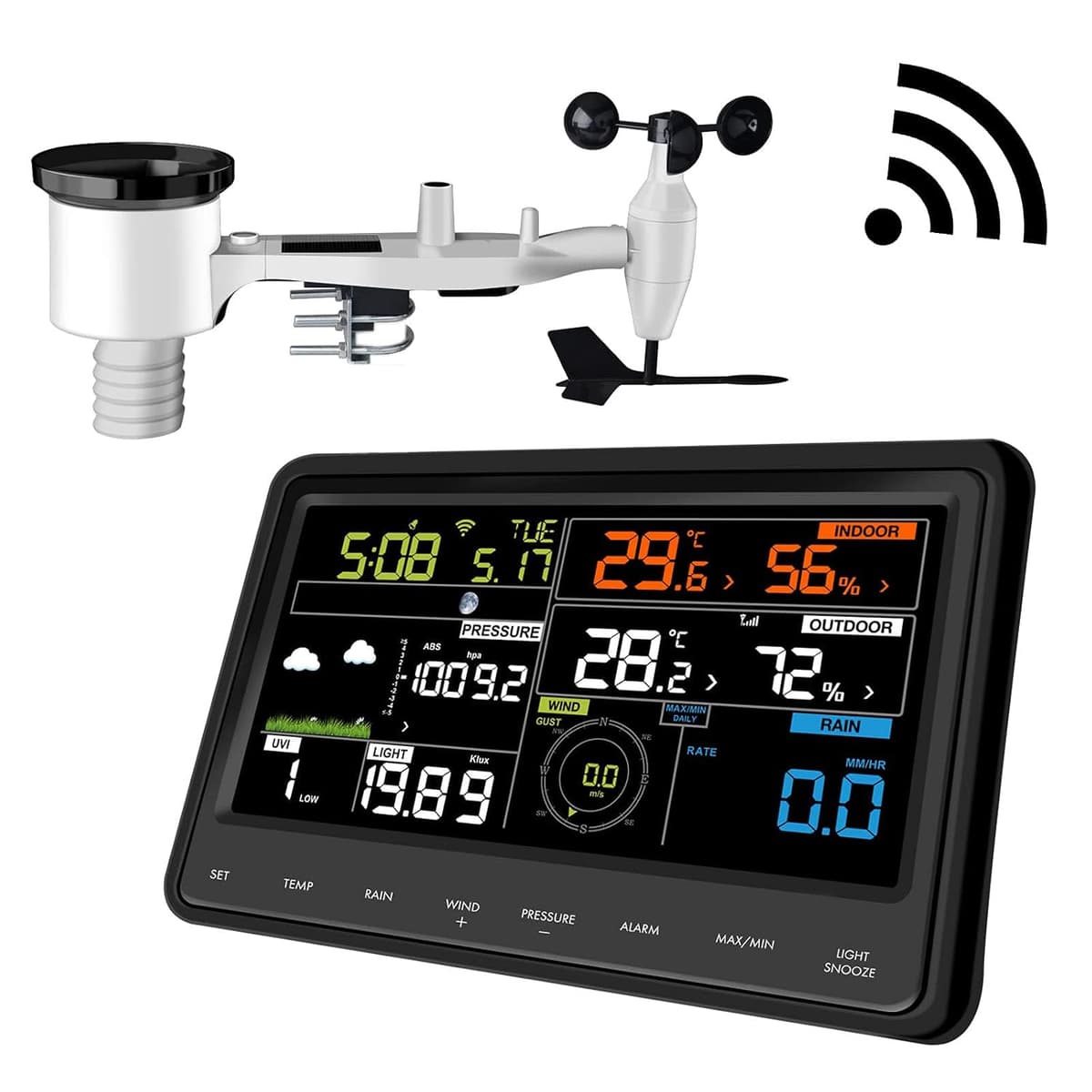
The forecast is quoting shaded air. If you are choosing where to put an outdoor thermometer, start with that. A sensor on a fence in the afternoon sun warms its own case, so the display can sit well above the forecast while the lawn still feels ordinary. Move it into moving shade, clear of the wall and the ground.
This page uses the Met Office’s public pages on how temperature is measured, and the amazon.co.uk listings in our weather station comparison. There is no lab test. Prices and review counts are the listing figures in that comparison, as checked on 15 October 2026. If you buy through our amazon.co.uk links, a qualifying purchase can earn us a commission at no extra cost to you.
In short
The Met Office measures air temperature in a Stevenson screen at 1.25 metres, with air moving through the louvres, and forecast temperatures come from screens at about that height. Put a home sensor in shade, off a sunlit wall and off the soil. Shade does not make a garden sensor an official instrument.
The forecast is shaded air at about 1.25 metres
When the forecast says 18 °C, it means shaded air inside a white louvred Stevenson screen at 1.25 metres. Air passes through the louvres by natural ventilation, so the instrument stays out of direct sun and rain. Stations used for standardised maxima face the door north, stand over level grass, sit at least 20 metres from concrete, and have only about half the ground within 100 metres as a man-made surface. Those distances belong to that network, not to a patio. Paving often reads a little warmer than grass.
A shield on a bought mast is a smaller version of that screen. A bare sensor on a sunny fence is not. The Met Office instrument is a platinum resistance thermometer. A retail radio sensor will not copy that accuracy.
Where a home sensor should go
Aim for about chest height, in shade, where a breeze can reach the case. At ankle level the sensor picks up warmth from the ground and from pale gravel. Hung in the dead air under a deep soffit, it misses the breeze. Keep the case proud of the wall. A rule of thumb, not a measured standard, is a few centimetres of clear air behind it, so brick, dark timber, or a metal post cannot heat it by contact.
A north-facing outdoor thermometer is the usual UK choice, because the sun is mostly in the south, which is also why record screens face their doors north. A north wall can still reflect a pale patio, and a still side passage is a poor spot, so use an open shaded post over the lawn. A south-facing fence heats the timber and the case. If the console only hears the sensor there, move the console. Open-air range is not a promise through brick. Check again on a cloudy, breezy afternoon. Sun on the case pulls the reading away on a still bright day.
Rain and wind want a different spot
Temperature wants shade. Rain wants open sky. Wind wants open air, not the lee of the eaves. A gauge under the eaves can record a dry day while the water butt fills, and uploading that feed does not make the spot official. A temperature remote can live in shade, and those listings often say to shelter it from rain. Put a rain gauge in open sky, clear of dripping trees, and put wind above the fence line.
A combined array has to compromise. Our top pick, the Ecowitt WS2910, is a 7-in-1 outdoor sensor: temperature and humidity, rain, wind speed and direction, light, and UV, with a solar panel on the unit. Amazon.co.uk shows 4.5 from 844 reviews at £134.99. The pole is not in the box, and two AA cells are required and not included. Put the mast in the open and let the shield shade the thermometer. Under the gutter the rain total fails, and on a south wall in June the temperature fails.
A window thermometer is a different job
A stick-on dial shows what the pane says when you are choosing a coat. It is not a screen at 1.25 metres. In direct sun the plastic heats and the pointer follows the case. Shade on the glass is the fix, covered in the window thermometer comparison and the page on sun and shade. It cannot tell you wind, rain, or the air over the grass. A south-facing kitchen window repeats the hot-fence error.
When three outdoor sensors disagree
Three remotes on one console are often three climates. A greenhouse in the sun should run warmer than a shaded north fence, and a shed wall warmer again. Hang the hot remote in the shade for an hour without changing batteries or channels. If the gap moves with it, the place was the cause. If it stays on the same channel, look at the battery and the signal. The indoor unit is the room, not a fourth outdoor sensor.
In our three outdoor sensor comparison the remotes send temperature and humidity, not wind or rain. Listings that mention rain tell you to shelter them: out of direct rain and sun, under north eaves where air still moves, or on a shaded post. Leave the greenhouse sensor in the greenhouse. A blank reading is often batteries. A high reading in full sun is a placement fault.
Common questions
Where should an outdoor thermometer go?
Why is my outdoor sensor hotter than the forecast?
How high is the Met Office thermometer?
Can the sensor sit on a south-facing fence?
Should a rain gauge be under the eaves?
Is a window thermometer the same job?
Will shade make a cheap sensor Met Office accurate?
What if three outdoor sensors disagree?

Peter F. is the editor for DIY & tools at productscompared.co.uk. Comparisons in this category are checked against amazon.co.uk listings, review evidence and public UK sources.
Related articles
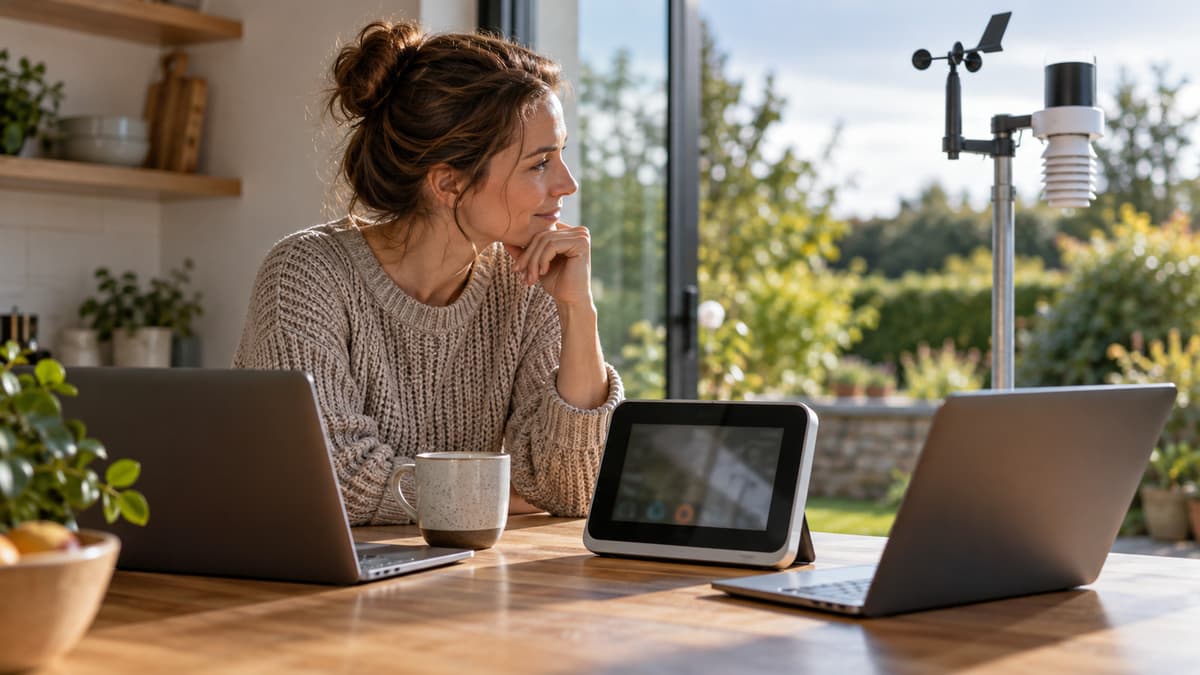
What a home weather station costs in the UK
A forecast console, a rain-and-wind array and a professional kit are different purchases.
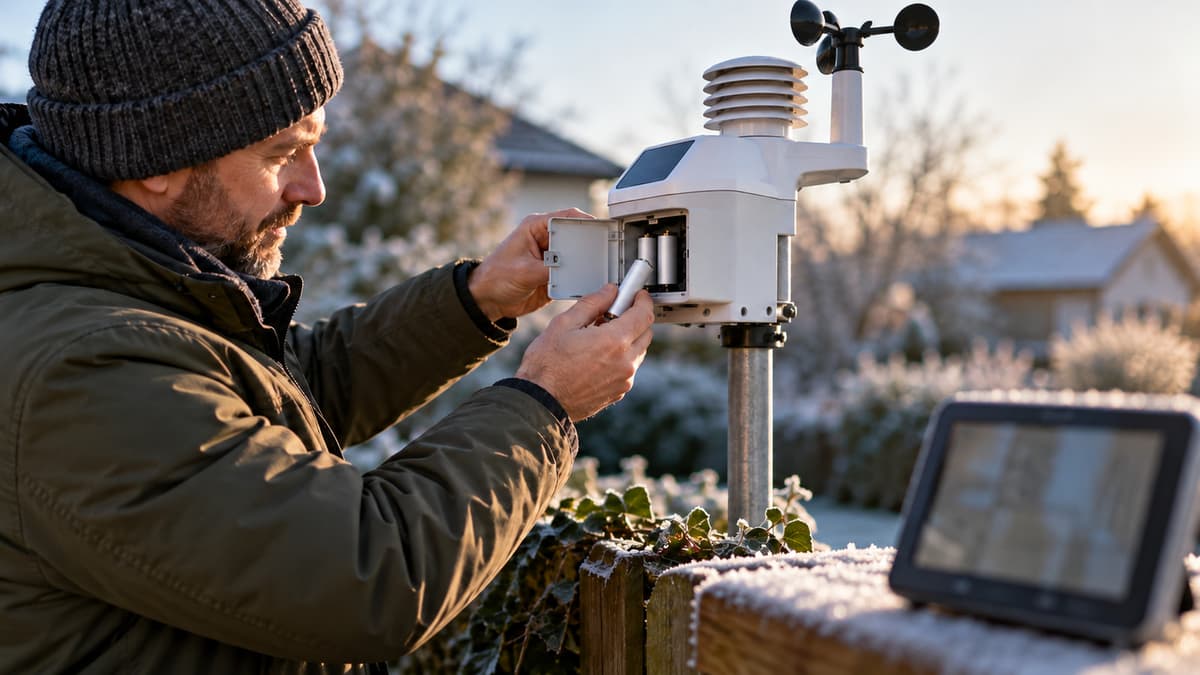
When to change outdoor sensor batteries
Cells are often missing from the box, and a solar panel only helps a sensor that still has a battery.

MSF or DCF77 on a weather station clock
MSF carries UK civil time. A DCF77 clock stays an hour out until you set the offset.