Infrared thermometer surface temperature, not the core

An infrared thermometer reads a surface, not the centre of food. See where it works, why shiny metal misleads it, and when you still need a food probe.
On this page
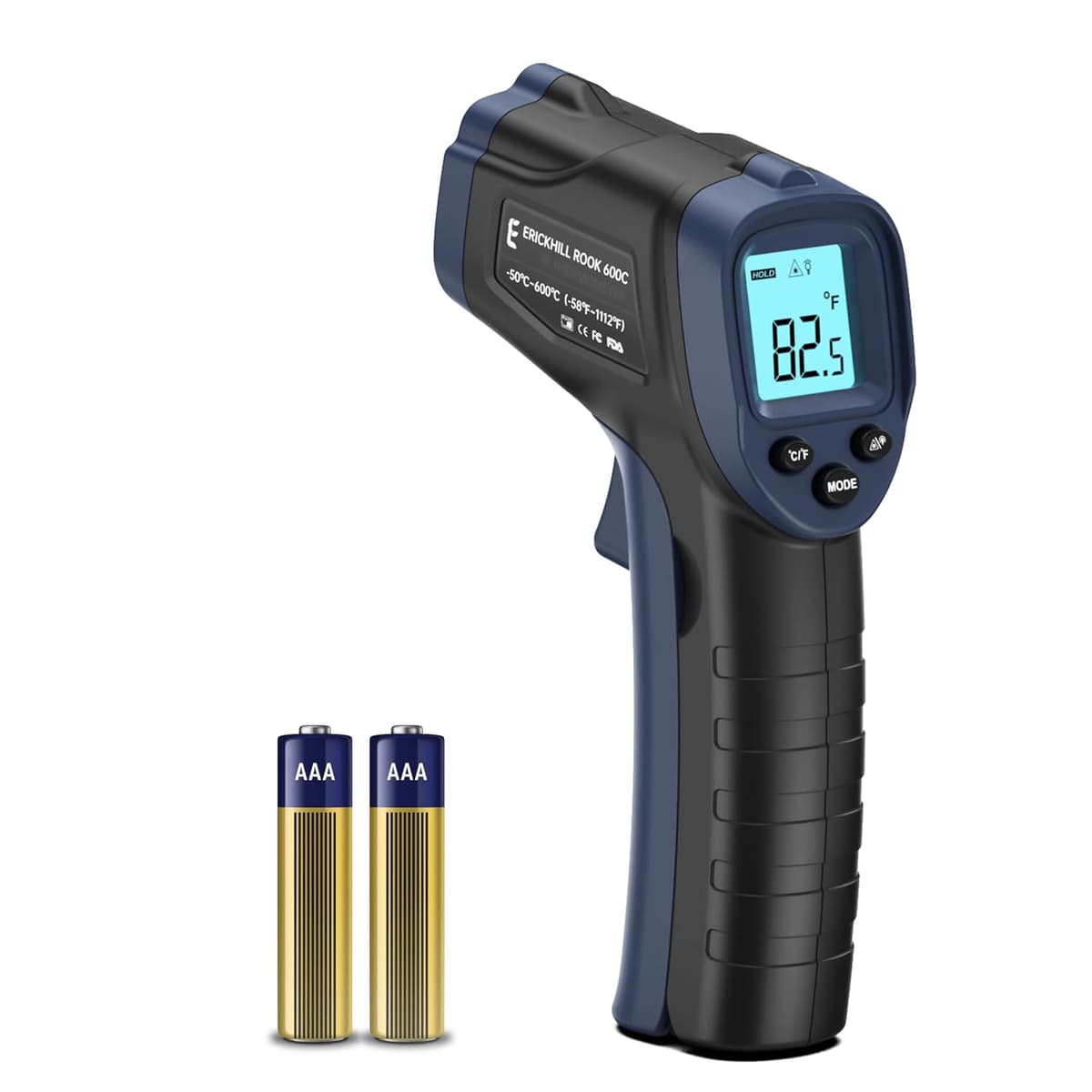
You squeeze the trigger, the laser sits on the roast, and the display shows a neat number. An infrared thermometer surface temperature is the temperature of a surface, not the centre of the joint. The same limit applies to a radiator, a window or a chilled delivery.
Products Compared drew the product figures from the amazon.co.uk listing in our infrared thermometer comparison, priced on 15 October 2026, and the food and health limits from Food Standards Agency and NHS guidance named below. We did not lab-test the gun. A qualifying purchase can earn a commission at no extra cost to you.
In short
An infrared gun reads energy from a patch of surface. It suits a cold food surface or a painted radiator panel. It cannot show the core of cooked food or see through glass. Use a clean probe for a roast, and a body thermometer for a person.
The gun reads a surface and a spot
The sensor collects infrared energy from a patch of the visible surface. It does not send a beam into the object. The laser, if fitted, is an aiming aid: it does not show depth or the edge of the patch.
Aim at a cold carton and you screen the outside. Aim at a roast and you see the browned exterior, which may be far hotter than the centre. Painted, oxidised and organic surfaces are often around emissivity 0.95. Bright metal reflects the room, so the number is still an estimate.
When comparing an infrared thermometer, look past the maximum temperature. Intended use, distance-to-spot ratio and emissivity range matter more than a headline figure.
Cold food surfaces, not the centre of a roast
The Food Standards Agency's Safer Food Better Business material allows infrared for the cold surface of food on delivery or in a fridge or freezer. It cannot measure the centre of cooked, reheated or cooling food. The pack is for businesses. The limit is the same at home.
Aim at the food surface, not reflective packaging or a sticky label. If the surface looks warm or the result is doubtful, confirm it with a clean, disinfected probe. On cooling food the top can lose heat while the middle stays warm. Reheating can do the reverse.
How to check food with the right thermometer
Place a clean probe in the centre or thickest part, off the tray and off bone. The FSA home advice is a core of 70 °C for two minutes, or 60 °C for 45 minutes, 65 °C for 10 minutes, 75 °C for 30 seconds, or 80 °C for six seconds. A surface can pass 80 °C while the centre stays below the target.
- Clean the probe and find the centre or thickest part.
- Insert the sensing end off the tray, pan and bone.
- Let the reading settle, then compare it with the time and temperature combination.
- Check a second thick area if the shape is uneven.
- Clean the probe again before the next item.
GOV.UK distinguishes whole cuts of beef or lamb from poultry, pork, rolled joints and minced meat. The gun should not decide which rule applies. Choose the thermometer that can measure the place that guidance describes.
Distance-to-spot ratio changes the reading
A distance-to-spot ratio says how wide the sensed area is. With 12:1 optics, twelve units of distance give a spot about one unit across: an inch at 12 inches, a foot at 12 feet. If the target does not fill the spot, the reading includes the roasting tin or the wall. Move closer, follow the maker's minimum distance, and treat large jumps when you change angle as a warning.
The ERICKHILL ROOK600C, ASIN B0C72MDQ2Z, is listed on amazon.co.uk at about £14.99, with 4.5 from 2,867 reviews. The listing states 12:1 optics, emissivity from 0.1 to 1.0, and −50 °C to 600 °C. Those are listing specifications, not laboratory results. The Class 2 laser is an aiming point, and the tool is not for human or animal internal temperature.
Emissivity, shiny metal and glass
A default near 0.95 suits many painted and organic surfaces, and it is not automatically accurate. Chrome and bright stainless steel reflect infrared from the room, so the number can change with your angle. Adjust emissivity if the gun allows it, or measure a non-reflective area. Do not tape a very hot surface. On a radiator, use the painted panel, not the chrome valve.
The gun measures the glass pane, not the room, outdoor air or food behind an oven door. Measure an accessible surface only when it is safe.
Radiators, rooms and foreheads
Keep distance and angle consistent on a painted panel. That reading is the panel's surface temperature, not the room's air temperature. A wall or window is local too: draughts, sunlight and the wall construction can shift it. Insulation or damp may also need humidity and air-temperature measurements.
Do not use a catering, DIY or HVAC gun as a fever check. For a child under five, NHS advice uses a digital thermometer in the armpit.
Common questions
Can an infrared thermometer tell me whether a roast is cooked?
What is an infrared thermometer useful for with food?
Does the laser show the whole measured area?
Why does shiny metal give a strange result?
Can an infrared thermometer read through glass?
Can I use a surface gun on a child's forehead?
What infrared thermometer should I compare?

Peter F. is the editor for DIY & tools at productscompared.co.uk. Comparisons in this category are checked against amazon.co.uk listings, review evidence and public UK sources.
Related articles

Body thermometer or room thermometer?
Why a body-temperature instrument and a room thermometer answer different questions.
Indoor humidity and mould
How humidity readings can help you spot conditions that encourage condensation and mould.

Where to site an outdoor thermometer
Choose a position that avoids misleading heat from sun, walls and windows.