Independent comparisons. We may earn from shop links. More info

Analogue vs digital thermometer

Updated: October 2026

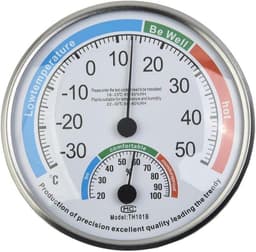
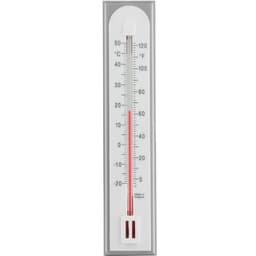
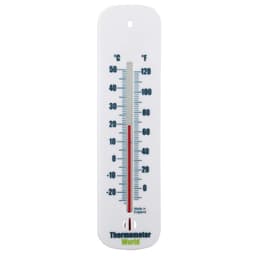
On a cold morning you look at the fridge, the bedroom, and, if you grow under glass, the greenhouse. An analogue vs digital thermometer is not one format for all three. A battery-free column or pointer, of the kind on the [analogue thermometer comparison](/hub/climate-measuring/analogue-thermometer), shows the air when you are there to read it. A digital max/min or a food probe is the better buy when you need the overnight low, a warning you might miss, or a temperature inside the food. Stay with a dial when a glance is enough, and leave the category when the reading has to remember the night or sit in the food.

On a cold morning you look at the fridge, the bedroom, and, if you grow under glass, the greenhouse. An analogue vs digital thermometer is not one format for all three.

Our top picks

On this page

Accuracy is a tolerance, on both kinds

A tenth of a degree on a screen is a resolution, not a promise. MetLink, from the Royal Meteorological Society, makes the same point for a digital display as for a dial: a reading that steps in 0.1°C can still sit a degree or two away from the air you meant to measure. Brannan publishes ±1°C between 0°C and 30°C on its gilt dial max/min, and ±2°C outside that band. ETI states ±1°C for its digital therma-hygrometer, which runs on a single AAA cell. A screen that reads 18.4°C on a sunny windowsill can be a degree warmer than the middle of the room, whether the case is a dial or a plastic box.

What a battery-free dial is for

An analogue thermometer in this set is a spirit column or a bimetal pointer. It does not keep a log, send an alert, or remember the coldest hour unless you have a max/min movement and you reset the markers yourself. None of the products in this comparison is a max/min, and none is a food probe. They answer what the air is doing while you are looking. In a hallway, use it out of direct sun and off a radiator. In a fridge, a middle-shelf dial is an air check. Food Standards Scotland draws the same line: a built-in dial shows cabinet air, and a hand-held digital thermometer cross-checks the food. Mercury-in-glass is the wrong analogue near food. ZWEquipint is titled as analog, yet the listing names a CR2032, so it is not battery-free like a spirit column.

Three reasons to buy digital instead

Memory is the first gap. A pointer you read at breakfast has already left the coldest hour behind. Frost around 4am in a greenhouse does not wait until you open the door. An analogue max/min holds the night on its markers. A digital max/min stores the low only while the cell is alive. This comparison includes neither. If the overnight low is your question, you are shopping outside these dials. If you need a warning when the temperature crosses a line you chose, a dial cannot give it. Food is the third gap. Safer Food, Better Business asks for a probe in the food when chilled food must be held at 8°C or below. The air check is a separate step. The household cold band stays on the fridge thermometer dial page.

The condition in one sentence

Stay with analogue when you will look at the instrument and you want no battery routine. Buy a digital max/min when you need the overnight low and you will change the cell. Buy a probe when the question is the food, not the air. Sun on the case or a radiator behind it will mislead either kind. The analogue thermometer buying guide keeps the criteria once you accept those limits.

Common questions

Are analogue thermometers less accurate than digital ones?
Not as a class. Brannan’s gilt dial is stated at ±1°C between 0°C and 30°C, and ±2°C outside that band. ETI’s digital therma-hygrometer is also stated at ±1°C. Compare the published figure and where the instrument sits, not the housing alone.
If the screen says 0.1°C, is that the accuracy?
No. That figure is how finely the display steps. MetLink says a digital reading shown to 0.1°C can still be about a degree or two out. The same warning applies if you invent a tenth a pointer cannot support. Keep the instrument out of sun and off warm walls.
Do I need digital for a baby’s room?
You need a thermometer you will look at. The Lullaby Trust recommends a room thermometer and does not require a digital model. A battery-free dial is enough when you check it in person. A digital unit can be clearer at night, though you then depend on a cell. Neither corrects a thermometer left in a sunny window.
Do I need digital for a fridge?
You need digital when the temperature you want is inside the food or between packs. For cabinet air, a spirit or bimetal dial is a fair check. Food Standards Scotland treats a built-in dial as an air reading and asks for a hand-held digital thermometer when you cross-check the food. Mercury-in-glass does not belong in a kitchen.
What fails when the battery dies?
You lose the display and any stored maximum or minimum. A greenhouse that froze around 4am will not show that low on a blank screen. A battery-free dial still shows the moment you look, and it will not have stored the night unless it is a max/min. ZWEquipint’s listing includes a CR2032, so treat that title as a cell-powered unit.
When is a probe the only serious choice?
When the temperature you care about is inside the food, not in the air around it. Safer Food, Better Business uses a probe in the food for the chilled-holding check, and it treats the air reading as a separate control. Clean the probe between foods. A room dial, a fridge dial, and a greenhouse column all miss that test. If the question is food, leave this analogue set and buy the probe.

Related pages

Sources

Public UK sources listed in the research digest. Listing prices, stars, and review counts are from amazon.co.uk on 19 October 2026.

  1. GOV.UK — controls on mercury (retrieved 19 October 2026)
  2. Food Safety (Temperature Control) Regulations 1995, regulation 4 (retrieved 19 October 2026)
  3. GOV.UK — chilling and freezing for food businesses (retrieved 19 October 2026)
  4. GOV.UK — how to chill, freeze and defrost food safely (retrieved 19 October 2026)
  5. Food Standards Agency — Safer Food, Better Business, chilled storage (retrieved 19 October 2026)
  6. The Lullaby Trust — room temperature (retrieved 19 October 2026)
  7. Centre for Sustainable Energy — temperature and humidity at home (retrieved 19 October 2026)
  8. Royal Meteorological Society — measuring temperature and humidity (retrieved 19 October 2026)