How to use an analogue thermometer
An analogue thermometer shows temperature without a battery. On a dial, a needle moves across a scale. On a column, a thread of coloured spirit rises in a glass tube. Either kind can check a living room, a bedroom, a greenhouse or an outdoor spot, as long as you site it fairly, give it time, and read it straight on. This page is the method once you already own one. The product table stays on the [analogue thermometer comparison](/hub/climate-measuring/analogue-thermometer). The sensing part reports the air or the surface right beside it. It does not average the house, and it does not repeat the number on the hall thermostat.
An analogue thermometer shows temperature without a battery. On a dial, a needle moves across a scale. On a column, a thread of coloured spirit rises in a glass tube.
An analogue thermometer shows temperature without a battery. On a dial, a needle moves across a scale. On a column, a thread of coloured spirit rises in a glass tube. Either kind can check a living room, a bedroom, a greenhouse or an outdoor spot, as long as you site it fairly, give it time, and read it straight on. This page is the method once you already own one. The product table stays on the analogue thermometer comparison. The sensing part reports the air or the surface right beside it. It does not average the house, and it does not repeat the number on the hall thermostat.
Our top picks
| Badge | Product | Where the listing puts it | Power on the listing | How to read it | Note | Price | Offer |
|---|---|---|---|---|---|---|---|
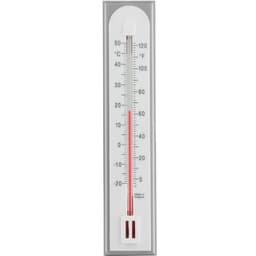
| Best overall |  Thermometer World Thermometer World grey wall thermometer | Indoor, outdoor | Battery listed | Hang from the hook hole | 8.6 | about £4.25 | View offer |
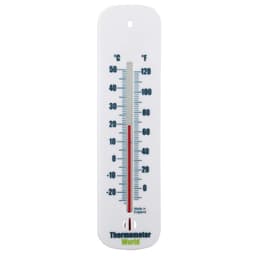
| Preis-Tipp |  Thermometer World Thermometer World blue room thermometer | Indoor, outdoor | None listed | Mounting not stated | 8.0 | about £3.95 | View offer |
| Alternative |  Thermometer World Thermometer World wooden room thermometer | Indoor only | None stated | Straight on, within a foot | 7.8 | about £4.25 | View offer |

On this page
Site it in ordinary air
Wait, then read square to the scale
Check a doubtful reading
Let the figure guide the room
Care, and the jobs it will not do
Common questions
Should I read Celsius or Fahrenheit?
How can I tell sun-error from a faulty movement?
Why can two thermometers in one room disagree?
What if the spirit column has split?
What should I do with minimum and maximum markers?
Related pages
Sources
Public UK sources listed in the research digest. Listing prices, stars, and review counts are from amazon.co.uk on 19 October 2026.
- GOV.UK — controls on mercury (retrieved 19 October 2026)
- Food Safety (Temperature Control) Regulations 1995, regulation 4 (retrieved 19 October 2026)
- GOV.UK — chilling and freezing for food businesses (retrieved 19 October 2026)
- GOV.UK — how to chill, freeze and defrost food safely (retrieved 19 October 2026)
- Food Standards Agency — Safer Food, Better Business, chilled storage (retrieved 19 October 2026)
- The Lullaby Trust — room temperature (retrieved 19 October 2026)
- Centre for Sustainable Energy — temperature and humidity at home (retrieved 19 October 2026)
- Royal Meteorological Society — measuring temperature and humidity (retrieved 19 October 2026)