Independent comparisons. We may earn from shop links. More info

Floating pool alarm vs wristband

Updated: 20.10.2026

A floating pool alarm vs wristband search looks like one product with two shapes, and it is not. You are deciding whether the warning should watch the water in a pool you own, or watch one child who moves between other people’s pools. A float left in your garden ignores a toddler at a holiday let. A wristband ignores every person who is not wearing a paired band. Neither device is a fence, and neither replaces an adult who is actually looking. RoSPA still asks for supervision and a childproof barrier with a self-locking gate. The GBP shelf is the [pool alarm comparison](/hub/burglar-protection/pool-alarm).

A floating pool alarm vs wristband search looks like one product with two shapes, and it is not.

Our top picks

On this page

What each alarm actually detects

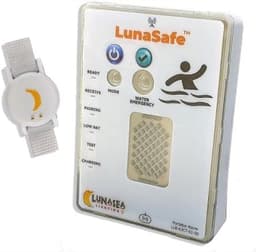
A surface float reacts to disturbance in the water it is sitting in. In ASTM F2208 that is a type A surface alarm. The wristband is a type D personal immersion alarm: a transmitter on a wrist or a strap, and a base that sounds when that transmitter gets wet. HSG179 uses the same split for operators and excludes family-only domestic pools. It still calls a motion sensor not a life-saving device. A band on one child does not notice a second child or a guest. A 2000 US CPSC staff study found wristbands could work when worn, and also that they alarmed under a running tap.

When the float is the wrong tool

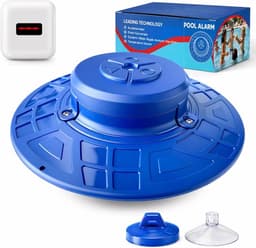
Buy a float when the risk is a body of water you can leave a sensor in. Do not buy one as a travel alarm. The floats in this set start at £73.31. ZEPLIHS, ESHANG, Mystique Maison, and Generalman will not follow a child to a relative’s garden. ZEPLIHS says its unit is not for a solid cover or a running cleaner. That is that listing’s limit, not a rule for every brand. RoamRider, at £110.82, screws or tapes to a pool you can fit. It is not a wristband. Reviews include a one-season failure, a continuous alarm on install, and light rain. That does not make it the best alarm here. If the child moves, the sensor has to move too.

When the wristband is the wrong tool

A wristband covers the wearer only while it is on, paired, and in range. LunaSafe’s one-band kit is £188.53 and shows 4.0 from one UK review. The two-band kit is £271.50, with import charges and no saved reviews. Both say the product is not a life-saving device. The only UK review says there was no alarm because the base had not been synchronised. A second child without a paired band is outside the system. If the risk is your pool and you are indoors, a float watches the water whether or not anyone remembered a strap. Fitting and the first test sit on the how to set up a pool alarm page.

One recommendation

If you have your own pool and you are often indoors, choose a floating alarm or a poolside sensor after you have heard the receiver from the room where you actually are. The float from £73.31 does that job for the water you own. If one child moves between pools you do not control, choose a wristband, worn and synchronised every time the base starts. LunaSafe is that listing. Its only UK review is a missed sync. Neither purchase is the barrier. A fence with a self-locking gate, and an adult watching, remain the layer RoSPA describes. Plug, indoor loudness, and the printed size are the next checks, on the pool alarm buying guide.

Common questions

Does a wristband watch the whole pool?
No. It watches the transmitter that is paired and worn. A second child, a guest, or a dog without a band can enter in silence. LunaSafe’s two-band kit at £271.50 still covers only those two transmitters, and that listing has no saved reviews. If you need the pool watched while you are indoors, use a sensor in the water.
Can I take a floating alarm on holiday?
You can pack one, and you still need a pool the let will allow, plus a receiver you can hear in that building. The floats here are sold for a pool that stays put, from £73.31. ZEPLIHS says a solid cover or a running cleaner is a failed condition for that listing. If the child is what travels, a wristband matches the risk better.
Will rain or a tap set a wristband off?
A tap can. The 2000 US CPSC staff study found wristband alarms also sounded under running water, so a hand wash is a known nuisance for that type. Rain is the surface-float problem in that same study, and the models did not all behave the same way. Do not read that old US test as a score for any ASIN on amazon.co.uk.
What happens if I forget the band?
Nothing useful. The base stays quiet because the only sensor is still on the side. The UK review of the £188.53 LunaSafe kit describes a toddler in the water with no alarm, because the sensor was not synchronised after the base was switched on. Forgetting the strap is the same class of miss. At your own pool, a float still watches the water.
Is a poolside sensor a third type?
Yes. It watches the water from the side, which is still a pool sensor, not a personal alarm. RoamRider at £110.82 is the poolside listing in this set. Reviews include failure within a season and alarms from rain, and the manual does not give sensitivity steps. It can be the right shape for a pool you can screw or tape a bracket to. It is the wrong shape for a holiday where you cannot fit anything.

Related pages

Sources

Sources taken from the research digest. Listings were checked on 19.10.2026.

  1. RoSPA — Drowning prevention (retrieved 19.10.2026)
  2. HSE — Swimming pools (retrieved 19.10.2026)
  3. HSE — HSG179 Managing health and safety in swimming pools (retrieved 19.10.2026)
  4. ASTM — F2208 pool alarms (retrieved 19.10.2026)
  5. BSI — BS EN 16582-1 domestic swimming pools (retrieved 19.10.2026)
  6. NCMD — Child drowning deaths in England, 2019–2025 (retrieved 19.10.2026)
  7. CPSC — Pool alarm study (retrieved 19.10.2026)
  8. EuroSafe — Pool alarms and drowning prevention (retrieved 19.10.2026)