CCTV for a small shop UK: the householder guide stops

CCTV for a small shop in the UK is organisational CCTV. The ICO householder pages stop at that door. An office bullet on a listing is not legal advice.
On this page
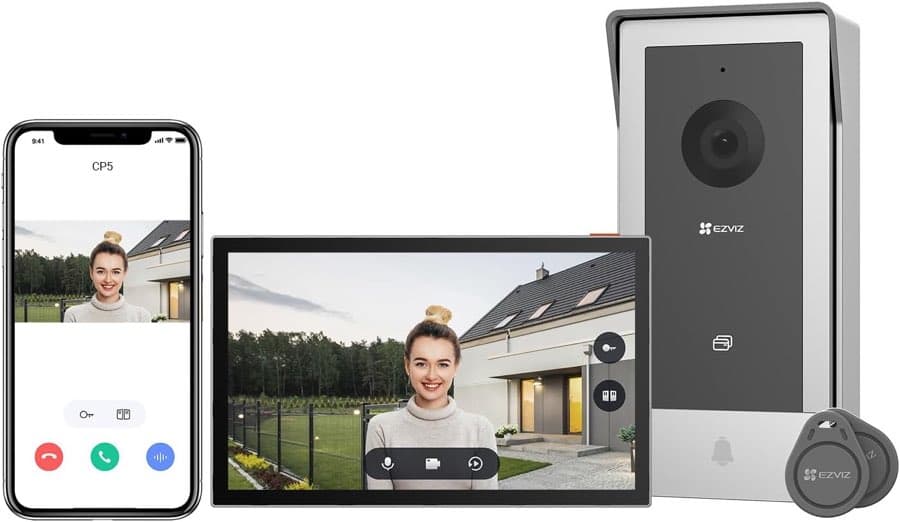
The bracket is still in the bag, and the door you are about to drill is the one customers use. CCTV for a small shop UK owners often start with the same video doorbell they liked at home. A shop door is organisational CCTV. The ICO's home CCTV page is written for householders, and GOV.UK's domestic CCTV guidance covers a household system on your property, with video doorbells inside that domestic scope. Staff and customers put the camera outside that role. This page uses those public sources, as checked on 15 October 2026, and the shelves in our video door intercom and Zosi security camera comparisons. We did not fit a camera, write a shop policy, or run a lab test. A qualifying Amazon purchase can earn us a commission at no extra cost to you.
In short
CCTV for a small shop in the UK is organisational CCTV, so the ICO householder guide and the GOV.UK domestic CCTV page stop at that door. A listing bullet that mentions offices is a sales line, and a missing subscription leaves the role unchanged. If you live above the shop, the pavement and the customers are two questions. Compare a door station and a recorder kit as products, and treat neither shelf as a ruling that the kit is lawful in the shop.
The householder guide stops at the shop door
The ICO page on home CCTV systems is a public guide for someone filming at home. GOV.UK's domestic CCTV guidance, in the set checked on 15 October 2026, covers systems you use on your own property as a household, and it includes video doorbells. A chime and a phone app sit inside that household subject when the door is your front door. The same box, screwed beside a shop entrance, is a camera the business is using. That role is organisational CCTV. Once customers and staff are the people in the frame, the householder pages are the wrong procedure.
The carton does not change because you carried last year's doorbell to the shop. At home the caller is a visitor. At the shop the person on the step may be a customer, a member of staff, or a driver who never comes inside. A family business, or answering the door yourself, still leaves a shop entrance. Before the screws go in, record a colleague entering as a customer and someone who only passes on the pavement, then play both clips the same day. If you can tell who entered, you are looking at organisational CCTV. A recognisable passer-by does not cancel the shop. This article will not draft your policy. If the camera is only a household system, use the pavement article.
Why a listing that says office is not advice
Amazon listings in this area sometimes put "offices and commercial spaces" in a bullet. That line widens the audience on the product page. It never says the ICO householder guide has stopped, and it never walks you through organisational CCTV. A video door phone with the word office in a feature list is marketing in the same way. A place in a comparison is a buying fact about the box. It is not a certificate you can show a customer who asks why they are on camera.
"Works in an office" tells you the seller imagines a desk and a corridor. It does not name who answers for the footage, how long you keep a face, or what you say at the door. Shop door camera GDPR questions start at that gap. The listing is a shop window. The ICO page is a different site. A no-subscription line, a card in a monitor, a kit with no app, and a one-off price are fee facts. None of them moves a business entrance off organisational CCTV. On a no-app kit a 7 inch monitor can be the only handset, which is a fair household choice. As the only recorder for a shop, seven inches is still a screen size.
What to read instead
Open the ICO guidance for organisations on CCTV and video surveillance, at ico.org.uk under the UK GDPR guidance for organisations. That is the page the public home guide points business users toward. Read it before you order a second bracket. The home CCTV page stays useful as the contrast, so you can see the role you have left. GOV.UK's domestic CCTV publication stays on the household side of the same line, including doorbells used as a household system. If the sentence you can say is "this camera covers the shop", you stay on the organisations page.
This article stops at that signpost on purpose. We will not give you a retention number, a template notice, or a score that says a dome is compliant. A sign copied from the home guidance does not pull a shop door back under the domestic pages. Whether the notice is enough is a question for the organisations guidance. At the shop, an access request goes to the organisation that runs the camera. We are not stating a deadline or a fee. Keep the clip while you deal with the request, and decide who on the staff owns that reply. The domestic steps stay in the pavement article.
A flat above a shop is still a boundary question
Plenty of small premises put the kitchen above the counter and one door on the street. You still ask what the lens does to the pavement, which is the beyond-the-boundary problem the householder pages describe when a home camera sees the street. You still ask what the lens does to customers and staff, which is organisational CCTV. A shared entrance often puts both in one frame. Sleeping upstairs does not move the shop camera into the domestic guide, and a shop sign on the same door does not erase the pavement.
On one recording, have someone walk only the public pavement and stop before the shop mat. On a second, have someone come in as a customer. An identifiable face on the pavement clip is the household beyond-the-boundary case. An identifiable face at the counter is organisational CCTV. One file that contains both faces means both duties stay open. A camera that shows only the flat's own step, and loses the shop floor, is a household system again. The moment the shop entrance stays in frame, you add the organisations page. A lease can also restrict cameras. Permission to drill is separate from which ICO page applies, in England, Scotland, Wales or Northern Ireland.
Which comparison is a door station, and which is a camera kit
Use the video door intercom comparison when the product is a door station for answering a household door. Prices and review counts there come from amazon.co.uk listings checked on 15 October 2026. A 7 inch screen or a missing app can be the right household shape, and those facts still do not approve the station for a shop or a salon. The no-Wi-Fi video door intercom page is the narrower shelf when the household monitor must work without a phone account. It remains a household page.
Use the Zosi security camera comparison when you want a recorder and cameras. The top pick in that set, B016ZPFO5Y, is a wired kit with eight 1080p domes, an 8-channel DVR, and a contents line that names a 2 TB drive. On 15 October 2026 it was £275.49, with 4.2 from 397 amazon.co.uk ratings. Some reviews describe an older box on the same ASIN without a drive, so you check the carton. Privacy blocking on the listing is a mask for a house, not approval for a business. A shop entrance belongs on the ICO organisations page before either basket. The sources here state no planning rule for a shop camera.
Common questions
Can I use the same doorbell as at home on the shop door?
Do staff and customers change the duty?
Is a sign on the shop door enough?
Does no subscription change the shop rules?
Who answers an access request at a business?
Is a domestic 7 inch monitor acceptable as the only recorder?
What if I live above the shop?
Where do I compare a recorder kit instead of a door station?

Products Compared publishes British-English buying guides based on amazon.co.uk listings and public UK sources. We do not run a lab and we do not invent test scores.
Related articles
A doorbell that films the pavement
The householder test is your own path against the street. A shop door sits outside that guide.

No monthly fee is not a privacy promise
A missing subscription is a price. Remote view can still need an account, and the boundary test stays.

Faulty video doorbell consumer rights: what still applies
A faulty video doorbell still falls under the Consumer Rights Act 2015. A warranty line is the seller's promise.