Vice for light metalwork: filing and sawing at home
You have a short piece of steel, a handful of screws, or a bit of bar, and you want it still while you file or hacksaw. A vice for light metalwork means that job and then a stop. Hold the metal low, cut close to the jaws, and quit before a hammer blow or a cut that twists the casting. The review file already includes a 5 kg "6 inch" that snapped on a 12 mm bolt. The [Swivel vice](/hub/workshop/swivel-vice) comparison is the table. Figures are the amazon.co.uk cards of 16 October 2026. A purchase through our links may earn a commission at no extra cost to you.
You have a short piece of steel, a handful of screws, or a bit of bar, and you want it still while you file or hacksaw. A vice for light metalwork means that job and then a stop.
You have a short piece of steel, a handful of screws, or a bit of bar, and you want it still while you file or hacksaw. A vice for light metalwork means that job and then a stop. Hold the metal low, cut close to the jaws, and quit before a hammer blow or a cut that twists the casting. The review file already includes a 5 kg "6 inch" that snapped on a 12 mm bolt. The Swivel vice comparison is the table. Figures are the amazon.co.uk cards of 16 October 2026. A purchase through our links may earn a commission at no extra cost to you.
Our top picks
| Badge | Product | Listed weight | Jaw | Mount | Note | Price | Offer |
|---|---|---|---|---|---|---|---|
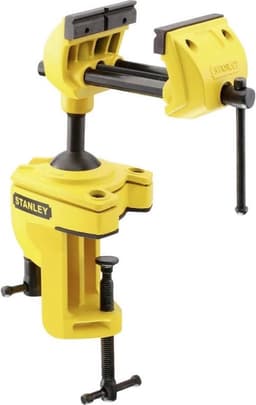
| Best overall |  Stanley Stanley MaxSteel multi-angle vice | 1.5 kg | 75 mm (3 in) on the included line | Screw clamp | 8.6 | about £22.31 | View offer |
| Best value |  Stanley Stanley MaxSteel 4 inch light-duty vice | 5.04 kg | 100 mm (4 in) | Bolt-down | 8.0 | about £29.95 | View offer |
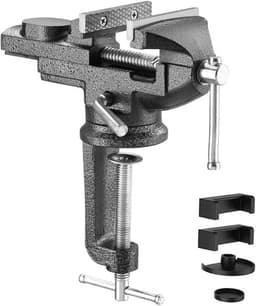
| Alternative |  TEENO TEENO 70 mm table vice | 1.86 kg | 70 mm, opening to 77.5 mm | Clamp-on | 6.8 | about £18.99 | View offer |

On this page
Light metal in this set means filing and a short saw cut
Hold it low and cut close to the jaws
Soft jaws when the metal must not be bruised
The anvil and the 12 mm bolt are the stop
A wood vice and a machine vice are different tools
Common questions
Can these vices hold steel?
How close to the jaws should I saw?
Do I need soft jaws for aluminium or copper?
Should I wear glasses?
Can I hammer on the anvil?
When is the job too big for this set?
Related pages
Sources
Public UK sources used for this comparison. Listing prices, stars, and review counts are the amazon.co.uk lines from 16 October 2026.
- HSE — PUWER overview (retrieved 16 October 2026)
- The Provision and Use of Work Equipment Regulations 1998 (retrieved 16 October 2026)
- HSE — Safe use of work equipment (L22) (retrieved 16 October 2026)
- Consumer Rights Act 2015, section 9 (retrieved 16 October 2026)
- HSE — using the right type of PPE (retrieved 16 October 2026)
- Stanley UK — MaxSteel multi-angle vice 1-83-069 (retrieved 16 October 2026)
- Stanley UK — MaxSteel 115 mm light-duty bench vice 1-83-065 (retrieved 16 October 2026)
- Excel Machine Tools — all-steel bench vice weights (retrieved 16 October 2026)