Independent comparisons. We may earn from shop links. More info

Silverfish or paperfish

Updated: 21 October 2026

You have a silver, bristled insect and you are not sure a bathroom trap is even the right job. Silverfish or paperfish is the split that changes what you do next: the common species likes a damp room, the grey silverfish (often called a paperfish) breeds in drier air among paper, and a firebrat wants heat. A glue trap can sample whichever one walks an edge. It cannot name the species, and a listing that prints the word paperfish has not identified yours. Packs and prices stay on the [Silverfish trap](/hub/traps/silverfish-trap) comparison, from amazon.co.uk on 19 October 2026. Peter F. checked those listings, with no lab test. A qualifying Amazon purchase can earn a commission at no extra cost to you.

You have a silver, bristled insect and you are not sure a bathroom trap is even the right job.

Our top picks

On this page

Three insects people call silverfish

English Heritage’s fact file on silverfish and grey silverfish is the clearest public split for UK collections, and it is usable in a house if you keep the measurements attached to that source. Common silverfish, Lepisma, are described there as adults of about 10 to 15 mm, in damp rooms, able to damage paper when humidity is high. Grey silverfish, Ctenolepisma longicaudata, are about 15 to 20 mm, grey and blotchy, with obvious bristles on the head and along the sides, and longer antennae and tail filaments. The British Pest Control Association’s professional note uses slightly different figures, and they should stay with that source rather than be averaged into a new number. It puts common silverfish at about 10 mm in wet rooms, often near 70 per cent relative humidity, and grey silverfish at about 13 to 15 mm in drier living rooms and storage. The householder page on the BPCA site says about 12 mm for the insect people tip out of the bath.

Firebrats are the heat lookalike

Firebrats are the third lookalike. Rochdale Borough Council separates them from silverfish by the hotter rooms they use, and describes them at about 14 mm. A UK council note places their preferred range well above a normal living room, towards the back of ovens, boilers and hot pipes. A firebrat is not a reason to buy a different glue chemistry. It is a reason to look at heat rather than at a dehumidifier in the bath.

Damp room or dry room

Common silverfish are the bathroom and leak storey. High humidity, a failed seal, a fan that stops too soon: that is the pattern BPCA’s householder page ties to damp. Drying that room, repairing the drip, and running the extractor can be enough for a small case of the common species. The silverfish trap bathroom page is that job, including where a station can sit without going into the shower. Grey silverfish are the dry-room storey. BPCA says humidity fixes may not clear them, because they live and breed in the conditions of ordinary heated houses, among paper, packaging and stored textiles. English Heritage makes the same point for collections: they are not confined to the wet cellar. If you have already dried the bathroom and you still see insects in the bedroom or the loft, question paperfish before you buy a second fan. Firebrats pull you towards the heat source. Look behind the oven, the boiler cupboard and the hot pipe, not at the shower tray, if the insect is mottled and the room is warm rather than wet. Reducing clutter against that heat matters more than a three-month glue claim. A trap on the skirting beside the boiler can still tell you whether anything is walking there this week. It will not cool the cupboard.

What a glue trap can and cannot tell you

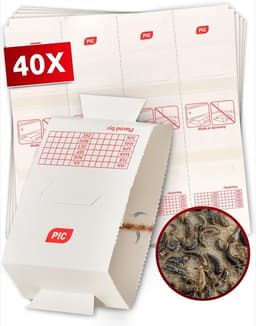
A catch is a sample of that edge on that week. It is not a certificate of species. PIC’s 40-pack and Veddelholzer’s strips name paperfish on the amazon.co.uk listing. That is a seller’s target list, the same way other packs say silverfish and then catch spiders. If you need to know where to put the station so the sample means something, use where to put silverfish traps. You do not need a separate glue formula for grey silverfish. You need the trap in the room where those insects walk, which may be a bookcase or a loft rather than the bath. Felyne reviewers mention attic paperwork, on a sample of only ten reviews, so treat that as a use people tried, not as a test. Stop guessing when the stakes rise. An entomologist is the right ask if a collection or a conservation decision depends on the name. The silverfish trap buying guide is only the next step if you still need a format for a monitor, after the room and the insect have narrowed the job.

Common questions

What is a paperfish?
A paperfish is the common name for the grey silverfish, Ctenolepisma longicaudata. English Heritage describes it as larger than the common silverfish, about 15 to 20 mm, grey and blotchy, with bristles and long antennae and tails, and able to breed in drier air. BPCA places it in living rooms and storage rather than only in wet rooms. It still feeds on paper and related materials.
How do I tell it from a common silverfish without a lab?
Use size, colour and place as a household sort, and keep the figures tied to the source. English Heritage: common adults about 10 to 15 mm in the damp; grey adults about 15 to 20 mm, blotchy, bristled, longer tails. BPCA’s professional note says about 10 mm and about 13 to 15 mm, and its householder page says about 12 mm, so do not invent a single official length.
Are firebrats the same trap?
They can be caught on the same glue if they walk over it. They are not the same insect and not the same room. Rochdale Council points firebrats at hotter sites and gives about 14 mm. Look at the boiler cupboard and the back of the cooker rather than assuming the bathroom pack is the remedy. You do not need a firebrat-branded station from this set.
If I dry the bathroom, why are they still in the bedroom?
Because the bedroom insect may be a grey silverfish, which BPCA says is not cleared by humidity fixes alone. Drying the bath is the right job for the common species living by a leak. It is the wrong main job when sightings continue among paper in dry rooms. Check the bookcase, the loft boxes and the airing cupboard as their own routes.
Do grey silverfish need a different glue trap?
No special glue is described for them in this set. PIC and Veddelholzer mention paperfish in the title, and that is not a different adhesive you can verify from the listing. Place an ordinary monitor where the grey insects are walking, usually a drier room with paper, and keep the glue uncovered by dust. A plastic bathroom station is for steam, not for a dry bookcase.
When should an entomologist or a BPCA member see one?
Ask an entomologist when the name itself matters, for example a collection or a building record, and you can provide a specimen. Ask a BPCA member when paper or wallpaper is being damaged, when catches rise after ventilation and fresh traps, or when a heavy infestation is beyond a few skirtings. BPCA does not treat these insects as a bite or a disease risk to people.

Related pages

Sources

Public UK sources used for the legal and safety limits. Listing prices, stars and review counts are the amazon.co.uk figures saved for this set, shelf date 19 October 2026.

  1. BPCA: silverfish can point to damp (retrieved 19 October 2026)
  2. BPCA: control silverfish professionally (retrieved 19 October 2026)
  3. Glue Traps (Offences) Act 2022 (retrieved 19 October 2026)
  4. GOV.UK: Glue trap licences (retrieved 19 October 2026)
  5. Agriculture (Wales) Act 2023, section 46 (retrieved 19 October 2026)
  6. Wildlife Management and Muirburn (Scotland) Act 2024, section 1 (retrieved 19 October 2026)
  7. HSE: regulated biocides (retrieved 19 October 2026)
  8. English Heritage fact file 8: silverfish and grey silverfish (retrieved 19 October 2026)