Independent comparisons. We may earn from shop links. More info

How to set a raccoon trap on level ground in the UK

Updated: 17 October 2026

If you are working out how to set a raccoon trap, begin before you raise either door. Identify the likely animal, decide what you can lawfully do if the cage closes, and make sure you can inspect it. The folding cages in the [raccoon trap comparison](/hub/traps/raccoon-trap) use different rods, plates and door layouts, so no single sequence replaces the instructions for that listing. Square the cage on level ground, test the closure without your hand inside, place bait beyond the treadle where the design permits, and keep checking. If the animal may be a raccoon, the final step is official advice, not relocation. A qualifying purchase can earn a commission at no extra cost to you.

If you are working out how to set a raccoon trap, begin before you raise either door. Identify the likely animal, decide what you can lawfully do if the cage closes, and make sure you can inspect it.

Our top picks

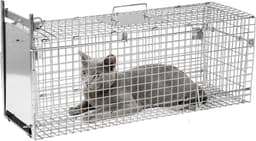
SARSTRY SARSTRY 79 cm

Best overall

SARSTRY SARSTRY 79 cm
8.2/10about £44.99
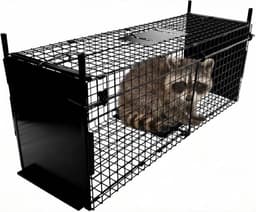
Tcowoy Tcowoy 32D

Alternative

Tcowoy Tcowoy 32D
7.8/10about £62.99
Thealyn Thealyn 105 cm

Best value

Thealyn Thealyn 105 cm
7.1/10about £57.99
On this page

Before arming the door

Unfold and assemble the cage in daylight, wearing suitable gloves, and follow the manufacturer’s video or leaflet for that listing. Thealyn’s bullets direct buyers to a video, while reviewers say the paper instructions can be poor. SARSTRY reviewers similarly suggest watching the sales video before unpacking. Do not borrow a rod position from a different brand because both cages are described as folding. Place the cage on firm, level ground where it cannot rock. Shared Thealyn review material reports that doors can jam on a slope and plates can trip in the wind. Clear only enough loose material for a stable base. Do not bend, file or redesign an unfinished mechanism. If the wire has a sharp edge, a clip is missing or a door will not stay attached, stop and contact the seller. Test the trigger with a stick from outside the cage. The door should travel freely, close fully and remain secured when you gently pull it. Repeat the test, and test each entrance on a double-door model. Tcowoy’s 32D and 37-inch listings claim adjustable sensitivity. The standard 32-inch and 24-inch listings do not. Use only an adjustment the exact instructions describe. GOV.UK fox guidance says check at least once a day and do not set a cage if you cannot inspect it daily. If work or travel makes that impossible, close and secure the doors.

Position bait beyond the plate

The aim is to make the animal put its weight on the treadle while reaching the bait, without being able to take food through the mesh. US live-cage guidance suggests placing bait beyond the trigger plate and using a small trail towards the entrance. That is a positioning principle, not UK legal authority, and not permission to release whatever enters. On a single-door cage, put the main bait behind the plate at the closed end if the design provides a safe bait point. On a double-door cage, the manufacturer may allow both entrances to remain open. One review in the ARIFARO material says both sides or one side can be used, while a Thealyn reviewer describes shutting one end and placing food at the other for a cat. Those are product experiences. Check that closing one door does not disable the trigger. Use a modest amount that suits the lawful target. UK fox-trap instructions mention strong-smelling foods such as kipper, bacon or mackerel on a bait hook, but that hook arrangement may differ from yours. Never put your fingers through an armed cage to reposition bait. Disarm it, confirm the door cannot fall, then work from the outside. Door and trigger differences are on the raccoon trap buying guide.
SARSTRY SARSTRY 79 cm

Testsieger

SARSTRY SARSTRY 79 cm
8.2/10about £44.99

Manage the first day, weather and checks

Set the cage only when you can return on schedule and respond if an animal is inside. Check it from a distance first, then approach calmly. Hot sun, cold, heavy rain and exposure increase welfare risk, and wind may move a sensitive plate or door. Live-capture practice discusses daily inspection alongside food, water and shelter. The site may justify checking more often. Do not import a roughly 25-hour interval from a bird-control licence and present it as the general mammal rule. GOV.UK’s fox page says at least daily. The Wildlife and Countryside Act does not set a single clock for mammal live cages. Do not set what you cannot check, and do not treat the absence of one statutory interval as permission to leave an animal confined. If a non-target animal enters, identify it before acting. A grey squirrel deliberately caught in a live trap cannot simply be released, and the RSPCA advises frequent checks for squirrel live-capture. A badger requires a different legal response. GOV.UK warns against setting fox cages near a badger sett or where badgers are present. The label on an ARIFARO listing does not override those protections.

Diagnose a mechanism that fails

A door that closes during a dry test but not outdoors often points to an uneven base, wind movement, debris under the frame or incorrect rod engagement. Disarm the cage, move it to level ground and repeat the stick test. Do not increase sensitivity first. A plate already tripping in wind needs more stability, not a lighter trigger. Thealyn buyers report missing R-clips, a door falling apart, rats moving faster than the closure and a fox backing out. Tcowoy 32D reviews include two criticisms of the mechanism or trapdoor. These are individual reports, not measured defect rates. A missing retaining part, or a closure that will not latch, is a reason to stop using the cage. For repeated empty closures, watch rather than endlessly resetting. Wind, a light non-target animal or bait accessible through the mesh can trip the plate without a capture. Move the bait inward only when the instructions allow it. If you cannot identify the cause safely, a competent pest professional is the next step.

Stop when species or law changes the plan

If the animal appears to be a raccoon, do not drive the cage to woodland and open it. England and Wales guidance treats raccoons as non-widely spread invasive animals: report the record, and do not release an animal you have intentionally taken. Scotland and Northern Ireland provide their own reporting channels. The raccoon trap UK rules explain those routes and the accidental-restraint distinction. The same pause applies if a protected animal, an injured animal or dependent young may be involved. A one-way door creates a release question because the animal exits directly rather than being held. Do not set another device while you are uncertain. Record what you saw, keep people and pets away, and seek official or professional advice. The best raccoon trap guide names conditional cages for lawful tasks. It does not crown a raccoon-relocation kit. A correctly operating cage can still be the wrong action.

Common questions

Where should bait go in a double-door cage?
Place it so the animal must cross or press the trigger plate, and follow the instructions for that cage. Some users close one end and bait beyond the plate. Others leave both entrances open. Test that your chosen door position still lets the trigger and the closure work before you leave the cage set.
Why did the door jam on the first night?
Uneven ground is a recurring explanation in the Thealyn review material. Disarm the cage, move it to a firm level surface and test with a stick. Also check for debris, missing clips or rods seated incorrectly. Stop if the door still fails to close and latch, and contact the seller rather than forcing the mechanism.
What if wind keeps tripping the plate?
Do not simply make the trigger more sensitive. Stabilise the cage on level ground and follow only the adjustment the instructions describe. Shelter it only in a way that keeps the cage visible and safe to approach. If ordinary weather still trips it, leave it disarmed and contact the seller.
How often should I inspect a live cage?
GOV.UK says a fox cage should be checked at least once a day and should not be set if a daily inspection is impossible. Weather, by-catch and welfare can require more frequent checks. Do not apply an interval from a bird-control licence as a universal rule for a mammal in a cage.
When should I call a professional?
Stop when you cannot identify the animal, the mechanism is damaged, a protected species may be present, dependent young are possible, or you do not have a lawful outcome. If a suspected raccoon is already contained, seek official guidance and do not release it.

Related pages

Sources

Public UK sources for invasive-species rules, fox cages, squirrels, badgers and spring-trap approval. Listing prices, stars and sizes are the amazon.co.uk captures for these twelve ASINs on 15 October 2026, not a live reload on 17 October 2026. Prices on amazon.co.uk move.

  1. GOV.UK, invasive non-native animal rules (retrieved 17 October 2026)
  2. Invasive Alien Species (Enforcement and Permitting) Order 2019 (retrieved 17 October 2026)
  3. NWCU, raccoon (retrieved 17 October 2026)
  4. APHA, 1 August 2016, raccoon not established (retrieved 17 October 2026)
  5. APHA, 23 May 2024, non-native species (retrieved 17 October 2026)
  6. GOV.UK, foxes, moles and mink (retrieved 17 October 2026)
  7. RSPCA, grey squirrels (retrieved 17 October 2026)
  8. Protection of Badgers Act 1992, section 1 (retrieved 17 October 2026)