Independent comparisons. We may earn from shop links. More info

Humane live trap buying guide: choose a cage class

Updated: 17 October 2026

A humane live trap is not a single standard product. A 17 cm plastic tunnel made for a house mouse, a 31 cm wire cage sold for rats and a 105 cm wildlife cage solve different problems, even when their listings use the same words. Before you spend, identify the likely animal, measure the usable body and decide when you can inspect it. Our [live trap comparison](/hub/traps/live-trap) shows the twelve amazon.co.uk listings side by side. This humane live trap buying guide is the size and material cut. If the signs are uncertain, start with the [mouse trap versus rat trap guide](/hub/traps/live-trap/sub/live-trap-mouse-vs-rat) rather than a broad title. A qualifying purchase can earn a commission at no extra cost to you.

A humane live trap is not a single standard product.

Our top picks

On this page

Three classes, not one humane trap

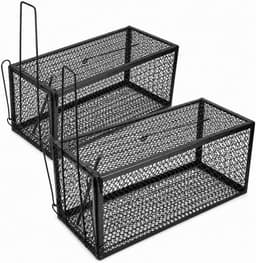
Plastic tunnels are the compact option for mice. In this comparison the Jsdoin body is around 17 cm long, while the MSR tunnel is 30 cm long but only 6.4 cm wide. That narrow cross-section matters: length by itself does not turn a mouse tunnel into a rat cage. Plastic is washable indoors, but you should still inspect the door, ventilation and trigger before setting it. Wire cages around 31 cm form the next class. The two Anyhall listings are 31.5 x 14.5 x 11.5 cm, and the Kwaiyole cages are roughly 31–32.5 cm long. For context, the UKRAT002 procedure uses a cage of about 35 x 15 x 15 cm for rat work. That figure is a useful ruler, not proof that any retail cage has passed a standardised test. A 31.5 cm product is still shorter than 35 cm, and a 22 cm Cardys cage is shorter again. Wildlife cages begin where ordinary rodent cages stop. The 78 cm Tcowoy and 105 cm Thealyn are intended for larger animals; the 145 cm Tcowoy is a 17.2 kg large-animal cage at about £180.99. Buying extra length is not automatically safer. A large cage can admit non-target animals and creates a more serious handling problem after the door closes. Price in this set follows the classes: compact bodies from about £9.99 to £19.84, the 31 cm two-packs about £25.49 to £27.99, and the smaller wildlife cages about £55.99 to £57.99. Decide the class first.

What fails after the door shuts

Trigger sensitivity is useful only when it matches the animal. Review notes for the Ratkil mention bait being taken without the plate firing, while the Cardys bait hook is described as fiddly or flimsy by some owners. A very light animal may not depress a stiff plate; a cautious rat may reach through mesh instead of entering fully. Look for a design that keeps the bait beyond the trigger. The door also needs level, stable ground. UK reviews of the 105 cm Thealyn say its doors depend on a flat surface. Indoors, place a mouse tunnel flush with a wall. Outdoors, check that stones or uneven paving cannot obstruct the door. Test the unloaded mechanism in its final position. Material descriptions deserve scrutiny. Both Kwaiyole listings call the body plastic in one details line and galvanised steel or mesh in their bullets. The two Anyhall pages describe mechanical pedal cages, yet their details flag them as electric without a battery, voltage or plug. If a listing contradicts itself, inspect the delivered product. Handling is part of the design: Anyhall reviews repeatedly note the lack of a carrying handle, whereas the Tcowoy wildlife cages claim guarded handles. If you cannot move an occupied trap without putting fingers near the mesh, choose another design.

Which class to take to the comparison

For clear mouse signs indoors, start with a washable plastic tunnel or compact mouse cage that can sit flat against the run. The MSR has a long but narrow 6.4 cm tunnel and explicitly says mice only. Treat the cheaper Jsdoin as a mouse product despite rat appearing in its title. For a suspected brown rat, compare the 31–32.5 cm wire cages and keep the 35 x 15 x 15 cm procedure example in mind as a ruler. A longer cage gives a wary rat more room to enter before reaching the bait. Dimensions alone cannot guarantee that the trigger or door will work. For a cat, rabbit, fox or squirrel-sized animal, establish the lawful end before choosing a wildlife cage. Then assess usable internal size, mesh strength, a guarded carrying point and whether the mechanism works on the intended ground. The 78 cm, 105 cm and 145 cm bodies are different tools, with different welfare and handling consequences. The best live catch trap shortlist applies that rule to named products.

Common questions

What length should a live rat cage be?
There is no universal retail minimum in the supplied evidence. UKRAT002 uses about 35 x 15 x 15 cm as a procedure example, while the rat cages in this comparison are around 31–32.5 cm. Use 35 cm as a practical ruler, check width and height too, and do not treat a 22 cm cage as the same class of tool.
Is a plastic live trap acceptable indoors?
Yes, for a mouse-sized job when the tunnel has ventilation, a reliable door and enough room for the animal to enter fully. Plastic is easy to wash and does not rust. It is a weaker choice for rats when the body is narrow, even if the product title uses the word rat.
How often should I check a live trap?
UFAW and Which? refer to checks at least every twelve hours for rodent live traps, but a seller or the circumstances may require more frequent visits. The MSR listing says every two to four hours. Decide your check times before setting the mechanism, and do not leave a catch unattended for convenience.
Does a no-kill trap mean I can release every animal?
No. A deliberately trapped grey squirrel must not be released or kept. Fox relocation also carries welfare concerns and is not a simple countryside release. Identify the animal and the applicable UK rules before setting a cage, because the lawful outcome differs by species and, in some cases, by nation.
Should I avoid a listing with conflicting specifications?
Treat the conflict as unresolved. The Kwaiyole pages disagree about material, and the Anyhall pages carry an unexplained electric flag. Ask the seller if possible, inspect the delivered product and do not set it until its dimensions, construction and mechanism match the job you planned.
When should I use a wildlife cage?
Use one only for a defined larger-animal problem, after confirming that trapping is appropriate and that you can handle the catch lawfully. A 78–105 cm cage may suit certain cats, rabbits or wildlife. It is unnecessarily cumbersome for house mice and ordinary rats.

Related pages

Sources

Public UK sources for glue traps, animal welfare, grey squirrels and fox cages. Listings are the amazon.co.uk captures for these twelve ASINs, not a live reload on 17 October 2026. Prices on amazon.co.uk move.

  1. BASC, grey squirrel live capture (retrieved 17 October 2026)
  2. GOV.UK, invasive non-native species rules (retrieved 17 October 2026)
  3. Glue Traps (Offences) Act 2022 (retrieved 17 October 2026)
  4. Animal Welfare Act 2006 (retrieved 17 October 2026)
  5. GOV.UK, foxes, moles and mink (retrieved 17 October 2026)
  6. UFAW, humane rodent control (retrieved 17 October 2026)
  7. RSPCA, injured rat or mouse (retrieved 17 October 2026)
  8. Mammal Society, brown rat (retrieved 17 October 2026)