Independent comparisons. We may earn from shop links. More info

Cockroach trap for the kitchen: where it should sit

Updated: 17 October 2026

A cockroach seen at night beside the fridge is more useful evidence than a random card left in the middle of the room. A cockroach trap for the kitchen should sit near the warm void, pipe run or protected edge the insect already uses, after crumbs and grease have been removed. Use our [cockroach trap comparison](/hub/traps/cockroach-trap) to choose a household monitor, but remember what it can establish: a catch maps activity. It does not show that a harbourage has been eliminated. A qualifying purchase can earn a commission at no extra cost to you.

A cockroach seen at night beside the fridge is more useful evidence than a random card left in the middle of the room.

Our top picks

On this page

Which cockroach uses a kitchen?

German cockroaches are strongly associated with warm, humid indoor areas. Coventry City Council describes adults at about 12–15 mm with two dark stripes, and highlights sinks and drains as sources of water. The British Pest Control Association also points to warm appliance motors, including fridges and ovens. An insect vanishing behind a working fridge therefore gives you a more credible monitoring position than an empty stretch of floor. Oriental cockroaches are larger; Manchester City Council describes them at about 22 mm, compared with roughly 12 mm for German cockroaches. They are associated more with the damp end of a building, although either species can appear in a kitchen. Size and location can help a professional identification, but do not use one blurred sighting to make a confident species claim. Look for supporting signs before setting cards. Small dark droppings or black marks may appear around tiles, sockets and cupboard edges; egg cases, cast skins, damaged food packaging and an unpleasant odour can indicate established activity. Check behind the dishwasher, below the sink and around appliance motors without dismantling electrical equipment. Daytime sightings or repeated signs suggest more than an occasional visitor.

What to clean before monitoring

Remove accessible food first. Vacuum crumbs along plinths and below movable appliances, wipe grease beside the cooker and seal dry goods in sound containers. Empty the bin, clean residue around it and do not leave pet food out overnight. BPCA specifically advises cleaning on top of and beneath the fridge, two places that are easily missed while the visible worktop looks spotless. Reduce water without creating an unsafe repair. Dry spills, report or fix a dripping pipe as appropriate, and check for condensation in the sink cupboard. Cockroaches can use small moisture sources, so placing a card beside a leak while leaving the leak untouched gives you observation without changing the conditions that support activity. Inspect deliveries and second-hand appliances before bringing them into the kitchen. A used fridge, microwave or cardboard box can provide a sheltered route into the home. Look around seams, motor areas and packaging where practical; do not spray an unknown chemical into electrical equipment. If signs are present, isolate the item and seek professional advice. Write down the original sighting before moving items, then let cleaned surfaces dry. A monitor placed in grease, dust or water may fail mechanically even when its location is otherwise sensible.

Where the card goes and where it must not

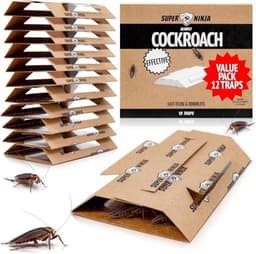
Place cards tight to edges: beside or beneath the fridge, near the cooker void, at the back of a dry sink cupboard or alongside a pipe entry. Orient the openings with the wall so an insect following the edge crosses the adhesive. If you use several cards, number them and separate the positions enough to compare routes. Fridge left, sink pipe and dishwasher right are more informative labels than three cards all recorded as kitchen. A few edge positions are usually more useful than a pile of cards in one corner. Two monitors in a kitchen is sometimes offered as a housing-management rule of thumb, not a UK legal requirement; the right number depends on the room and the evidence. Add a position when it samples a different harbourage, not merely because the pack contains 18 cards. Do not put a sticky monitor on the worktop, chopping board or another food-preparation surface. Hoy Hoy's listing expressly says to avoid food-preparation surfaces and direct sunlight. Keep adhesive beyond the reach of children and pets, and do not set an open board where a rodent could cross it. Glue-trap law differs between England, Scotland and Wales, so intended insect use does not remove the need to check local restrictions. Date each card and inspect it without touching the glue. The general how to use a cockroach trap guide covers peeling, folding and interpreting an empty card.

When the kitchen needs more than a card

A single catch tells you that a cockroach crossed that position. Repeated catches, egg cases, insects in daylight or evidence around several appliances point towards a harbourage that monitoring cannot resolve. Activity in the bathroom or adjoining flat as well as the kitchen suggests a wider route through pipework, gaps or shared structure. Record the pattern and contact a qualified pest controller. Do not respond to continued catches by buying an unnamed gel station. The generic station in this comparison did not identify its active substance, and a plastic casing is not proof that a treatment is authorised or suitable. Our glue trap or gel bait comparison explains why a readable label and user category are essential. This page concerns a home kitchen. If the room is used to prepare or sell food commercially, a cockroach catch is not a DIY monitoring project. Involve a pest-control contractor promptly so inspection, treatment and records meet the needs of the business. Even at home, a professional should take over when safe access requires moving fixed appliances, opening electrical fittings or applying a biocide. A good monitor map shows which route was active and when.

Common questions

Why do cockroaches hide behind a fridge?
The motor area offers warmth, shelter and protected edges, while nearby crumbs or condensation can provide resources. BPCA identifies fridge and oven motors as likely German cockroach harbourages. Clean above and below the appliance where safely accessible, then place a monitor along an edge rather than in open floor space.
How can I distinguish German and Oriental cockroaches?
German adults are typically smaller, around 12–15 mm, with two dark stripes; Oriental cockroaches are larger at roughly 22 mm and favour damper areas. Those clues are not a substitute for identification. Photograph a specimen or retain a closed monitor for a pest professional if the species will affect treatment.
Can I put a sticky trap on the worktop?
No. Hoy Hoy's researched instructions say not to place its monitor on food-preparation surfaces. Use a dry, protected edge below the worktop, beside an appliance or at the back of a suitable cupboard. Keep the adhesive away from food, utensils, children and pets.
Should I clean before setting the card?
Yes. Remove crumbs, grease and accessible water so they do not compete with the monitor or obscure evidence. Note the original sighting first, clean safely, allow the surface to dry and then place the card on the relevant route. Dust or moisture can reduce adhesive performance.
Can a second-hand fridge bring cockroaches into a home?
It can transport insects or egg cases in sheltered seams, packaging or the motor area. Inspect a used appliance before moving it into the kitchen and isolate it if you find suspicious signs. Do not apply an improvised spray inside electrical components; ask a professional how to proceed.
When is a kitchen no longer a DIY monitoring job?
Repeated catches, daytime activity, egg cases, several affected rooms or signs around multiple appliances justify professional assessment. A commercial food kitchen needs a contractor promptly after evidence appears. A household card can map activity, but it cannot identify every harbourage or supply a complete authorised treatment.

Related pages

Sources

Public UK sources for cockroach monitoring, biocidal claims, and glue-trap rules in England, Scotland, and Wales. Listings are the amazon.co.uk captures for these ten ASINs on 15 October 2026, not a live reload on 17 October 2026. Prices on amazon.co.uk move. Northern Ireland was not checked.

  1. BPCA, cockroach control advice (retrieved 17 October 2026)
  2. BPCA, cockroach sizes and harbourages (retrieved 17 October 2026)
  3. HSE, insect monitoring traps (retrieved 17 October 2026)
  4. Glue Traps (Offences) Act 2022 (retrieved 17 October 2026)
  5. Scottish Government, glue trap ban from 1 July 2026 (retrieved 17 October 2026)
  6. Welsh Government, glue trap ban from 17 October 2023 (retrieved 17 October 2026)
  7. Bromley Council, cockroaches in food businesses (retrieved 17 October 2026)
  8. Lodi Addict Gel label (retrieved 17 October 2026)