Independent comparisons. We may earn from shop links. More info

How to dress a grinding wheel

Updated: 22 October 2026

The chisel blues at the edge, or the wheel knocks once a turn because a groove has formed. How to dress a grinding wheel on a bench grinder is a short sequence: check the wheel stopped, support the dresser on a close rest at speed, use light passes, then isolate the machine and close the rest. This page is that order for a vitrified bench wheel. It does not rank dressers. Scored rows are on the [grinding wheel dresser comparison](/hub/tools/grinding-wheel-dresser). Peter F. used HSE’s HSG17 and the SR21 dust sheet. There was no dressing trial. A qualifying purchase can earn a commission at no extra cost to you.

The chisel blues at the edge, or the wheel knocks once a turn because a groove has formed.

Our top picks

On this page

Before the wheel turns

Look at the wheel before you pick up the dresser. A crack, a missing blotter, or a flange that does not match the bore is a reason to stop. HSG17 treats dressing as keeping a vitrified wheel true enough for a close rest, not as a repair for a damaged wheel. The wheel can still break. Do not start if the dresser fixing is already loose, and do not hold a loose angle-grinder diamond disc against the bench wheel. With the plug out, set the rest close, and only while the wheel is stationary. If you cannot hold a close rest, replace the wheel.

The pass

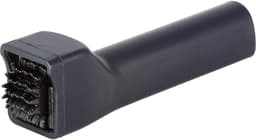
Let the wheel reach speed, and keep the dresser supported. HSG17 wants a hand dresser rested so it cannot dig in. Do not jam the tool between the wheel and the rest. Disconnecting the grinder before the pass would stop the wheel you are trying to true. A star head leaves a coarser, more open face and more dust than a flat diamond block. Which surface you want is on the diamond dresser versus star dresser page. Keep sleeves and drawstrings away. HSG17 names loose clothing.

Eyes, clothing and dust

Dry grinding throws grit at your face. Use rated eye protection, and the grinder’s shield if it has one. The shield does not make a cracked wheel safe to dress. At work, regulation 9 of PUWER 1998 requires training, and HSG17 includes dressing in that competence. The Abrasive Wheels Regulations 1970 were revoked. Domestic use is outside PUWER. The burst and the dust are not.

After the wheel is smaller

Switch off, wait until the wheel has stopped, and isolate the machine before you move the rest. Dressing reduces the diameter, so a rest that was close is now further away. Bring the rest back without it touching, and do the same for the spark arrestor. A light dress should leave the wheel cutting. If the wheel still knocks, stop and get someone competent with abrasive wheels. Dressing does not straighten a bent spindle, and it does not replace a free run, with people standing clear, after you mount a new wheel.

Common questions

Do I dress with the grinder switched on?
Yes. HSG17 dresses with the wheel running and the dresser supported. You isolate the machine to inspect the wheel and to move the rest, not to make the cut. Let the wheel reach speed, use light passes, then switch off before you adjust anything. Disconnecting first, as some shop text suggests, would stop the wheel you are trying to true.
How do I stop the dresser being pulled under the wheel?
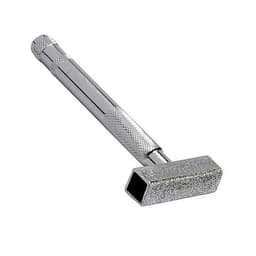
Support a hand block on the rest, and seat the lugs of a star dresser so the head cannot tip in. Keep the rest close enough that the tool cannot drop into the gap. HSG17 also rejects hammer dressing. If the nut on a diamond block is already loose, tighten it with the machine isolated before you start, or the head can leave the handle.
How close should the tool rest be, in UK terms?
HSG17 says as close as possible, adjusted only when the wheel is stationary. It states no millimetre gap. A school sheet’s 3 mm line, and the American 1/8 inch line, are not that guidance. Sealey’s BG150WL and BG200WL instructions cap the rest and spark arrestor at 2 mm on those models. If you can no longer hold a close gap, replace the wheel.
What eye protection is named?
HSG17 names eye protection or a screen for dry grinding, and it cites BS EN 166. Later commentary notes BS EN ISO 16321-1 as the newer marking, with existing BS EN 166 kit still acceptable while its certificate is valid. Use rated eye protection and the machine’s shield if it has one. The shield does not make a cracked wheel safe to dress.
What about the dust in a garage?
SR21 treats dressing dust as a hazard to airways, skin and eyes. At work it expects local exhaust, examined at least every 14 months. A private shed is not that setup, and there is no exposure number here for a garage. Open the doors, do not blow the dust around the room, and wash afterwards. That is the home version of the same hazard.
How hard do I press?
Use frequent light passes and stop when the face is even. HSG17 prefers that to one heavy cut. Heavy pressure is how a thin diamond face wears through. One reviewer’s estimate of 1 to 1.5 mm off a diameter is a single anecdote that the wheel shrinks, not a target depth. If the glaze is gone, another hard pass only wastes wheel.
When do I stop and get a competent person?
Stop if the wheel is cracked, the flanges or blotters are wrong, or a light dress does not cure a knock. Stop if you mount wheels for other people at work and you have not been trained. Also stop if the job is a surface-grinder form you cannot specify, or a CBN wheel, which should not be dressed. A sound vitrified bench wheel that is merely glazed is the job this sequence is for.

Related pages

Sources

Public UK sources from the research digest, used for this page in October 2026. Prices, stars and review counts are from the nine amazon.co.uk listings captured on 19 October 2026. HSG17 and PUWER apply at work. They are not a certificate for a domestic dresser, and none of these scores is a laboratory test.

  1. HSE, HSG17 Safety in the use of abrasive wheels (retrieved 19 October 2026)
  2. legislation.gov.uk, PUWER 1998 (retrieved 19 October 2026)
  3. HSE, SR21 Dressing and grinding dust (retrieved 19 October 2026)
  4. HSE, Using the right type of PPE (retrieved 19 October 2026)
  5. HSENI, Abrasive wheels information sheet (retrieved 19 October 2026)
  6. wolfcraft, Grinding wheel dresser 4105 (retrieved 19 October 2026)
  7. Peter Child, Wheel dresser note (retrieved 19 October 2026)
  8. Norton 37C silicon-carbide stick data (retrieved 19 October 2026)