Independent comparisons. We may earn from shop links. More info

Bench grinder wheel dresser

Updated: 22 October 2026

The usual machine in a UK shed is a 150 mm or 200 mm bench grinder, with a grey wheel and sometimes a white one. A bench grinder wheel dresser is for those vitrified stones when they glaze, groove or go out of round. It is not for a surface grinder, a cup wheel, or a CBN wheel. Peter F. used HSG17, Sealey’s notes and the amazon.co.uk reviews in this capture. There was no lab test. A qualifying purchase can earn a commission at no extra cost to you. Scores are on the [grinding wheel dresser comparison](/hub/tools/grinding-wheel-dresser).

The usual machine in a UK shed is a 150 mm or 200 mm bench grinder, with a grey wheel and sometimes a white one. A bench grinder wheel dresser is for those vitrified stones when they glaze, groove or go out of round.

Our top picks

On this page

The bench grinder this page means

A 150 mm machine is the common 6 inch grinder. A 200 mm machine is the next size, still off-hand. UK reviews describe that class even when an attribute says “angle grinder”. On QWORK and VEDA that line is a conflict. An angle-grinder cup wheel is not a bench stone. A toolroom surface grinder is a different job. A block at about £6.95 or £6.49 is enough geometry for a 150 mm vitrified wheel if the head stays on the handle.

Grey wheels and white wheels

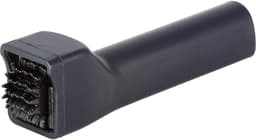
Grey aluminium oxide glazes on hard steel and the chisel burns. Peter Child’s note is that those grey wheels need frequent dressing. White aluminium oxide loses shape sooner, so you restore the shape more often. Axminster describes that as behaviour, not a timetable. The same dresser can serve both colours when both wheels are vitrified. A white wheel that loses its corner wants the flatter face a diamond block leaves. A grey wheel that has gone shiny is the case for a star head if you want the grain opened.

The rest after you have dressed

HSG17 wants the work rest as close as possible, and you may move it only when the wheel has stopped. A grooved wheel forces the rest back, and that gap is where a chisel can be pulled in. After the pass, isolate the grinder, wait until the wheel is still, and bring the rest in. At work, training under regulation 9 of PUWER is the live duty. At home that duty does not apply. If you cannot get the rest close without it touching, the wheel is due for replacement.

What not to dress on the same grinder

A plated CBN wheel is the clean exclusion. Charnwood’s manual says maintenance is none and the wheel never needs truing or dressing. Peter Child says the same of CBN and diamond-plated wheels: one layer of grit. If the CBN side still cuts, leave it alone. Do not clean it up with the block you use on the grey stone. The other end of a cheap grinder is often a wire wheel. A diamond block or a star head will ruin the brush and throw wire. A light dress will not straighten a bent spindle, so if the knock remains, stop. If you still need a block, a star or a stick, that is the buying guide.

Common questions

Will a £7 dresser work on a 150 mm bench grinder?
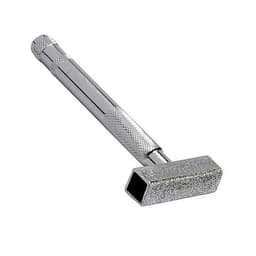
Yes, if it is a diamond block or a star dresser and the wheel is vitrified. QWORK at about £6.95 and VEDA at about £6.49 are the rows UK reviews describe on bench wheels, including a VEDA note of a 6 inch wheel. Both files mention loose nuts, and one VEDA review says the head came off. The price is enough for the diameter. The fixing still has to be checked before the wheel runs.
Do I dress a new wheel?
Only if it is out of round after mounting. HSG17 wants a free run with people standing clear, then truing if the wheel does not run true. A new grey wheel that cuts cleanly can wait until it glazes. Dressing does not replace a check of the flanges, the blotters and the wheel. If it knocks on the first start, true it and reset the rest.
What gap does a UK bench-grinder maker print?
Sealey’s BG150WL, BG150XWL and BG200WL instructions say the spark arrestor and rest must be no greater than 2 mm on those models, and that the wheel is replaced when you can no longer hold that gap. HSG17 says as close as possible and gives no millimetre figure. Do not apply Sealey’s 2 mm to every brand, and do not treat 3 mm or 1/8 inch as UK law.
Can I use the same dresser on the wire wheel?
No. A wire wheel is not a bonded abrasive. A diamond block or a star head is for a vitrified grinding wheel. Using either on wire damages the brush and throws wire. A cup wheel or a sanding disc in the same search is not a dresser either. Leave the wire side alone.
I fitted a CBN wheel. Do I still need a dresser?
Not for that wheel. Charnwood’s CBN manual says maintenance is none and the wheel never needs dressing. Peter Child says the same of single-layer CBN and diamond plate. Keep a dresser only if the other end still carries a vitrified grey or white stone. Do not clean the CBN face with the block you use on the grey wheel.
Is this different from dressing a surface grinder?
Yes. A surface grinder uses a mounted single-point and a feed you can set. This page is an off-hand 150 mm or 200 mm bench grinder and a hand block or star dresser on the rest. The MachEl 1 carat claim at about £11.99, with no reviews, is not that toolroom diamond. If you cannot state the form and the infeed, you are on a bench grinder, and a £12 shank is not the holder for the other machine.

Related pages

Sources

Public UK sources from the research digest, used for this page in October 2026. Prices, stars and review counts are from the nine amazon.co.uk listings captured on 19 October 2026. HSG17 and PUWER apply at work. They are not a certificate for a domestic dresser, and none of these scores is a laboratory test.

  1. HSE, HSG17 Safety in the use of abrasive wheels (retrieved 19 October 2026)
  2. legislation.gov.uk, PUWER 1998 (retrieved 19 October 2026)
  3. HSE, SR21 Dressing and grinding dust (retrieved 19 October 2026)
  4. HSE, Using the right type of PPE (retrieved 19 October 2026)
  5. HSENI, Abrasive wheels information sheet (retrieved 19 October 2026)
  6. wolfcraft, Grinding wheel dresser 4105 (retrieved 19 October 2026)
  7. Peter Child, Wheel dresser note (retrieved 19 October 2026)
  8. Norton 37C silicon-carbide stick data (retrieved 19 October 2026)