Diamond dresser vs star dresser
Two tools both claim to dress a grinding wheel, and the photos do not do the same job. A diamond dresser vs star dresser choice is about the face you want next: a flatter surface for drill lips and chisels, or an opened grain on a glazed vitrified wheel. Neither tool is for a CBN wheel, and neither is safer because of its shape. Peter F. used the amazon.co.uk listings, HSE’s HSG17 and a UK workshop thread. That thread is experience, not a measured test. A qualifying purchase can earn a commission at no extra cost to you. The scored rows are on the [grinding wheel dresser comparison](/hub/tools/grinding-wheel-dresser).
Two tools both claim to dress a grinding wheel, and the photos do not do the same job.
Two tools both claim to dress a grinding wheel, and the photos do not do the same job. A diamond dresser vs star dresser choice is about the face you want next: a flatter surface for drill lips and chisels, or an opened grain on a glazed vitrified wheel. Neither tool is for a CBN wheel, and neither is safer because of its shape. Peter F. used the amazon.co.uk listings, HSE’s HSG17 and a UK workshop thread. That thread is experience, not a measured test. A qualifying purchase can earn a commission at no extra cost to you. The scored rows are on the grinding wheel dresser comparison.
Our top picks
| Badge | Product | Type | Face | Fixing | Note | Price | Offer |
|---|---|---|---|---|---|---|---|
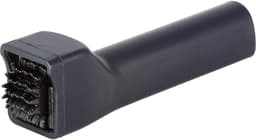
| Best overall |  wolfcraft wolfcraft 4105000 dresser | Star dresser | Unknown | Check the screw | 7.6 | about £11.78 | View offer |
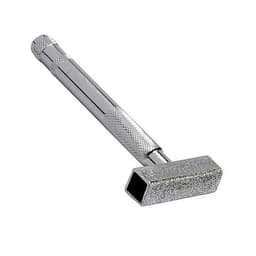
 QWORK QWORK 3-piece diamond dresser | Diamond block | 45 × 10 mm | Nut works loose | 8.9 | about £6.95 | View offer | |
| Best value |  VEDA VEDA diamond wheel dresser | Diamond block | 40 × 10 mm title | Head came off | 8.3 | about £6.49 | View offer |

On this page
What each tool does to the grain
How you hold them
The wolfcraft row
When to pick which
Common questions
Which one leaves a flatter face for chisels and drill bits?
Which one opens a glazed wheel faster?
Does a star dresser waste more wheel?
Is the wolfcraft 4105000 a star dresser?
Can I use either on a white wheel and a grey wheel?
What is the lug for?
Related pages
Sources
Public UK sources from the research digest, used for this page in October 2026. Prices, stars and review counts are from the nine amazon.co.uk listings captured on 19 October 2026. HSG17 and PUWER apply at work. They are not a certificate for a domestic dresser, and none of these scores is a laboratory test.
- HSE, HSG17 Safety in the use of abrasive wheels (retrieved 19 October 2026)
- legislation.gov.uk, PUWER 1998 (retrieved 19 October 2026)
- HSE, SR21 Dressing and grinding dust (retrieved 19 October 2026)
- HSE, Using the right type of PPE (retrieved 19 October 2026)
- HSENI, Abrasive wheels information sheet (retrieved 19 October 2026)
- wolfcraft, Grinding wheel dresser 4105 (retrieved 19 October 2026)
- Peter Child, Wheel dresser note (retrieved 19 October 2026)
- Norton 37C silicon-carbide stick data (retrieved 19 October 2026)