How to use a Bosch impact driver
The battery is off, the screw is in the timber, and you want the head to seat without the bit skating out or the screw disappearing into the wood. This is how to use a Bosch impact driver in that order: fit an impact-rated hex bit, choose the mode or the trigger, keep the tool square, and stop when the head meets the surface. The five bodies and their prices are on the [Bosch cordless impact driver comparison](/hub/tools/bosch-cordless-impact-driver). The Products Compared editorial team used Bosch's manuals and the amazon.co.uk review notes saved on 20 October 2026. We did not run a driving test. A qualifying purchase can earn a commission at no extra cost to you.
The battery is off, the screw is in the timber, and you want the head to seat without the bit skating out or the screw disappearing into the wood.
The battery is off, the screw is in the timber, and you want the head to seat without the bit skating out or the screw disappearing into the wood. This is how to use a Bosch impact driver in that order: fit an impact-rated hex bit, choose the mode or the trigger, keep the tool square, and stop when the head meets the surface. The five bodies and their prices are on the Bosch cordless impact driver comparison. The Products Compared editorial team used Bosch's manuals and the amazon.co.uk review notes saved on 20 October 2026. We did not run a driving test. A qualifying purchase can earn a commission at no extra cost to you.
Our top picks
| Badge | Product | Control | Holder | Bit note | Note | Price | Offer |
|---|---|---|---|---|---|---|---|
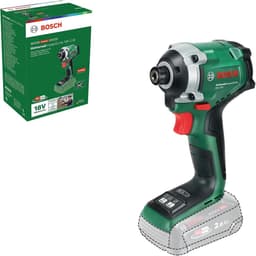
| Best overall |  Bosch Bosch UniversalImpactDrive 18V-210 | Two speeds | 1/4 inch hex | Deep holder | 8.3 | about £78.90 | View offer |
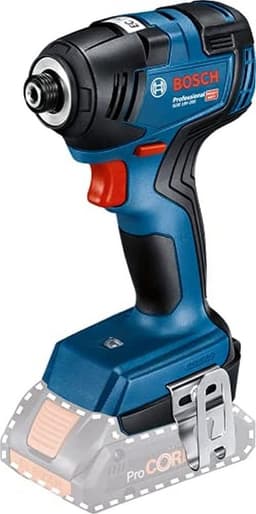
 Bosch Professional Bosch GDR 18V-200 | Trigger pressure | 1/4 inch hex | No auto stop | 8.6 | about £114.00 | View offer | |
| Best value |  Bosch Professional Bosch GDR 18V-215 | Wood and metal modes | Single-push | Modes in forward | 8.4 | about £77.95 | View offer |

On this page
Bit, holder, and the battery off
Modes on the 215, trigger on the 200
Drive straight, then stop
When a professional should take over
Common questions
Which bits go in a Bosch hex driver?
How do I set wood versus metal on the 215?
The 200 has no dial. How do I start a screw?
How long should I keep impacting?
Why did the bit walk out of the head?
When do I stop and use a torque wrench?
Related pages
Sources
Public UK sources from the research digest, used for this page in October 2026. Prices, stars and review counts are the saved amazon.co.uk listings for these five ASINs. Vibration figures are manufacturer emissions, not a dose for your job. HSE vibration limits and PUWER apply at work.
- Bosch Professional GB, GDR 18V-200 (retrieved October 2026)
- Bosch Professional GB, GDR 18V-215 (retrieved October 2026)
- Bosch Professional GB, GDX 18V-285 (retrieved October 2026)
- Bosch DIY GB, UniversalImpactDrive 18V-210 (retrieved October 2026)
- Bosch Professional GB, GDR 12V-105 (retrieved October 2026)
- Bosch Professional GB, AMPShare (retrieved October 2026)
- HSE, vibration regulations (retrieved October 2026)
- The Control of Noise at Work Regulations 2005, regulation 4 (retrieved October 2026)