Independent comparisons. We may earn from shop links. More info

How to mount a tool wall safely and level

Updated: October 2026

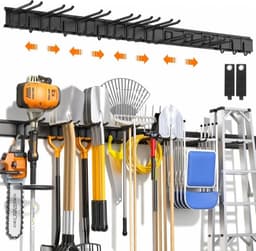
Learning how to mount a tool wall begins before you choose a drill bit. You need to identify the wall, choose fixings specified for that material, and plan where the loaded rack will sit. The screws supplied with an organiser are not a universal fixing system, and a capacity printed on the rack cannot override the limit of an anchor or a weak wall. This guide covers brick, concrete, timber and plasterboard in a UK garage, shed or workshop. Use the [tools wall comparison](/hub/tool-accessories/tools-wall) for model details. The steps below are about installation. We did not load-test a wall. A qualifying purchase can earn a commission at no extra cost to you.

Learning how to mount a tool wall begins before you choose a drill bit. You need to identify the wall, choose fixings specified for that material, and plan where the loaded rack will sit.

Our top picks

On this page

Name the wall before opening the fixing pack

Do not assume every solid-looking wall is masonry. A stud wall often sounds hollow between the supports, and a thin shed panel may have little strength away from the framing. If you cannot identify the substrate, ask a competent tradesperson to inspect it. Check for cables and pipes before you drill. Sockets, switches, taps and radiators are reasons to be cautious. Halfords’ wall-mounting guidance also advises professional help when you are unsure. Keep heavy items lower, so a dropped tool has less distance to fall. Mark the rack’s actual holes, because several listings show conflicting measurements. Use a spirit level, and lay out every rail before the first hole. The tool wall buying guide helps if the shape no longer suits the tools or the wall.

Mounting on brick or concrete

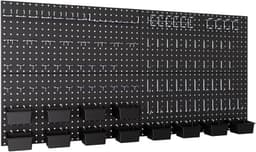
Read the wall-plug packet first. It specifies the screw and the drill-bit diameter. B&Q’s fitting guidance treats that match as the centre of the method. A 6 mm plug example does not mean every rack needs a 6 mm hole. Hold the empty rack level and mark every fixing point. Choose sound brick or concrete unless the instructions cover mortar. Drill to the depth on the packet, clear the dust so the plug can seat, and insert it flush. Tighten evenly and stop before the frame distorts. Housolution or Zacurter can be fitted as separate sections, and each section still needs the specified fixing points. INCLY restricts its pegboard to solid wood, brick or concrete. Add light tools first, and stay within the lowest limit from the rack, the fixings and the wall. If the rack shifts, unload it and correct the holes.

Timber studs and shed framing

Sound timber can take a direct fixing when the screw type and embedment follow the instructions. Find the centre of the stud rather than its edge. Services may pass through the framing. Rack holes rarely meet every stud. A timber batten across several uprights can give a continuous line where a shed has only thin sheet between the frames. GearHooks gives a similar warning for some sheds, for its own products. The batten and the frame underneath have to carry the planned tools. Thin cladding is not structural just because a screw bites. Long handles can lever on a hook as you lift them off. The garden tool wall rack guide covers that shed case.

Plasterboard is a different limit

Standard masonry plugs are not plasterboard fixings. Cavity anchors and screws into studs have their own conditions for board thickness and screw size. A Screwfix listing for one Rawlplug SM Interset product prints a 10 kg maximum. That figure cannot be copied onto another fixing or multiplied by four to justify a 40 kg or 90 kg tool wall. One BILIONE reviewer used Interset anchors. That is not a capacity test. INCLY says not drywall, so another anchor does not cancel the instruction. Align a heavy rack with studs where you can. Stop if the rack will sit above people, a vehicle or valuable equipment and you cannot verify the structure.

After the rack is fitted

Load the wall in stages. Put the heaviest drills or cases on the lowest positions the rack is designed for, keep sharp edges out of the walkway, and make sure long handles cannot swing free. Use retaining features where the product supplies them. Do not hang a tool that does not sit securely just because a hook is empty. Recheck screws after the first weeks of use. Unload the rack if holes widen, the board cracks, or a rail bends.

Common questions

Can I use the screws in the box on plasterboard?
Only if the instructions identify them for your plasterboard construction and load. Many supplied plugs are intended for masonry. Choose a fixing specified for the board thickness and the cavity, or fix into structural timber. If the planned load is substantial, get site-specific advice before you hang the tools.
What drill bit do I need for brick?
Use the diameter and type specified on the wall-plug packet, not a size guessed from the screw. Mark the required depth, use a suitable masonry bit and clear dust from the hole. Also confirm that the rack hole accepts the recommended screw without damaging the frame.
Why does INCLY say not drywall?
Its listing limits installation to solid walls such as wood, brick or concrete. That restriction takes priority over a general claim that a particular plasterboard anchor is strong. Choose another system, or create a suitable structural mounting surface, rather than ignoring the condition.
Will four cavity anchors add up to 90 kg?
You cannot assume that. The load may be uneven, anchor spacing matters, and the board can fail before each fixing reaches an individual figure. Capacity data also depends on the exact anchor and the wall build. Treat the lowest verified limit of the whole system as the one that controls the installation.
When should I call a professional?
Stop when you cannot identify the wall, you suspect hidden services, you cannot locate sound structure, or you plan a heavy installation beyond the fixing guidance. Seek help too if earlier holes are damaged, or if the rack will sit above people, a car or valuable equipment.
Should the heaviest drills go on the top shelf?
Keep heavier tools as low as the rack design allows, provided they stay secure and you can still reach them. That shortens the fall and makes lifting easier. Follow the product’s intended positions rather than placing a drill on an unsuitable shelf or hook.

Related pages

Sources

Public UK sources for falling objects, plasterboard fixings, pegboard hook pitch, and the 30-day right to reject. Listings checked 17 October 2026. Prices on amazon.co.uk move.

  1. HSE, struck-by hazards (retrieved 17 October 2026)
  2. HSE, HSG129 health and safety in engineering workshops (retrieved 17 October 2026)
  3. Consumer Rights Act 2015, section 22 (retrieved 17 October 2026)
  4. Which?, faulty goods (retrieved 17 October 2026)
  5. Screwfix, Rawlplug SM Interset plasterboard fixings (retrieved 17 October 2026)
  6. Rawlplug, SPO spring toggle datasheet (retrieved 17 October 2026)
  7. KAS, pegboard hooks and accessories (retrieved 17 October 2026)
  8. UKPOS, single prong metal pegboard hook (retrieved 17 October 2026)