Wet cutting petrol disc cutter: control dust properly
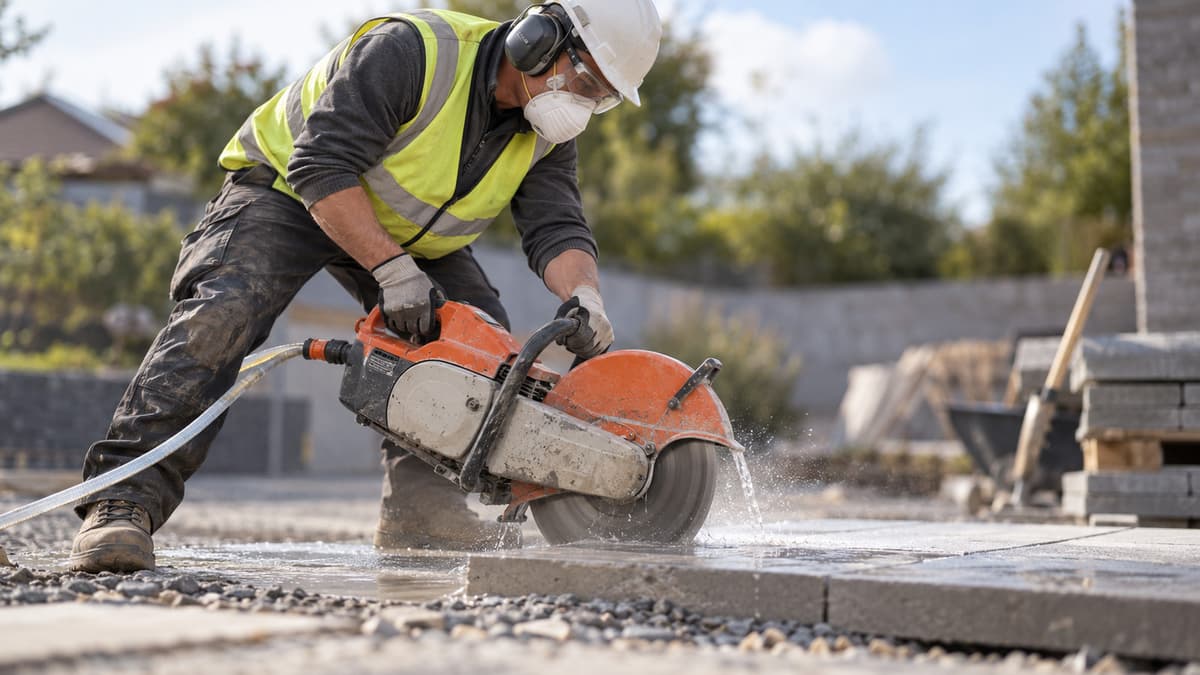
Wet-cut with a petrol disc cutter at about 0.5 litres a minute on both blade faces. Water still leaves you needing face-fit-tested respiratory protection.
On this page

Wet cutting with a petrol disc cutter means supplying water continuously to the blade while you cut, primarily to suppress the fine silica dust released from concrete, kerbs and paving. For a hand-held petrol cut-off saw, UK Health and Safety Executive guidance gives about 0.5 litres per minute as the minimum water flow. Water does not replace respiratory protective equipment, and it must not be improvised on an electrically operated saw.
You need enough flow at the blade for the whole cut, clear jets on both sides, a blade approved for the application and a plan for the slurry left behind. If any part fails, the control can look wet while a visible plume escapes from the cutting point.
Peter F. prepared this from public HSE construction guidance and the operating limits printed for the saw and blade. We did not carry out a laboratory or site test. The PRODIAMANT figure is the amazon.co.uk price in our 350 mm diamond blade comparison, captured at about £54.78. A qualifying purchase can earn a commission at no extra cost to you.
In short
Use a mains water supply where practicable, or a suitably sized pressurised bottle when a hose cannot reach. Check that water reaches both sides of the blade before cutting, maintain at least about 0.5 litres per minute, and keep wearing suitable, face-fit-tested respiratory protection. Stop if the jets block or the water runs out; do not finish the cut dry.
Why a petrol disc cutter needs water
Cutting concrete and similar materials can release respirable crystalline silica: particles small enough to reach deep into the lungs. Wet suppression captures much of that dust as it is generated, before it can become airborne and spread around the site. Water is a control measure. Cooling may help a compatible blade avoid excessive heat, but it does not promise longer blade life: material, blade specification and cutting pressure all affect wear.
Water has to arrive at the cutting point through jets that wet both sides of the blade. A damp surface elsewhere is not evidence that suppression is working. If a dry plume appears, stop and correct the delivery. HSE guidance for cutting paving states that respiratory protective equipment is still required alongside water suppression. For silica work, that commonly means equipment providing an assigned protection factor of 20, such as a suitable FFP3 disposable mask or a half mask with P3 filters. Tight-fitting RPE must be face-fit tested to the wearer, worn correctly and compatible with other protective equipment.
Petrol exhaust is a separate hazard, so use the saw in a well-ventilated outdoor area. Wet cutting does not remove risks from exhaust, noise, vibration, fragments or kickback. For the hazard itself, read silica dust when cutting kerbs.
Hose or pressurised bottle
A mains connection is usually the most dependable option because it provides a continuous supply. Use the saw’s intended water fitting and inspect the line for kinks and leaks. A long hose, poor pressure or a partly closed valve can reduce delivery even when water is visible.
Where a mains supply cannot reach, HSE guidance describes a portable pressurised water bottle as the alternative. A bottle of around 8 litres is a practical reference point. At the minimum flow of 0.5 litres per minute, eight litres represents only about 16 minutes of theoretical flow. Allowance for setup, pressure loss and residual water makes the useful period shorter. Treat that calculation as a planning check, not a guaranteed cutting time.
Pressurise the bottle according to its instructions and keep the hose out of the cutting route. Check pressure and flow before every cut, because delivery can fall as the bottle empties. Keep spare clean water within reach. If the bottle empties, stop safely, then refill and repressurise it before restarting. Protect the supply from freezing in cold weather.
Checking the 0.5 litre-per-minute minimum
About 0.5 litres per minute is a minimum benchmark from HSE guidance for this type of task. With the engine off and the saw stable, collect the discharged water in a marked container. In 30 seconds you would expect at least roughly 250 ml; in one minute, at least roughly 500 ml. Confirm that the jets wet both blade faces, and follow a higher flow where the manual requires it.
Check the blade, jets and saw
Confirm that the diamond blade is the correct diameter and bore for the saw, that its maximum permitted speed is not lower than the saw spindle speed, and that any direction arrow agrees with the spindle rotation. Inspect the segments, steel core and bore for cracking, distortion, missing segments or other damage. A damaged blade is a stop condition, whether you intend to cut wet or dry. How to recognise wear that means stop is covered in when a diamond blade is finished.
The blade must permit the intended wet application. Some UK listings expressly say wet and dry; others do not. Silence in a marketplace title is not permission, so check the blade marking and the manufacturer’s technical information. The PRODIAMANT 350 mm listing with a 20 mm bore states wet and dry cutting for concrete, kerbs and masonry, and the bore still has to match the arbor.
Inspect the connector, hose, valve and each jet. HSE guidance recommends cleaning jets at every blade change because grit and dried slurry can restrict one side. Use the method in the saw manual. Set the guard as instructed, keep the hose away from the blade path and support the material so the cut cannot trap the blade. Stop if a dust plume appears, the spray pattern changes or the work moves.
Manage slurry
Wet cutting creates slurry that can spread across routes and cause slips. If it dries, traffic or sweeping can put fine material back into the air, so plan containment before cutting. Use the minimum effective flow that meets the guidance and the equipment instructions. Keep slurry away from drains, contain it using the site’s agreed method and follow local disposal arrangements. Do not wash it into a surface-water drain.
On sloping paving, runoff may cross an access route well away from the saw. Pause if slurry reaches a route used by others, and do not dry-sweep the residue after it hardens. The practical issues are covered in slurry from wet cutting paving. Afterwards, shut down as instructed, clean the jets before residue sets and store the water kit protected from frost.
Electric saws are a different case
Do not transfer this petrol-saw method to a 110 V or 230 V electrically operated cut-off saw. HSE construction guidance for this work says not to use wet dust suppression with electrically operated saws. Adding a loose hose or bottle creates an electrical risk that a lower supply voltage does not remove. Some purpose-designed electric machines have engineered wet systems. If the manual does not explicitly provide for wet operation, keep water away and choose another properly controlled method.
A wet-and-dry blade does not convert an ordinary electric saw into a wet saw. On a petrol saw, the right blade still leaves you needing functioning jets and RPE. If the equipment cannot control the job, stop and get the correct saw, dust control or competent help.
A practical wet-cutting sequence
This sequence is a check, not a substitute for training or the instructions supplied with your particular saw.
- Confirm a petrol cut-off saw for the task, a blade approved for wet use, and stable, supported material. Plan for exhaust, exclusion, noise, slurry and footing.
- Inspect blade condition, size, bore, speed rating and rotation, then the hose, connectors, supply, valve and jets.
- Wear the eye, hearing, foot and other protection the assessment identifies, plus face-fit-tested RPE.
- Start the water before the cut. Establish at least about 0.5 litres per minute, or any higher flow the manufacturer requires, on both blade faces.
- Cut without forcing the blade. Keep a stable stance and the hose clear. Stop if dust appears, flow weakens or the work shifts.
- Contain slurry before it enters a walkway or drain, and do not sweep it once it has dried.
- Isolate the saw and water supply as instructed, clean the jets and store the kit protected from frost.
Common questions
How much water does a petrol cut-off saw need?
Is a pressurised bottle as good as a hose?
Do I still need an FFP3 mask when wet cutting?
Can I connect a garden hose to a disc cutter?
What should I do if the water jets block?
Does wet cutting make a diamond blade last longer?
Can I wet-cut using a 110 V electric saw?
What should I do with concrete-cutting slurry?

Peter F. is the editor for DIY & tools at productscompared.co.uk. Comparisons in this category are checked against amazon.co.uk listings, review evidence and public UK sources.
Related articles
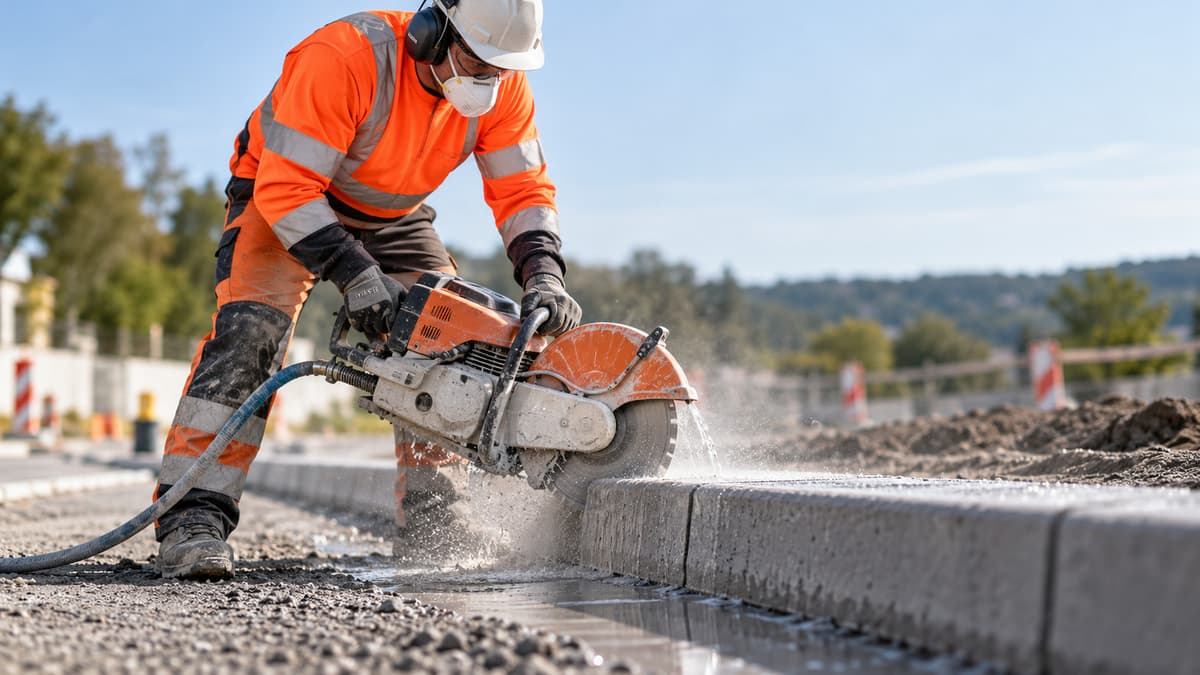
Silica dust when you cut kerbs
Why short cuts still create a serious lung risk, and how UK guidance approaches control.
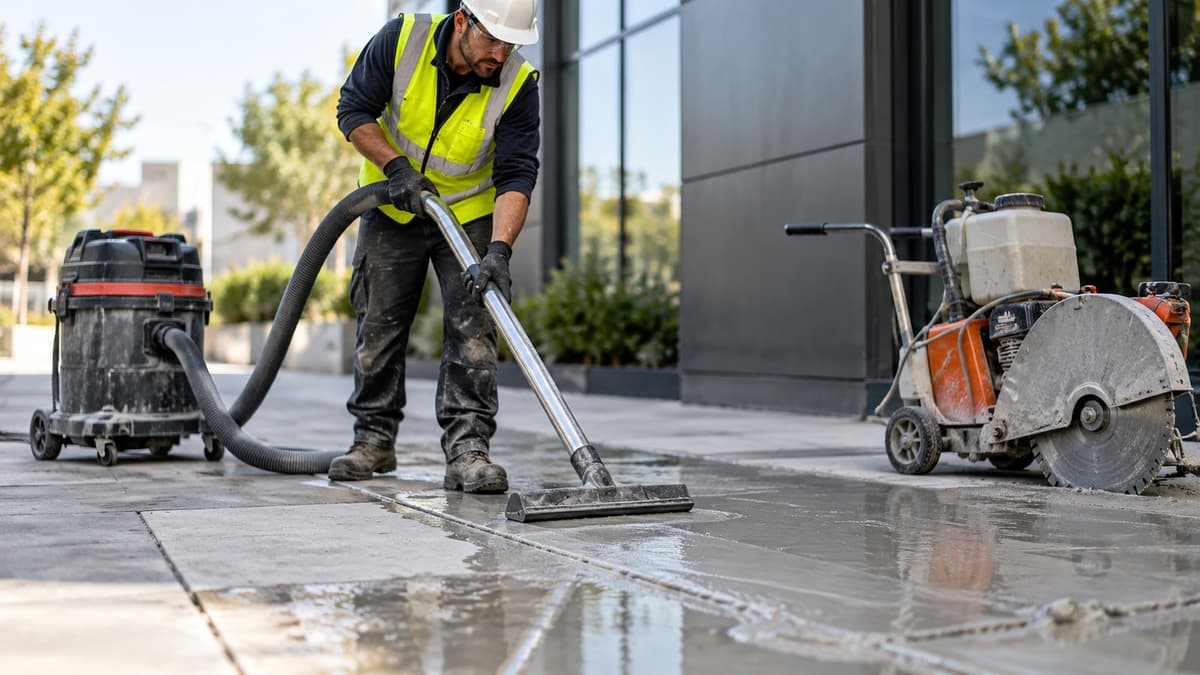
Slurry from wet cutting paving
Control wet-cutting slurry before it creates a slip hazard or dries back into dust.

When a diamond blade is finished
Recognise blade damage and wear that mean you should stop rather than keep cutting.