Silica dust cutting kerbs: control the lung risk
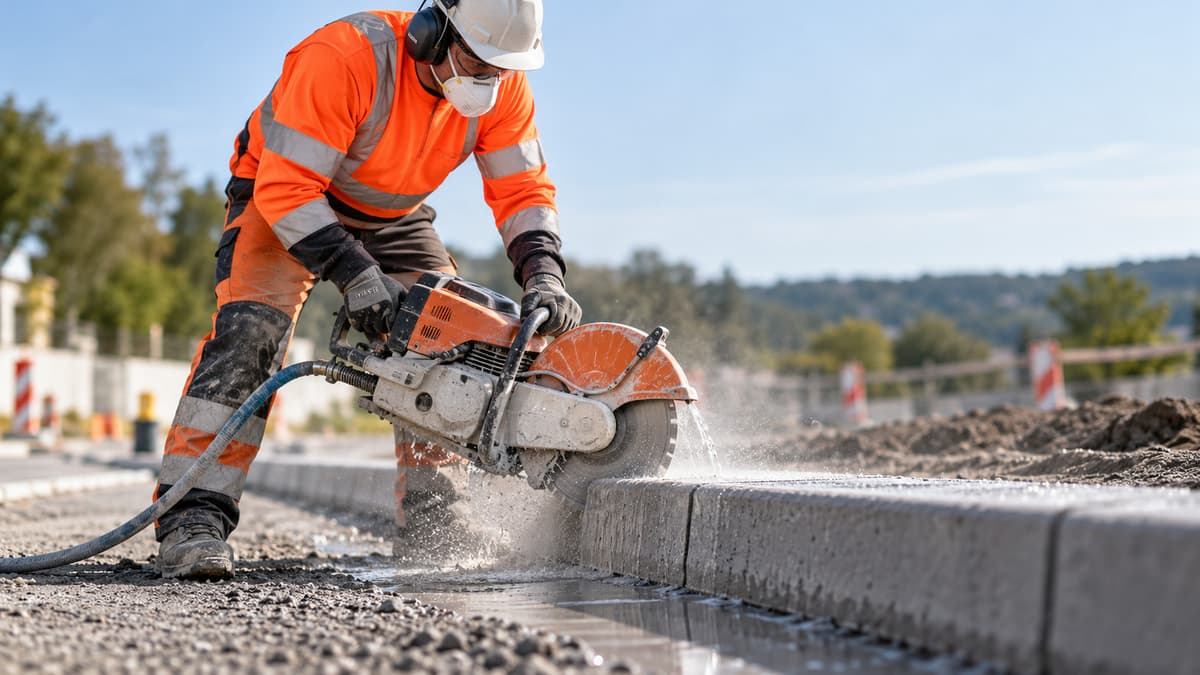
Silica dust from cutting kerbs can harm your lungs even on a short job. See what HSE expects, how water and FFP3 RPE work, and what to check on a blade.
On this page

The pale cloud from a quick kerb cut is not simply dirt. Silica dust when you cut kerbs can create a high concentration of respirable crystalline silica, including during a short job, and the finest particles can travel deep into your lungs. Reduce the number of cuts, control dust at the blade, and use suitable respiratory protective equipment where the assessment requires it.
Peter F. checked this against HSE guidance on cutting paving and kerbs, INDG461 and CN6. The PRODIAMANT price is the amazon.co.uk figure from our 350 mm diamond blade comparison in October 2026. We did not measure dust on a site. A qualifying purchase can earn us a commission at no extra cost to you.
In short
Dry-cutting concrete kerbs can generate intense silica exposure. HSE cites a dry-cutting example with peaks of up to 70 mg/m³. The UK workplace exposure limit is 0.1 mg/m³ over eight hours. Use water suppression or suitable extraction, a suitable diamond blade, and face-fitted RPE. Water alone does not capture every particle.
What is in kerb dust
Concrete, mortar, sandstone and many paving products contain crystalline silica. A cut-off saw also makes particles small enough to stay airborne. That respirable fraction can reach the gas-exchange region of your lungs. Coarse dust may fall quickly while the finest particles stay suspended and settle on clothing and tools. Sweeping or blowing settled dust puts it back into the air.
Breathing respirable crystalline silica can cause silicosis, an incurable scarring of the lungs. HSE also associates exposure with lung cancer and chronic obstructive pulmonary disease. Each poorly controlled cut adds to that total, and a high peak can deliver a substantial dose in minutes.
At work this falls under the Control of Substances Hazardous to Health Regulations 2002 (COSHH). The workplace exposure limit for respirable crystalline silica is 0.1 mg/m³ as an eight-hour average. Because silica is a carcinogen, exposure must be reduced as low as reasonably practicable, not merely kept just under that number.
Why short cuts still matter
Do not treat a dozen kerb cuts as too brief for water. The limit is a shift average, and a short dusty task can dominate it. HSE's paving guidance reports dry-cutting peaks of up to 70 mg/m³ in its example, hundreds of times the eight-hour limit. That figure is not your personal result.
Remove unnecessary cuts. Check dimensions before marking, use standard kerb lengths where the design allows, and avoid a layout that multiplies offcuts. Cut in a ventilated place away from doorways, vehicle cabs and other trades. Outdoors is easier than a confined space, but wind can carry the plume towards a colleague or an occupied property.
The assessment must cover the whole task: cutting, clearing slurry, changing dusty clothing and cleaning the saw. Do not use compressed air or dry sweeping. Use wet methods or suitable dust-class extraction for clean-up, deal with slurry before it dries, and wash exposed hands before eating, drinking or smoking.
Control dust at the blade
Stop dust becoming airborne rather than relying on a mask after the plume forms. For hand-held cut-off saws on paving and kerbs, that usually means water suppression through the saw's designed system. Wetting the surface with a garden spray before a dry cut is not equivalent. Water needs to reach the point where the blade creates dust.
Set up the supply before starting the machine. Confirm that water reaches both sides of the blade and keeps flowing for the whole cut. Too little water can leave the kerb looking damp while a plume remains. Petrol-powered saws are commonly designed for wet cutting with a petrol disc cutter. Use electrically powered equipment only with a system intended for wet cutting.
Water suppression reduces dust markedly but does not collect every fine particle, especially as the blade enters and leaves the material. Wind and poor positioning can carry residual mist through the operator's breathing zone. HSE describes water and RPE as combined controls for this task, not interchangeable options.
On-tool extraction can suit a compatible saw, shroud and dust extractor used as one tested system. A domestic vacuum is not a substitute. Inspect hoses, jets and the guard before work. If the water stops, the extractor alarms or the shroud is damaged, stop rather than finishing the cut dry.
Choose and use RPE
Respiratory protective equipment is the last line of defence, because engineering controls do not remove all silica. HSE's INDG461 guidance points to RPE with an assigned protection factor of 20 for many high-dust construction tasks. A suitable FFP3 disposable mask can meet APF 20, as can an appropriate reusable respirator with P3 filters, provided the complete device is suitable and worn correctly.
The rating alone is not enough. Tight-fitting RPE must match the wearer and pass a face-fit test for that make, model and size. Check the seal each time you put it on. Stubble, a beard, glasses under the seal or a poor strap can leak past the filter. Where facial hair prevents a seal, use suitable loose-fitting powered RPE that also works with your eye and hearing protection.
RPE does not permit uncontrolled dry cutting. Its protection factor assumes a good fit and correct use, while source control protects everyone nearby. Build the job around suppression first, then use RPE for the residual risk the assessment identifies.
Protect other people and clean up safely
The operator is not the only person exposed. Someone holding the kerb, a resident at a window or another trade downwind can enter the plume without RPE. Keep an exclusion area, point the spray away from people and air intakes, and stop if someone enters it. Do not ask anyone to steady a kerb beside a running blade. Dust control does not reduce kickback, noise or flying fragments.
Wet cutting creates slurry rather than removing the hazard. Contain it, keep it out of surface-water drains, and remove it while wet. Concrete cutting slurry covers that run-off. Once it dries, traffic or a brush can put the fine solids back into the air. Do not blow the saw or clothing down with compressed air, and do not take heavily contaminated clothing into a vehicle or home.
Employers should give workers clear information and training, maintain controls and supervise their use. Where the risk assessment indicates it, exposure monitoring and health surveillance may also be required. Those decisions need competent occupational-hygiene or health input. An article or a product listing cannot measure an individual worker's dose.
What this means for your blade choice
A blade is part of the control system, but no blade makes silica harmless. HSE's CN6 guidance advises using a suitable diamond blade rather than an abrasive wheel and planning the work to reduce cuts. The blade should match the saw's diameter, bore, maximum speed and guard, and it should be specified for the material you are cutting.
Our 350 mm diamond blade comparison sets out the buying details. The top pick is the PRODIAMANT 350 mm, 20 mm bore, ASIN B0171VPD7A, at about £54.78. The listing names concrete, reinforced concrete, granite, kerbs, brick and masonry, permits wet or dry cutting, and states EN 13236. It shows 4.3 stars from 1,078 amazon.co.uk ratings shared with the 25.4 mm variant. Asphalt is not named. One UK review needed a washer that was not in the box for a Stihl saw, so check the flanges. Never fit a 350 mm blade to a guard made for another diameter, and never run it above the blade's maximum permitted speed.
A sharp diamond blade may shorten time at the cut compared with an abrasive wheel. That is not an exposure guarantee, and a premium blade used dry can still throw a hazardous plume. Mount it correctly, confirm it is suitable for wet use, and let it cut without forcing. Stop if you see vibration, glazing, segment damage or a cut that suddenly slows. Budget for water, suitable RPE and a slurry method as well as the blade.
Common questions
Is kerb dust just a nuisance?
What is the UK workplace exposure limit for silica?
Do only a few cuts require dust controls?
Is an FFP3 mask suitable for cutting kerbs?
Does wet cutting remove the need for a mask?
Can people stand near someone cutting a kerb?
Does a diamond blade create less dust than an abrasive wheel?
Who must assess silica exposure at work?

Peter F. is the editor for DIY & tools at productscompared.co.uk. Comparisons in this category are checked against amazon.co.uk listings, review evidence and public UK sources.
Related articles
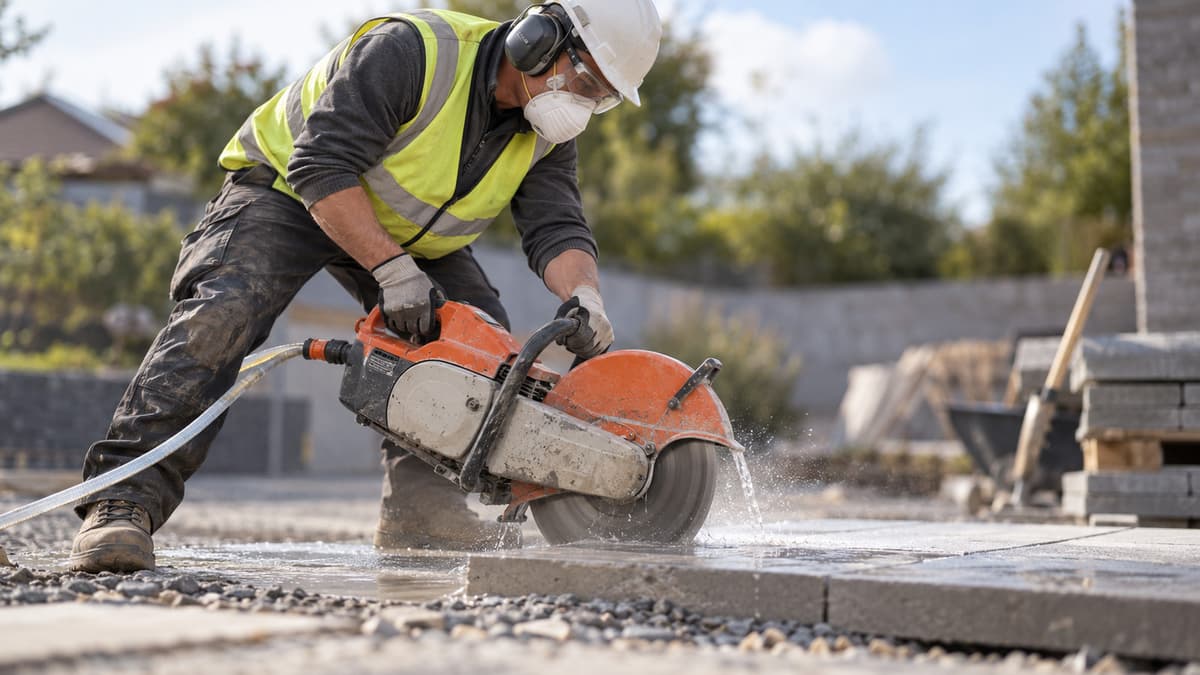
Wet cutting petrol disc cutter: control dust properly
How to keep water on the blade, and why a mask can still be needed.
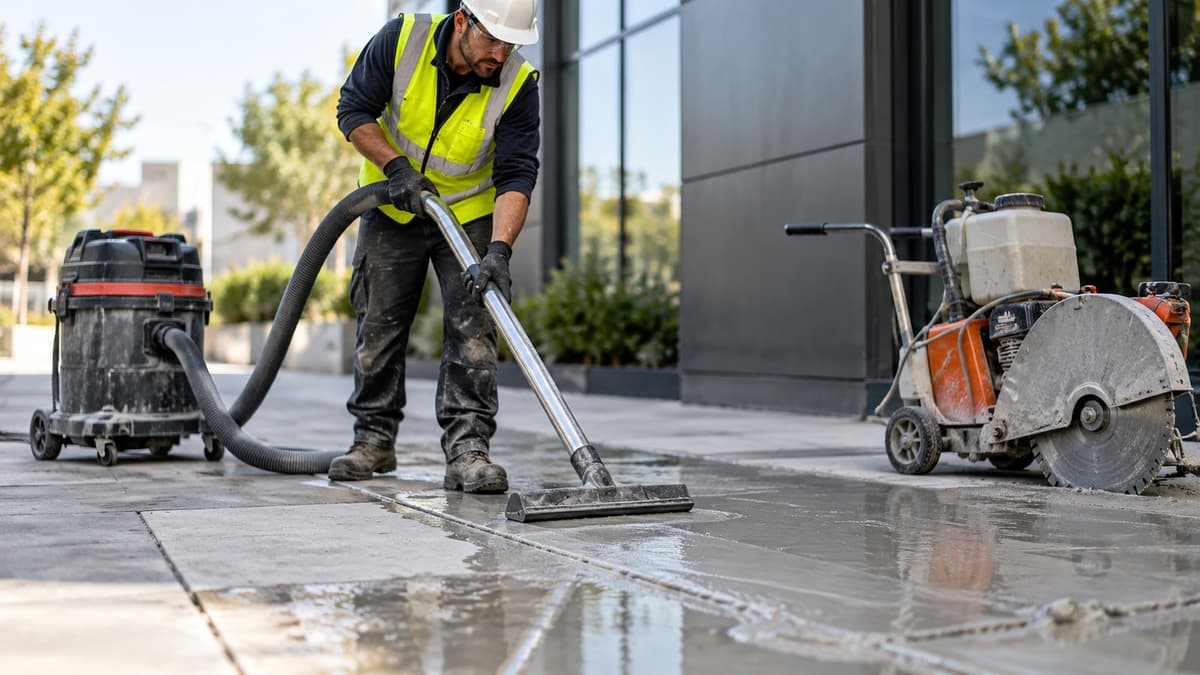
Concrete cutting slurry: catch run-off before it dries
Wet slurry is slippery, and once it dries it can become dust again.

EN 13236 diamond blade: what the safety mark means
EN 13236 is a safety mark on the blade, not a test of how long it cuts.