Concrete cutting slurry: catch run-off before it dries
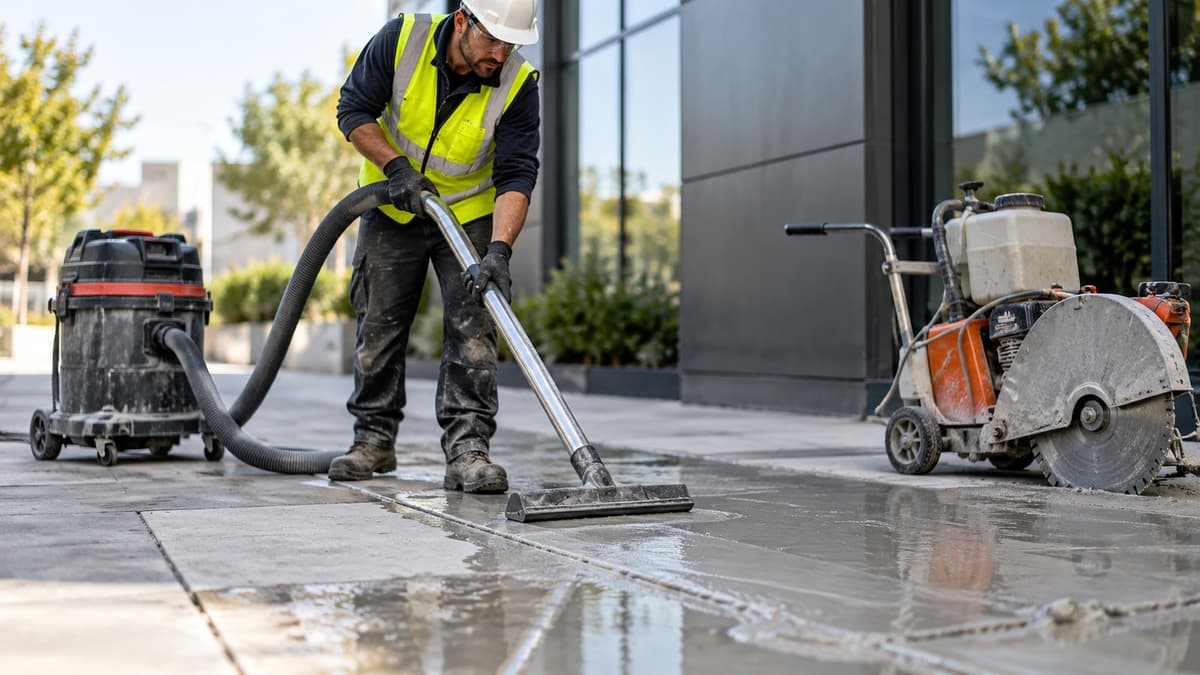
Concrete cutting slurry is slippery while wet and becomes dust again once it dries. Catch the run-off, wet-brush it, and leave the broom until it is wet.
On this page

The line through the slabs looks finished, the saw is off, and a grey film is already creeping toward the footway. That film is concrete cutting slurry. It is slippery while it is wet. Leave it, and the water that was holding the dust evaporates, so the same fines sit loose on the paving again.
Deal with it in the same hour as the cut. HSE construction sheet CN6 tells you to cut in one area or use a tray, then clean with a hose and a wet brush. Stopping once the blade has made less dust leaves the second half of the control undone. A mask stays on, because the water is a managed stream. The price below is the amazon.co.uk figure from our 350 mm diamond blade comparison. We used CN6, CIS54, the HSE roof-tile cutting page and Global Diamond UK's troubleshooting notes, and we did not run a lab test.
In short
Concrete cutting slurry is the fines from paving, concrete or a kerb, carried in the water from the blade. Catch wet cutting slurry on paving in one area or a tray, then hose and wet-brush it before it dries. Do not dry sweep the film. Keep the mask on, and do not treat a gully as the bin.
What the grey water actually is
Concrete cutting slurry is the cut, moved into water. The blade has ground cement, sand and stone into fines, and the spray has carried those fines out of the kerf and onto the slabs. While the mix is wet it is a slurry slip hazard on a smooth flag, and it packs into the joints of block paving.
HSE information sheet CIS54 sets the limit beside that description. Water on this work creates a managed stream. The sheet does not describe a zero-dust cut. Jets that miss one face of the blade still throw a plume, and the material that did get wetted is now on the ground, on your boots and on the slabs beside the line.
The HSE page on cutting roof tiles asks you to have spare water ready and to think about slurry before you start. Use that water to move the stream into a place you chose. These sheets do not give a concentration in milligrams, and this page does not invent one. Milky water leaving the kerf is reason enough to hold the run-off.
Catch it before it spreads
Decide the route before the engine starts. CN6's control is one cutting area, or a tray, then a hose and a wet brush. The roof-tile page puts that thinking first, and it tells you to limit who stands near the cut. One person on the dry side can keep a passer-by off the film. Keep the spare water on that dry side too.
Cut-off saw runoff follows the fall of the slabs. A drive that slopes to the road can put a short cut at the garage across the public footway before you have racked the saw. Where the fall only goes one way, stop the stream with something you can lift afterwards: a length of timber, or the edge of a mixing tray on the low side of the line. A bund made from the slurry itself becomes more of the same film.
When a tray works, and when the zone does
A tray earns its place when you can take the piece to the saw. A loose flag, or a kerb you have lifted, can sit over a tray inside one fenced area, which is the choice CN6 writes down. You keep the spray in the tray and lift the paste while it is wet.
A tray will not slide under a slab that is already laid. Mark one zone that stays visible when the surface is wet, keep the hose inside it, and wet-brush back toward the zone. How the water reaches the rim is in the wet cutting guide for a petrol disc cutter. Blocked jets leave dust at the cut, and a dry line you will be tempted to sweep.
Why dry sweeping puts the dust back
A pale stain looks finished, and the broom is already on the van. That broom puts the dust back in the air. Drying has only removed the water that was holding the fines down. The instruction on this job is direct: do not dry sweep concrete dust.
CN6's clean-up is a hose and a wet brush. Keep the residue wet, move it to the place you set aside, and lift it as a paste. A stiff broom used with water is that wet brush. The same broom on a pale film is a dry sweep, and a blower or an airline lifts the dust faster. If the film has already lightened, wet it again before anyone touches it.
CN6, CIS54 and the roof-tile page do not give a waste code or a licence procedure, so this page will not invent one. Hold the paste and put the tub where the site has told you to put it. Keep it out of the gully. Rain on a footway moves the fines toward that gully and leaves a smear where people walk. The same film from a kerb, once it dries, is the exposure in silica dust when you cut kerbs. Gathering the slurry stops a broom from opening that exposure again.
Slurry and the steel core
Global Diamond UK's troubleshooting notes say slurry left in an abrasive cut undercuts the core. The fines sit in the gullet and wear the steel behind the segments. The diamond can still look tall while the neck that holds each segment goes thin. When that neck fails, the segment leaves the wheel.
Flush the kerf while the mix is still mobile. A hose along the line, then the wet brush, is the same action as the CN6 clean-up. Leave the saw standing in the cut while you walk to the van, and the mix settles on the steel the segments are meant to protect. Lift the blade clear, then wash the line.
None of the five 350 mm blades in the 350 mm diamond blade comparison is listed with a slurry tray, a wet brush or a collection kit. The top pick, the PRODIAMANT 350 mm with a 20 mm bore, is about £54.78. It names concrete and masonry, and the listing states wet or dry cutting and EN 13236. It does not hold the run-off for you. A qualifying purchase through our links can earn us a commission at no extra cost to you.
If the steel under the segments is already grooved, today's rinse will not put it back. When a diamond blade is finished is that check. The guide to using a 350 mm diamond blade covers mounting and the cut.
A routine before the first cut
Run this before the engine starts. It does not replace the saw manual, the blade marking or your training.
- Walk the fall of the paving and mark where cut-off saw runoff will travel if you do nothing, including the public footway and any gully on that path.
- Set one cutting area. Bring loose pieces to a tray or a bench inside it. For slabs that stay laid, mark the zone you will wet-brush back into.
- Put spare water where you can reach it without crossing the wet line.
- Keep other people out of the spray.
- Put your respiratory protective equipment on before the cut, and keep it on while you wet-brush.
- Cut, then hose and wet-brush while the paste is wet. Flush the kerf so the slurry does not sit against the steel core.
- If the film has started to pale, wet it again. Leave the dry broom, the blower and the airline in the van.
- Hold the gathered paste until you know the rule that applies on this site. Do not write a waste code you have not been given, and do not use the gully as the bin.
On a public footway, CN6 and CIS54 do not name a person or a statute, so this page will not invent one. If you cannot keep people off the film and wet-clean the line, stop until the zone is one you can contain.
Common questions
Is concrete cutting slurry just dirty water?
Can I sweep slurry once it has dried on the pavement?
Where should I cut so the run-off stays put?
Does slurry left in the cut damage the blade?
Is a slurry tray realistic on a driveway?
Can I wash cutting slurry into a drain?
Do I still need a mask if the cut is wet?
Who is responsible for slurry on a public footway?

Peter F. is the editor for DIY & tools at productscompared.co.uk. Comparisons in this category are checked against amazon.co.uk listings, review evidence and public UK sources.
Related articles
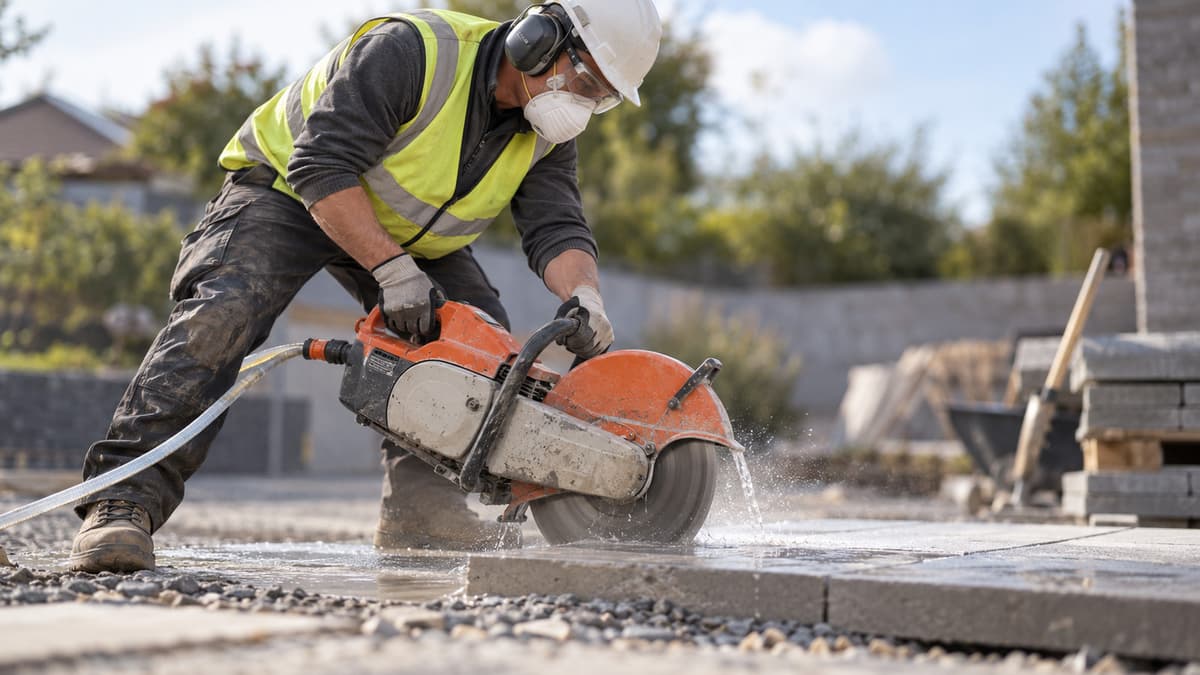
Wet cutting with a petrol disc cutter
How water reaches the blade on a petrol cut-off saw, and why the mask stays on.
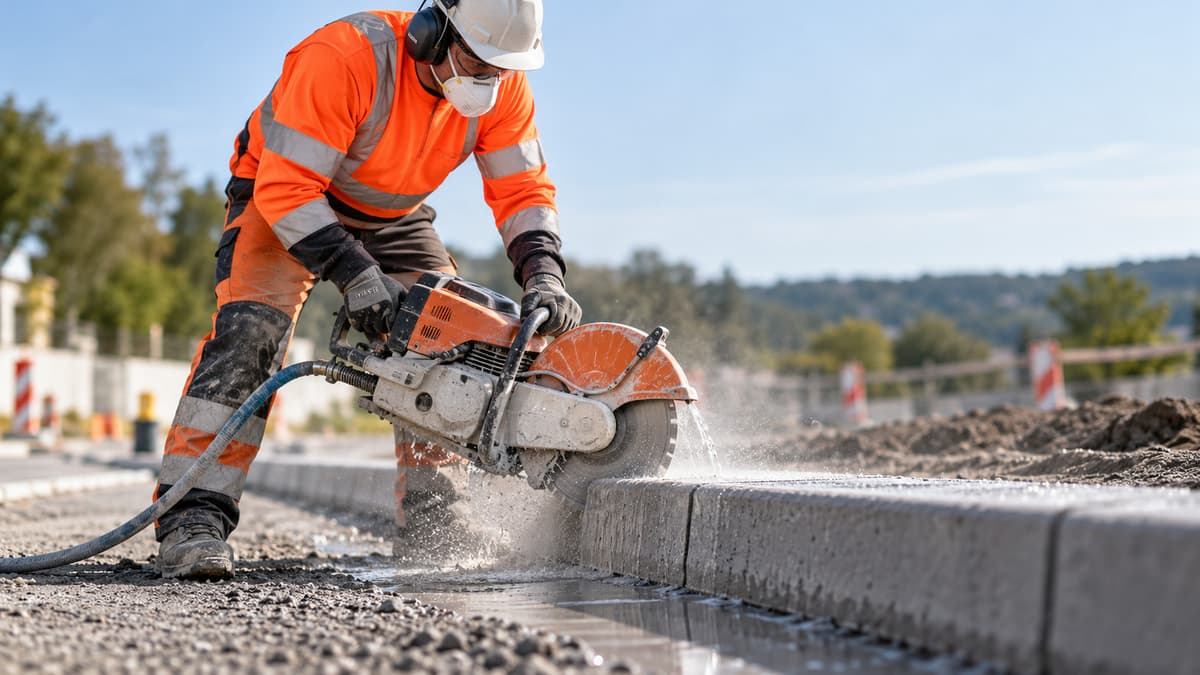
Silica dust when you cut kerbs
Why a short kerb cut is still a lung risk, and what the HSE sheets expect you to control.

When a diamond blade is finished
Undercut steel, missing segments and heat colour mean the blade comes off the saw.