Safe hot tub temperature: the 40°C UK ceiling
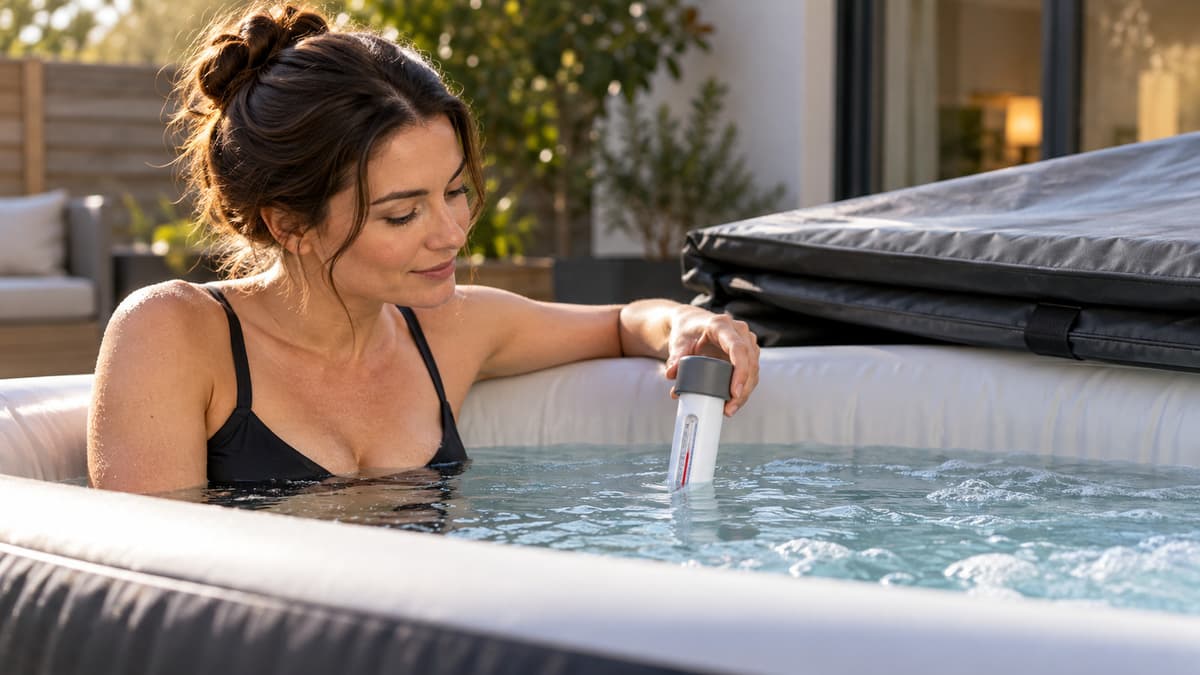
BISHTA's maximum is 40°C, the same figure as 104°F. Set adults nearer 37°C and measure the water before you get in. The panel is the heater's reading.
On this page
The cover comes off, the panel already reads 40, and the plan is to get straight in because that is the number on the box. A safe hot tub temperature is settled before that step. BISHTA's hot tub owners' handbook states a maximum of 40°C and prints about 37°C for adults. The keypad is free to sit on the maximum the heater claims. The water you use for a normal evening follows the lower figure.
Forty degrees Celsius converts exactly to 104°F, so a Fahrenheit bullet is that same ceiling in the other unit. The panel can still be adrift on the night. A scoop held in the water tells you which number you are about to sit in. This page is from Peter F. at productscompared.co.uk. The figures come from that BISHTA handbook, the heating rate on Lay-Z-Spa's own page, and the Royal Life Saving Society UK note on children. Nothing here is a laboratory test of your tub. A qualifying purchase through our links can earn a commission at no extra cost to you.
In short
BISHTA states a maximum of 40°C, which is 104°F, and about 37°C for adults. The handbook gives about 36°C for under-12s and advises that under-fours do not use a hot tub. Measure the water. The panel is the heater's reading, and a listing that prints 104°F is printing that same maximum.
40°C is the ceiling
BISHTA's owners' handbook is the UK trade guide owners get pointed to. It states that the water should stay at or below 40°C. That sentence is a maximum: the line the heater may approach and then stop. Keep 40 as the top of the scale. Keep the set point lower for the soak itself.
The same handbook prints about 37°C for the way adults use a tub. If the control moves in whole degrees, 37 is the adult mark and 40 belongs to the heater's limit. Marks at 38 and 39 still sit above the adult figure the handbook prints. Use one only when you can say why, and only after a thermometer has agreed.
Listings in this set often print 20–40°C, or 104°F, as the span the product claims. The bottom end is cold water the heater can start from. The top end repeats the 40°C ceiling. A bullet that says "up to 40°C" or "104°F" describes that top end, and it is silent on the 37°C adult figure.
Hotter water uses sanitiser faster. Total Chemical Solutions notes that in its chemical guidance. The test, the dose, and the bands those guides print sit in our hot tub chlorine and pH article. Water at 37°C with no chlorine reading waits until the test is done. Put the cover back when you get out, because an open surface lets the heat leave as steam.
What adults should set
Set the control to about 37°C for an adult soak, then give the heater time. Lay-Z-Spa's heating page describes factory behaviour towards 40°C at about 1.5–2°C an hour. Take a fill at 15°C as arithmetic on that published rate. Twenty-two degrees up to 37°C is about 11 hours at 2°C an hour, and about 15 hours at 1.5°C an hour. Another three degrees, up to the 40°C ceiling, adds roughly an hour and a half to two hours.
The high 30s are where many inflatable spas sit on a British evening, once the cover has been on and a thermometer agrees with the panel. Seat counts and the 40°C claims are in our inflatable hot tub comparison. The top pick is the Lay-Z-Spa Aruba AirJet, B095PK7W5D, at about £394.74, with 4.4 from 30 amazon.co.uk ratings. The listing claims 110 AirJets, a cover, a type VI filter and a 40°C maximum. That maximum is the heater's ceiling.
When the water stalls in the mid-30s, check the cover before you decide the heater has failed. A cover folded back, or a cold wind across an open ring, gives the gain away as steam. Put the cover on, leave the filter cycle as the manual asks, and read the water again after a further hour. A rise of about 1.5–2°C in that hour matches the published Lay-Z-Spa rate. A flat reading, with the cover sealed and the pump running, is the moment to open the fault section in that model's manual.
Get out when your skin is red, you want to stand up, or your head feels thick, and set the next soak lower. The handbook figures used here are temperature limits. They are silent on pain, sleep, and recovery.
Children and the lower figure
BISHTA's handbook gives about 36°C for children under 12, and it advises that children under four do not use a hot tub. The Royal Life Saving Society UK writes about children under five around hot tubs. Age, supervision, and a tub left uncovered are written up in our children and hot tubs article. Read that page before a child gets in.
A control left at the adult 37°C, or pushed to 40°C because that is as high as the panel will go, already sits above the under-12 figure. Turn the heater down, then measure. A panel that reads 36 can be out by about a degree, and that degree sits against a child's limit. Thirty-six Celsius is 96.8°F if the panel is on the other unit. Under-fours stay out, which is the handbook's advice.
Check the water with a thermometer
The digits on the spa are the manufacturer's control reading. A thermometer in the water you are about to enter is a second instrument. When the two disagree, follow the water you have measured, and check the panel after you are out.
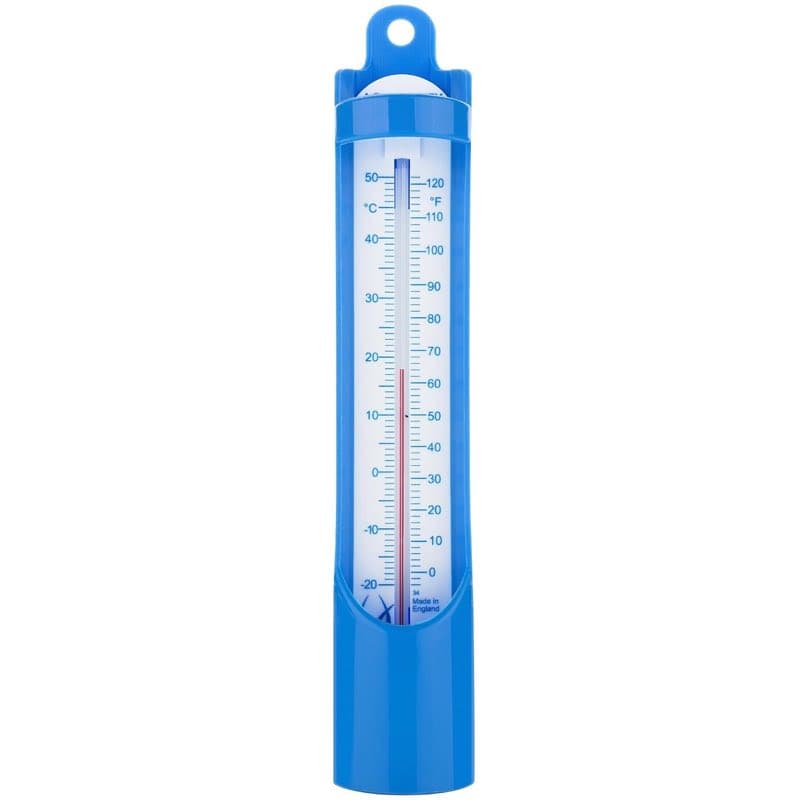
The top pick in our pool thermometer comparison is the AQUAVERITY IN-327, listing B0D1GSNV2N. It is a scoop, at £8.95 on amazon.co.uk, with 4.5 from 292 reviews. The bullet prints −20°C to +50°C and ±1°C, and the technical upper rating is also 50°C, so a 40°C check sits inside the stated scale. You submerge it for about 30 seconds and read it at eye level. One UK review called the readings inaccurate, so repeat a dip that shocks you before you drain the tub or condemn the heater.
Use the scoop at the depth you sit. A reading from the first centimetre, in sun on the surface, can sit above the water around your shoulders. Stir once, hold the scoop under, and wait the half-minute the listing states. If the scoop says 39 and the panel says 37, the water is the hotter reading. Turn the set point down, then measure again after the heater has cycled. If the scoop says 35 and the panel says 40, the control is ahead of the water.
A leave-in float can lie on its side and sample the surface, a different layer from the water at your chest. When you want the number from the sofa, the wireless pool thermometer comparison is the set with an indoor monitor. Check a new wireless float once against the scoop, because two screens can share an offset and still read high.
What 104°F means on a listing
Fahrenheit still arrives on amazon.co.uk because the same product page is written for more than one market. Convert before you compare two bullets. Multiply Celsius by 9, divide by 5, and add 32. Forty times 9 is 360, divided by 5 is 72, plus 32 is 104. So 104°F is 40°C with no remainder. A line that says "heats to 104°F" is the ceiling again, printed in the other unit. A model sold beside it at "40°C max" is claiming the same top end.
Thirty-seven Celsius is 98.6°F. Thirty-six Celsius is 96.8°F. Twenty Celsius, the bottom of a typical 20–40°C bullet, is 68°F. A range printed as 68–104°F is the cold-start-to-ceiling band again. If the panel has a C/F switch, confirm which mark is lit. A display showing 99 in Fahrenheit sits by the adult figure. A display showing 99 in Celsius would be far beyond anything these products claim, which means the unit flag is wrong or the sensor has failed.
Shopping text that says to run the tub at 104 is pointing you at the maximum. BISHTA's adult figure is about 37°C, which is 98.6°F. For an inflatable, the claimed maximum stays 40°C, the adult set point stays about 37°C, and the under-12 figure stays about 36°C.
Common questions
What is the maximum safe hot tub temperature?
Is 40°C the same as 104°F?
What temperature should adults set a hot tub to?
How hot is too hot for a child?
How do I know the hot tub panel is right?
Why does my hot tub only reach the high 30s?
Does hotter water use more chlorine?
Which thermometer comparison should I read?

Peter F. is the editor for DIY & tools at productscompared.co.uk. Comparisons in this category are checked against amazon.co.uk listings, review evidence and public UK sources.
Related articles

Children hot tub safety: ages, heat and the cover
Age cut-offs, a cooler set point, and an uncovered tub, on the page to read before a child gets in.
Hot tub chlorine and pH: the bands to test
What to test on a private tub, and why hotter water spends the sanitiser faster.

Cloudy hot tub water: the order that clears it
Milky water after heat and heavy use: chemistry, the filter, or a drain and refill.