Hot tub chlorine and pH: the home bands to test
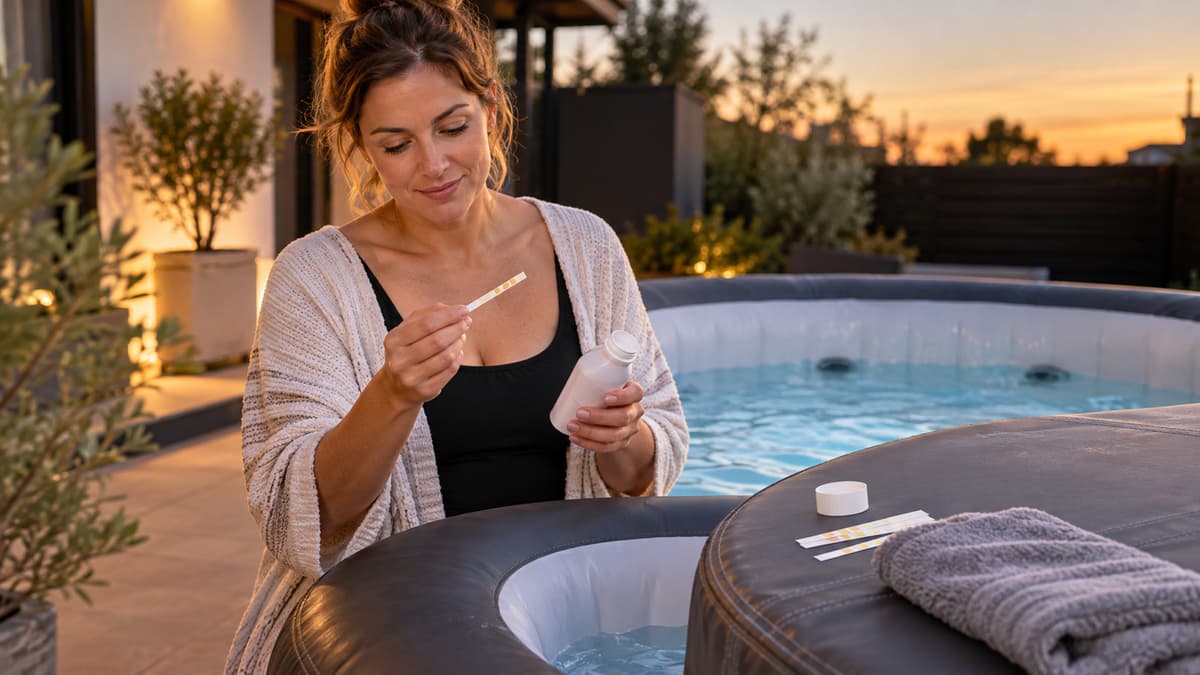
Home bands for hot tub chlorine and pH are about 3–5 ppm and 7.2–7.6. Stay out above 5 ppm, test before you get in, and do not dose by water colour.
On this page

The water looks clear on a Thursday evening and you are about to drop a capful in because the bottle says weekly. Hot tub chlorine and pH are test results, not a guess from the colour of the water. You want free chlorine in the band UK suppliers print, a pH that lets that chlorine work, and a stop if the strip is too high to bathe. These figures come from Clearwater, Lay-Z-Spa's cloudy-water example, Total Chemical Solutions, BISHTA and a Trading Standards note for businesses. We did not dose a tub. The shopping table is the inflatable hot tub comparison, and the first-fill order sits on the setup guide.
In short
For a private tub, supplier guides print free chlorine at about 3–5 ppm and pH at about 7.2–7.6. Do not bathe above 5 ppm. A grams dose belongs to the maker who printed it. Twice-daily logs are the holiday-let pattern, not the family default.
The three numbers to test
Free chlorine, pH and total alkalinity are the three readings that change what you do next. Clearwater's hot-tub guide describes a shock, then a free-chlorine band of about 3–5 ppm, and it says not to bathe above 5 ppm. Total Chemical Solutions prints the same free-chlorine band as 3–5 mg/l, which is the same unit under another name, and a pH of about 7.2–7.6. Alkalinity on that page sits around 80–120 ppm. Those are supplier bands for a spa, not a statute for your garden.
Test before you get in. That is the home line BISHTA states. The water can look fine and still be low, because bathers, sunlight and idle days consume sanitiser even when nobody has complained. A strip that only says chlorine, without separating free chlorine from total, is a weaker tool than a free-chlorine pad. If your kit is bromine, do not borrow the chlorine numbers. The same troubleshooting page prints bromine at about 4–6 mg/l. Mixing a chlorine shock into a bromine tub because the shop was out of tablets is how the reading stops meaning anything.
Hotter water uses sanitiser faster. Test on the evenings you turn the tub up. That is not a reason to exceed 40°C. The temperature article on this hub keeps that ceiling separate from the chemistry. A filter cartridge, including the type VI cartridge listed with the Lay-Z-Spa Aruba, catches debris. It does not hold 3 ppm for you. None of these bands was measured on the eight amazon.co.uk listings in the inflatable comparison. Take a second strip after the pump has circulated. The first dip, straight after a dose, often reads the chemical cloud rather than the tub.
Alkalinity and pH before chlorine
The order is the part people skip. If alkalinity is wild and pH is sitting far outside 7.2–7.6, adding more chlorine first spends money on a reading that will not settle. Total Chemical Solutions puts alkalinity and pH ahead of the sanitiser chase. You adjust the smaller band, circulate, and test again before you decide the tub will not hold chlorine.
Give the pump time to mix. A scoop tipped in one corner and tested thirty seconds later is a sample of that corner, not of the tub. Leave the cover on while it mixes. If the pH will not move after a dose the bottle allows, stop stacking products. Drain and refill when the water is tired. How often to change hot tub water treats that as a rule of thumb of months, not as a failure of one evening's test.
Do not invent a pH product dose for a generic inflatable that has no manual in the file. The bottle in your hand has a label. The listing title does not. If the label and the maker's spa page disagree, the maker's page for that model wins, and a third-party blog does not break the tie.
A shock dose, using the maker's grams
A shock is a deliberate high dose to burn off contamination, followed by a wait, then a test that has fallen back into the bathing band. It is not add until it smells clean. Lay-Z-Spa's cloudy-water article gives an example of 20 g of chlorine per 1,000 litres, then a 24-hour wait, then bathing again only when the water is back at about 3–5 ppm. Use that example on their tub, with their product, if it matches the pack you bought. Do not scale it onto a generic ASIN that never printed a manual, and do not halve the wait because guests are due.
A 1,000 litre example is not a 700 litre tub. If you use their ratio, scale to the volume the manual states, and still wait the 24 hours they printed. Clearwater's line remains: do not bathe above 5 ppm, and dilute with fresh water if the reading is still high. Dilution means fresh water in and, if the tub would overflow, water out to a foul drain. It does not mean a kettle of cold water and a hopeful strip.
Shocking every Friday regardless of the test wastes chlorine and can push you over 5 ppm on a quiet week. Shock when the water is cloudy, smelly, or has had a heavy load, then confirm with a strip. Cloudy hot tub water puts clarifier late in that order, after the test and the filter. A clarifier is not a substitute for the 20 g example, and the 20 g example is not a substitute for a drain when the water will not clear.
Smell, high readings, and when to drain
A sharp chlorine smell often means chloramines, sanitiser that has already reacted with sweat, cosmetics and urine, rather than a tub that is high in free chlorine. The strip decides. If free chlorine is low and the smell is strong, you are looking at used sanitiser, and a shock followed by the 24-hour wait is the maker's pattern, not another small daily cap. If free chlorine is already above 5 ppm, you do not shock again. You stay out and dilute.
Cosmetics and sunscreen load a small inflatable. A shower before you get in, and rinsed swimwear, is the maker tip on cloudy-water advice. It will not rescue a tub that has not been tested for a fortnight. A 2–3 person tub, such as the top pick, can turn faster than a family-spa claim suggests. Four adults in a tub that only fits three is a bather load the chemistry was not sized for.
Drain when the reading will not hold, when the water stays cloudy after the wait, or when you are topping up so often that you have not really changed the water. Send treated water to a foul drain. Lay-Z-Spa's pack-away notes warn that it can kill plants. A private tub does not need the written log a holiday let keeps, but the strip before you get in is still the BISHTA home line. If a strip will not read at all, replace the strips before you replace the water. Out-of-date reagents look like a chemistry failure.
What changes if the tub is a holiday let
Devon and Somerset Trading Standards, writing for accommodation providers, print free chlorine at about 3–5 mg/l as part of a business check. BISHTA also describes twice-daily testing as the business line, against a test-before-use line for a home. Those duties do not land on a private owner because the numbers look similar. They land when the tub is offered to guests.
A chlorine floater in an inflatable is not a demonstration that HSG282 has been met. Hosts need hot tub in a holiday let, a water change after each rental or each week, whichever is shorter, and a control scheme a competent person can defend. Do not copy a domestic 20 g example onto a let and call the paperwork done. If the house is not let, keep the home bands and the home test. The comparison is a shopping table for a private soak, not a commercial approval.
Common questions
What chlorine level should a hot tub be?
What pH should I aim for?
Do I add chlorine every day?
What if the reading is above 5 ppm?
Why does it smell of chlorine?
Is bromine different?
Does a private tub need a written log?
How much chlorine is a shock dose?

Peter F. is the editor for DIY & tools at productscompared.co.uk. Comparisons in this category are checked against amazon.co.uk listings, review evidence and public UK sources.
Related articles

Cloudy hot tub water: the order that clears it
Test, shock and rinse the filter before you buy a clarifier for milky water.
How often to change hot tub water: a UK drain window
A 1–3 month rule of thumb for a private tub, and a shorter rule for a holiday let.
Safe hot tub temperature: the 40°C ceiling
40°C is the ceiling BISHTA states, not the set point for a normal evening soak.