Independent comparisons. We may earn from shop links. More info

Granite parasol base vs water filled

Updated: 22.10.2026

A plastic base looks cheaper until you notice the kilogram on the box is the filled one, not the shell in the carton. You are choosing between a polished stone weight that is already 25 kg on the doorstep and a container you fill with sand or water where it will stand. By the end you should know which system matches your route from the car to the patio, and the one condition that flips the choice. The stone shortlist itself is our [granite parasol base comparison](/hub/sun-shades/granite-parasol-base). Products Compared used amazon.co.uk prices and UK retailer guides on 20 October 2026, not a side-by-side wind test.

A plastic base looks cheaper until you notice the kilogram on the box is the filled one, not the shell in the carton.

Our top picks

On this page

Two systems, not two finishes

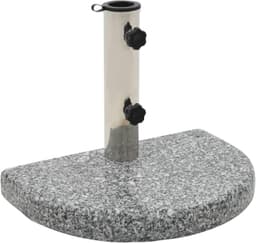
A granite plate and a fillable base are different machines. Garden Marketplace B07CTT9M2Z is solid polished granite, 25 kg and 47 × 47 cm, at £64.99, with nothing to fill. A plastic or resin shell is light in the box and only becomes a base after you pour in sand or water. The two generic 10 kg listings in this comparison are still granite claims, not a water base. The kilogram printed on a fillable listing is the full one, and you have to read which fill it assumed. £64.99 buys 25 kg of stone today. A plastic price buys a container.

Sand, water, and the number on the box

The container only becomes a base after you fill it. Opal's retailer rule of thumb, not a laboratory density test, is about 1 kg per litre of water and about 1.5 kg per litre of dry sand. On that rule a 60 litre shell is about 60 kg of water or about 90 kg of dry sand. A listing that says "100 kg" is often quoting the sand figure. Filling with water only is the common way to miss the kilogram you thought you had bought. Water is easier to empty, and it is less stable than sand. It can freeze and split a base that is not made for it. Sand stays put and does not freeze in the same way, and it is harder to empty. Do not copy one brand's 60/80 kg pair onto another listing. If the advertised kilogram assumed sand, fill with sand.

Winter, frost, and leaving it outside

Granite and a water-filled shell spend a UK winter differently. 4 Seasons Outdoor say their granite is dense, resists frost better than marble, and can stay outside. The stone staying out does not mean the fabric stays open. A water-filled plastic base is the one to drain or bring in if the shell is not sold as frost-safe. Belveo's warning is that freezing water can split a base. Sand is the fill Belveo prefer where frost is likely. Opal's line is to close a cantilever above about 25 mph whatever the base weighs. That figure is theirs.

When to pick which

Choose granite when the weight has to be real on delivery and the plates can live on level paving. For an offset parasol, that starts with B07CTT9M2Z: two tiles are 50 kg, four are 100 kg and about £260. Choose a fillable base when you must carry it upstairs empty, when there is no lift, or when you need the shell empty in a cupboard for winter. Fill it on site with sand if you need the advertised kilogram. Do not assume a balcony can take 100 kg of stone. If it cannot, load a fillable shell only to a weight the structure allows, or skip the free arm. Stone suits you when the weight is finished before you open the box. The fitting sequence, once you have chosen, is how to fit a granite parasol base. Who the three stone ASINs are for is best granite parasol base. Plate versus socket, before you pick a material, is the buying guide.

Common questions

Is granite better than a water-filled base?
It is better when you need the kilograms on the day it arrives and the base can stay on a patio. A 25 kg plate at £64.99 is 25 kg with nothing to pour. It is the worse system when you have stairs, no lift, or you need the base empty in a cupboard. Neither is a certified wind rating.
Should I fill a plastic base with sand or water?
Use the fill the kilogram assumed. Sand is heavier and stays put. Water is easier to drain and weighs less in the same shell. Opal's rule of thumb is about 1 kg per litre for water and about 1.5 kg per litre for dry sand. If the listing's heavy figure is a sand weight, water only will leave you short.
Why is a 60 kg water base not a 60 kg sand base?
Because the two fills do not weigh the same per litre. A shell sold as 60 kg of water can be heavier once you use dry sand, and a shell sold as 100 kg is often the sand number. Jati's four-part set states about 60 kg water and about 80 kg sand. Do not swap those pairs between products.
Will water freeze and crack the plastic?
It can, if the shell is not made for a hard frost and you leave it full. Belveo warn that freezing water can split a base, and they prefer sand where frost is likely, with the slabs stored dry. Granite, by 4 Seasons' account, copes with frost better than marble and can stay outside. Drain a water base or bring it in if the listing does not claim frost safety.
Can I get a granite plate up the stairs?
Only as a full 25 kg lift. A floor-level plate is a poor one-person carry. A fillable shell goes up empty and is filled on the patio, which is why plastic suits a flat without a lift. On a balcony, buy stone only if the structure can take the finished weight plus the furniture.

Related pages

Sources

Public UK sources and the amazon.co.uk listings compared on this page. Listings captured 20 October 2026. Updated 22.10.2026.

  1. Garden Marketplace 25 kg plate (retrieved 22.10.2026)
  2. Ruma parasol base weight guide (retrieved 22.10.2026)
  3. Belveo base guide (retrieved 22.10.2026)
  4. HSE INDG143 (retrieved 22.10.2026)
  5. Consumer Rights Act 2015 (retrieved 22.10.2026)
  6. General Product Safety Regulations 2005 (retrieved 22.10.2026)
  7. Nova Outdoor Living cantilever care (retrieved 22.10.2026)
  8. 4 Seasons Outdoor granite (retrieved 22.10.2026)