What size sauna heater 9kW: measure the room first
You have a tape measure and a listing that says 9 kW, and you want a yes or a no before you book the cabin. What size sauna heater 9kW suits is not one number on amazon.co.uk. The seven pages in our [9 kW sauna heater comparison](/hub/steam-baths/sauna-heater-9kw) print 9–13 m³, 8.5 m³, 7.5 m³, a family range of 2–13 m³, or nothing at all. We compared those claims with Harvia’s sizing notes on 20 October 2026. We did not survey your garden room. A qualifying purchase can earn a commission at no extra cost to you. The method below is how to calculate. It does not pick a winner, and it does not size the cable.
You have a tape measure and a listing that says 9 kW, and you want a yes or a no before you book the cabin. What size sauna heater 9kW suits is not one number on amazon.co.uk.
You have a tape measure and a listing that says 9 kW, and you want a yes or a no before you book the cabin. What size sauna heater 9kW suits is not one number on amazon.co.uk. The seven pages in our 9 kW sauna heater comparison print 9–13 m³, 8.5 m³, 7.5 m³, a family range of 2–13 m³, or nothing at all. We compared those claims with Harvia’s sizing notes on 20 October 2026. We did not survey your garden room. A qualifying purchase can earn a commission at no extra cost to you. The method below is how to calculate. It does not pick a winner, and it does not size the cable.
Our top picks
| Badge | Product | Type | Stated volume | Temperature | Note | Price | Offer |
|---|---|---|---|---|---|---|---|
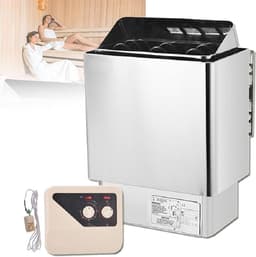
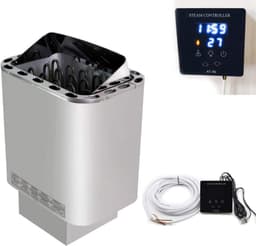
| Best overall |  CGOLDENWALL CGOLDENWALL 9 kW steam kit | Steam generator | 8.5 m³ | 35–55°C | 7.8 | about £350.55 | View offer |
| Best value |  Generic Generic 9 kW stone heater | Electric stone heater | 9–13 m³ | Up to 90°C | 3.0 | about £245.00 | View offer |
| Alternative |  Generic Generic 9 kW digital stone heater | Electric stone heater | 2–13 m³ family | Up to 110°C | 2.9 | about £559.99 | View offer |

On this page
Start with length, width and height
Add glass and heavy walls the way the heater maker does
Stay off the ends of the range
Steam kits use a different room
Common questions
How many cubic metres does 9 kW heat?
Is 9 kW too big for a small cabin?
Why does one listing say 7.5 m³?
Does the Harvia on amazon.co.uk state a room size?
Does the same sum work for a steam generator?
Related pages
Sources
Public UK sources named below, taken from the research digest first. amazon.co.uk prices on these seven listings were taken from the listings, shelf date 20 October 2026. Page updated October 2026.
- GOV.UK: Electrical Equipment (Safety) Regulations 2016 (retrieved 20 October 2026)
- Approved Document P (England) (retrieved 20 October 2026)
- Consumer Rights Act 2015, section 22 (retrieved 20 October 2026)
- NBS: BS EN 60335-2-53:2011+A11:2023 (retrieved 20 October 2026)
- Harvia: how to select heater power (retrieved 20 October 2026)
- Harvia Spirit European manual (retrieved 20 October 2026)
- Elec-Mate: sauna electrical installation (retrieved 20 October 2026)
- SPATA: sauna and steam factsheet (retrieved 20 October 2026)