Carbon vs ceramic infrared sauna heaters: which suits you?
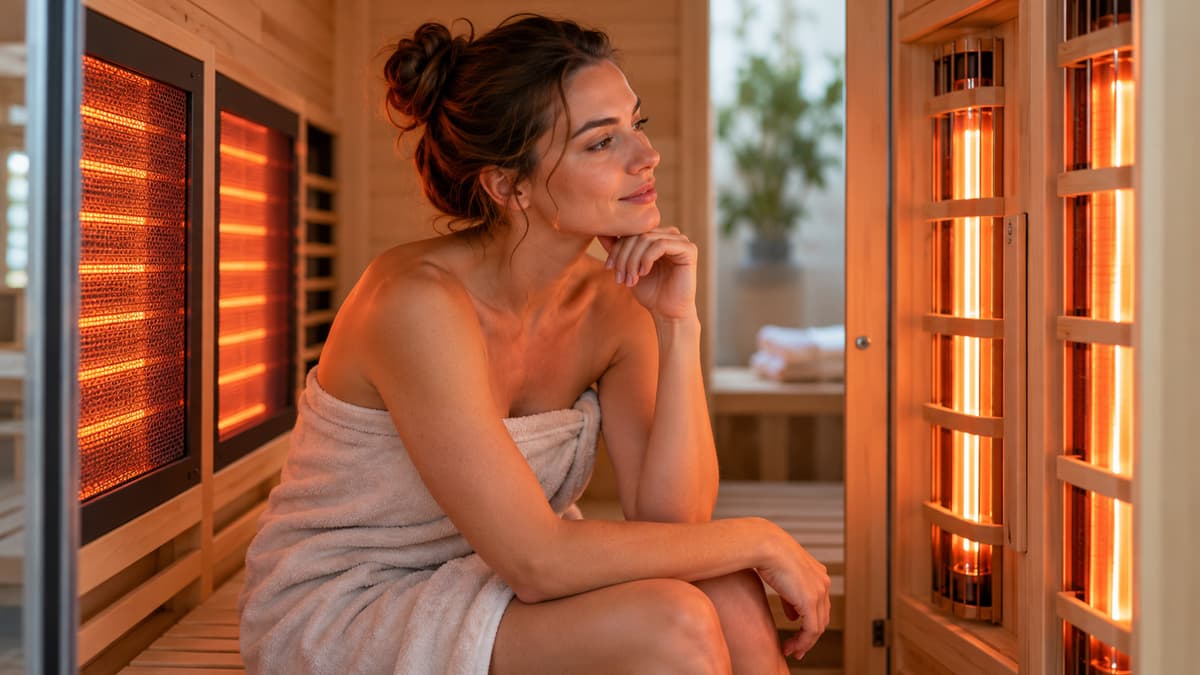
Compare carbon and ceramic infrared sauna heaters for warmth, warm-up time and comfort, with the practical checks to make before a UK home cabin purchase.
On this page

You have settled on an infrared cabin, but the heater descriptions make the choice harder: one seller promises broad carbon warmth, while another presents ceramic rods as the more powerful option. In a carbon vs ceramic infrared sauna comparison, neither material is an automatic winner. Decide whether you want a gentler spread of heat or a more concentrated sensation, and whether the cabin places enough emitters around you to deliver it. We have not measured cabin temperatures in a lab. A qualifying purchase through our links can earn us a commission at no extra cost to you.
In short
Carbon panels are generally sold as broad, lower-intensity emitters. Ceramic rods are marketed as hotter, more focused sources that can feel quicker at close range. Position, total wattage, insulation and controls can matter more than the label, so judge the complete cabin rather than the material alone.
How carbon and ceramic heaters differ
A carbon panel is a relatively large, flat heating surface, often fitted behind the backrest or along the side walls. Its size lets a manufacturer spread output over more of your body without a very hot, narrow element. That tends to suit a longer seated session if you want mild, enveloping warmth.
A ceramic heater is usually a rod or tube with a reflector directing output into the cabin. Manufacturers describe these emitters as reaching a higher surface temperature and producing more concentrated warmth. A hot zone on your back does not prove the whole cabin has warmed evenly.
Count the emitters at the back, sides, calves and floor, then compare those positions with where you will sit. A two-person cabin with strong rear heaters can still leave both users' legs cool. Compare complete products on the infrared cabin comparison rather than isolated element claims. Two cabins using the same material can still differ because panel area, reflectors and controls differ.
Warm-up speed or even warmth?
Ceramic heaters usually have the clearer argument when you want concentrated heat quickly. A smaller emitting area can create an obvious warm spot before the cabin air and surrounding surfaces have caught up. That may suit a shorter session, but it can feel sharp when your seat is close to the rod.
Carbon panels favour coverage. A panel behind most of the backrest can spread warmth across your shoulders and torso. A broad, moderate output may feel less dramatic at the start, then more comfortable once the session settles.
Do not compare warm-up claims unless the conditions match. A showroom time cannot be transferred to a cabin in a cold garage in January. Ready may mean an air reading, an element reaching temperature, or the point at which you feel warm. Ask how long the exact cabin takes to reach its stated range from about 18°C, and where the sensor sits. If lower-body warmth matters, look for calf and floor emitters rather than the heater count.
What full spectrum means
Full spectrum infrared sauna usually means a cabin that combines emitter types, or that is sold as covering near-, mid- and far-infrared ranges. In practice that may be carbon panels around the body plus ceramic or other higher-intensity elements. The label is not one specification. Two full-spectrum cabins may use different proportions, placements and controls. One may switch zones separately; another may power every emitter together. Ask for a heater map and the wattage of each zone if that distinction matters.
This guide does not rank one heater as a health winner. Infrared remains heat exposure, and a broader marketing label does not establish a better outcome. A hybrid is most persuasive when the layout solves a comfort problem, such as broad rear and side panels with focused calf heaters. If you are still choosing size and installation, use the infrared cabin buying guide before paying extra for the terminology.
Electricity, EMF and service life
Carbon does not automatically mean a low running cost, and ceramic does not automatically mean waste. Use the cabin's rated input in kilowatts. A 2 kW cabin drawing continuously for one hour uses up to 2 kWh, although a thermostat may cycle the heaters once the set point is reached. A lower-rated cabin that runs flat out for longer may use a similar amount. The infrared cabin electricity cost guide turns rated power, session length and your unit rate into a session estimate.
Heater material does not settle electromagnetic-field claims. Wiring, controls, shielding, distance and the test method all change the reading. A low-EMF figure needs units, a measurement position and the conditions. The low-EMF claims guide explains what that number can show. Advertised service-life hours may use different assumptions and are not an independent endurance test. Prefer a written heater warranty and a replacement element you can obtain in the UK.
Portable tents and hybrid cabins
The carbon-versus-ceramic choice mainly belongs to rigid infrared cabins. A portable tent may use a steam generator, heated wrap, mat or another system. The word infrared does not mean fixed carbon panels or ceramic rods are present, so cabin advice does not transfer by assumption. A steam tent warms you with hot, humid air. The steam room or infrared heat guide separates those methods. Check the heat source, power rating and electrical equipment before you compare prices.
On the infrared cabin comparison, the top pick is the CONLONS portable infrared sauna at about £219.99, with 4.7 from 25 amazon.co.uk ratings. The bullets state heated feet, a reading light, a 150 kg chair and a claimed maximum of 65°C. Wattage, voltage and plug are not stated, and the listing does not identify carbon or ceramic heaters. The best value option is the SereneLife AZSLISAU10BK at about £80.41, with 4.2 from 5,327 ratings. That listing also leaves voltage and wattage unstated. Confirm the rating plate before you treat either tent as a carbon or ceramic cabin.
Some wooden cabins combine carbon panels and ceramic tubes. One UK marketplace example described both types in a 2,300 W cabin, which is a real mix rather than proof that the mix is better. Expect a heater diagram, usable internal dimensions, a written warranty and clear electrical requirements. If a listing is silent, ask the seller in writing. Portable options also sit on the steam baths hub.
How to read a UK listing
Start with the heater layout. A drawing or interior photograph should show what warms your back, sides, calves and feet. Count positions, not just elements: several small rods behind one shoulder may cover less than the total suggests. For a shared cabin, check whether both seats receive comparable exposure.
Record the input power, the supply requirement and the plug or connection type. UK domestic mains are 230 V, but a high-powered cabin may need more than a convenient socket. Do not improvise with travel adaptors, extension leads or a Schuko plug. Follow the manufacturer's instructions and use a qualified electrician where a dedicated circuit or fixed connection is specified.
Separate zones let you reduce a hot spot or add warmth at the legs. A single temperature setting may not balance rear and lower-leg output, and a sensor reading is not the radiant heat at your skin. Useful documents are a UK manual, a stated warranty, spare-part details and a heater map. If you can, sit in a comparable cabin, because distance from the emitters changes the sensation.
Choosing the right heater for your sessions
Choose carbon panels when you want broad, moderate warmth and enough panel area around the seat. Confirm lower-leg coverage, because a large rear panel cannot compensate for an unheated footwell. Choose ceramic rods when you want a stronger, more immediate sensation and the rods sit far enough away to avoid a concentrated hot zone. Faster should not be confused with uniformly warmer.
Consider a full-spectrum or hybrid cabin when you want both behaviours and can understand the zones. Do not pay a premium solely for the label. Stay within the manufacturer's time and temperature guidance, leave if you feel unwell, and seek medical advice if heat exposure may be unsuitable for you. Heater technology changes the character of the warmth. It does not remove the ordinary limits of heat.
Common questions
Which infrared sauna heater warms up faster, carbon or ceramic?
Are carbon sauna heaters more even than ceramic heaters?
What is a full-spectrum infrared sauna?
Does a carbon infrared sauna use less electricity?
Do portable infrared sauna tents use carbon or ceramic heaters?
Do carbon heaters last longer than ceramic heaters?
Does heater type determine an infrared sauna's EMF level?
Can an infrared sauna combine carbon and ceramic heaters?

Peter F. is the editor for DIY & tools at productscompared.co.uk. Comparisons in this category are checked against amazon.co.uk listings, review evidence and public UK sources.
Related articles

Low EMF infrared sauna claims: what the numbers mean
A low-EMF figure may describe one chosen point. You need the unit, distance and test conditions.

Infrared sauna running cost: pence per session
The useful figure is rated power multiplied by the time the heaters draw power and your unit rate.

Steam room vs infrared sauna: choose the right heat
Wet steam and dry infrared heat suit different rooms, humidity levels and setups.