Steam room vs infrared sauna: choose the right heat

Steam room vs infrared sauna: compare humidity, temperature, a filled generator and dry radiant heat before you choose a format for a UK flat.
On this page

You have found a compact sauna for the spare room, but one listing shows a water tank and another shows glowing panels. In a steam room vs infrared sauna comparison you are choosing wet air from boiling water or comparatively dry radiant heat. The room, the cleaning and the electrical setup all change with that choice.
Searches place steam tents, infrared tents and wooden cabins side by side. Titles do not always name the heating method. Ask what produces the heat, where the moisture goes, and whether the format fits the space you have.
In short
Choose steam if you want humidity and will fill a generator, manage condensation and dry the tent after every use. Choose infrared for dry radiant heat and less moisture, then check heater type, electrical load and size. Neither is automatically healthier, and neither is a traditional Finnish sauna.
Three products hiding in one word
Home sauna covers three products. A portable steam sauna is a fabric enclosure on a small electric boiler. You add water, and a hose carries steam into the tent. The air becomes warm and humid. On a seated pop-up, your head may stay outside.
A portable infrared sauna can look similar, but it uses radiant emitters, not a boiler. The air generally stays drier. There is no water reservoir and no steam hose. A listed steamer, tank or vapour hose means steam, even if the title also says infrared.
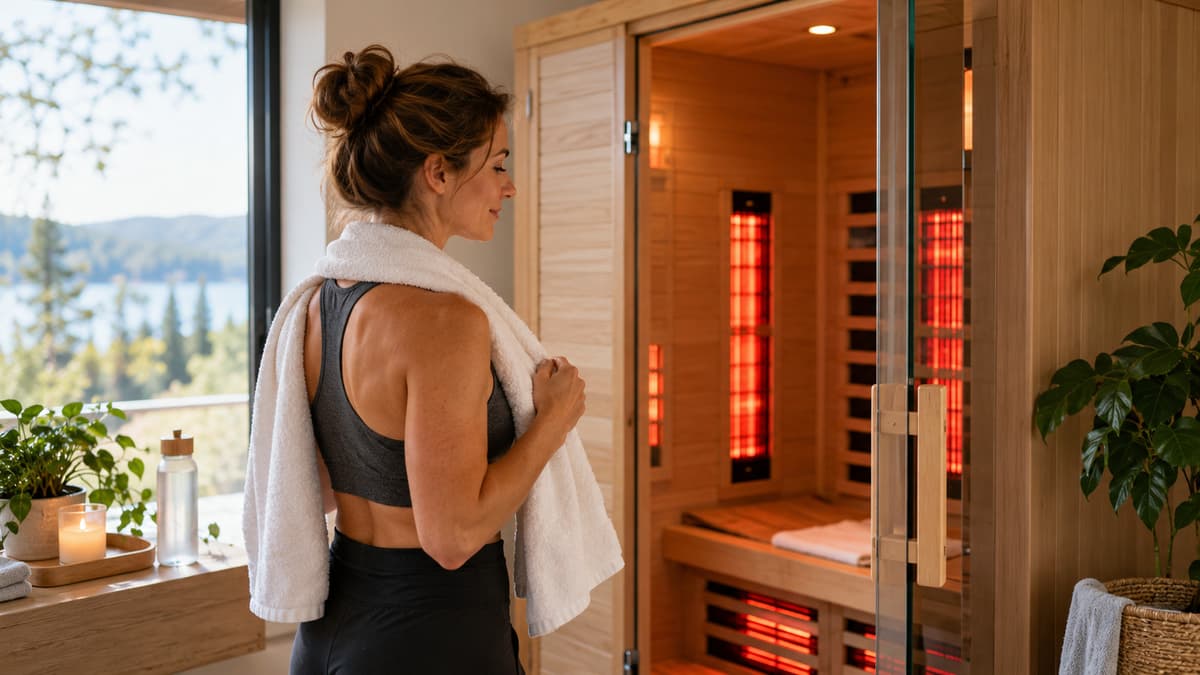
A rigid infrared cabin is a timber enclosure with panels, a door, controls and seating. It takes permanent floor space and may draw more power than a tent. The infrared cabin comparison covers that dry category. The top pick is the CONLONS portable infrared sauna at about £219.99, with 4.7 from 25 amazon.co.uk ratings. The listing states heated feet, a 150 kg chair and a claimed 65°C. Wattage, voltage and plug are not stated, so check the plate before you treat it as a flat plug-in. The best value listing in that comparison is a cheaper infrared tent, not a steam box.
A Finnish sauna heats the room with a stove and stones. Water on hot stones makes a brief burst of humidity, löyly, not a continuous steam room. A hammam-like cloud of vapour is a different product. If a seller writes steam infrared, the manual must name the heat source before you compare warm-up, electricity or cleaning.
Moisture and temperature
Temperature alone does not describe the room. Patient.info gives indicative bands of about 70–80°C for a wet sauna and 45–60°C for infrared. Thermostat position, enclosure size and how the reading is taken can change the number.
Humid air lets sweat evaporate less readily, so steam can feel oppressive below the temperature of a very hot traditional sauna. Infrared emitters warm your body and nearby surfaces while the air stays comparatively dry.
Open a steam tent and moist air can condense on a cold window or wall. One session is not automatically a damp problem. Repeated use without ventilation and drying gives moisture more chance to settle on fabric, paint and frames. Infrared still needs sweat wiped from the seat and towel. Dry heat is not maintenance-free. You are simply not boiling a tank of water into the room.
Do not chase the highest controller setting. It does not prove a better product, and an air reading does not measure radiant intensity everywhere on your body. Follow the instructions and leave if you feel dizzy, faint, nauseous or unwell. The guide to using an infrared cabin covers the session.
What you plug in or fill
A steam tent adds water to every session. Fill to the marked level, connect the hose, and keep the hot unit where it cannot be kicked over. Let it cool before you drain it. In hard-water areas, use only the descaling method approved for that model. Do not overfill, block the outlet or kink the hose. Keep the generator outside the seat unless the instructions show otherwise. Steam and hot condensate can scald.
An infrared tent has no boiler, but the emitters, controller, cables and enclosure must be one system. Do not add a freestanding steamer. Parts made for dry use may not cope with condensing moisture.
Check the rated input. UK mains are nominally 230 V. A BS 1363 plug does not prove that an old socket, extension lead or shared circuit suits a long heating load. Avoid coiled extensions and multiway adaptors unless the manufacturer allows them. A rigid cabin may need a dedicated circuit and an electrician. The infrared cabin buying guide is the check before you order.
Steam or infrared for a flat
The suitable flat format is the one you can store, run and dry. A portable steam tent often wins on price and packed size, then asks for a stable boiler and ventilation that actually removes moisture. An infrared tent avoids the steam plume, so it is often easier in a bedroom or home office if the load suits the circuit. It still needs more floor in use than the folded size, and furniture must not touch heated surfaces. Store it only when it is cool.
A wooden cabin behaves like furniture. Measure the assembled size, door swing and the route in, including a tight stair. Keep the stated clearances. A steam generator can bubble. Both types may beep or run a fan. In a rented flat, check the tenancy before fixings or electrical changes, and put a water-filled unit on a stable, water-resistant surface. A tent that folds quickly but needs an hour to dry is not cupboard-ready. The portable or wooden infrared guide separates a temporary setup from a permanent cabin.
What this hub compares
This hub keeps infrared cabins and portable steam tents in separate comparisons. Heater layout, consumption and maintenance only compare fairly when the method matches. A steamer, a water capacity and fill or drain instructions mean steam. Emitters, a rated input and instructions that keep liquids away mean infrared. If the listing is incoherent, skip it.
A portable infrared tent is not a timber cabin. Volume, coverage, seating and build differ. For wet heat, use the portable steam sauna comparison and check the UK plug, generator capacity, spare parts and drying instructions on the live amazon.co.uk listing.
Claims that do not decide it
Marketing often jumps from heat to health results. These sources do not crown a therapeutic winner, and ICNIRP does not rank steam as healthier than infrared, or the reverse. Treat detox, immunity, weight loss and recovery claims cautiously. Sweating changes body water for a while. It does not show that a heater removed a named toxin. A listed temperature or wavelength is not medical advice. If you have a condition, take medicines that affect heat tolerance, or were told to avoid overheating, ask a healthcare professional first.
NHS pregnancy guidance groups saunas, hot tubs and steam rooms in its overheating caution, particularly early in pregnancy. A lower infrared setting is not individual advice. Choose on generator capacity, hose, cleaning and the room's moisture, or on emitter coverage, electrical input, clearances and tent versus cabin. This page uses public UK information and amazon.co.uk listings. The products were not tested in a lab. Check the live listing. A qualifying purchase may earn a commission at no extra cost to you, and that does not change the heating method.
A water reservoir and a vapour hose mean steam. Radiant panels without a boiler mean infrared. Then compare the moisture you can manage, the electrics you have, and the space you can spare.
Common questions
Which is wetter, a steam room or an infrared sauna?
Which is hotter, steam or infrared?
Can I add a steamer to an infrared tent?
Is a steam tent in an infrared search the same product?
Which is easier to use in a flat?
Which one is a Finnish sauna?
Does a portable steam sauna need a water tank?

Peter F. is the editor for DIY & tools at productscompared.co.uk. Comparisons in this category are checked against amazon.co.uk listings, review evidence and public UK sources.
Related articles

Infrared sauna running cost: pence per session
Turn heater wattage and your electricity tariff into a realistic cost per session.
How often to use an infrared sauna: a cautious routine
Start with one or two short sessions, keep a rest day, and build only if you recover well.

Sauna dizziness: when to stop and leave safely
Dizziness, nausea or feeling unwell means you should leave the heat and cool down.