Independent comparisons. We may earn from shop links. More info

How to use solder flux paste, gel, and liquid safely

Updated: 21 October 2026

You have flux on the mat, the iron is heating, and the joint still looks grey after the last attempt. Usually the metal was oxidised, the iron was too cold, or paste sat on the pad without ever reaching activation temperature. Using flux well is less about drowning the board and more about clean metal, a thin film, full heat-through, and storage that stops the pot drying out. The [flux comparison](/hub/soldering-and-welding/flux) lists chemistry and pack sizes. This page is the hands-on sequence for UK hobby and bench work.

You have flux on the mat, the iron is heating, and the joint still looks grey after the last attempt.

Our top picks

On this page

Prepare the joint and your space

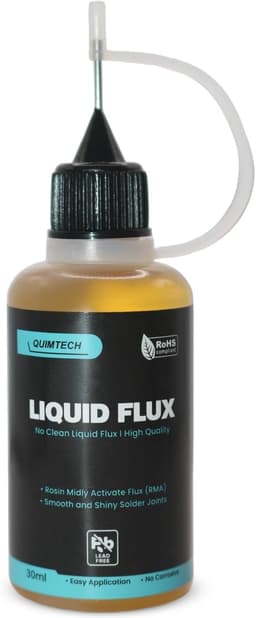
Use a stable surface, an iron you trust, and ventilation. A window or a small extractor beats leaning into the smoke. HSE guidance on rosin fume is written for employers. The same plume still irritates if you solder every evening in a closed room. Residue differences are on rosin or no-clean flux. Clean before chemistry: isopropyl where it is safe, light abrasion on tinned wire, brass wool on the tip. Flux is not a degreaser. On a lifted USB pad, remove old solder, then flux only the copper you want to wet. Tin paste and a toothpick suit pad tinning. A syringe suits one 0603 corner. Liquid on stranded ends must stay off the insulation. Quimtech flows into joints, including places you did not intend.

Apply flux sparingly

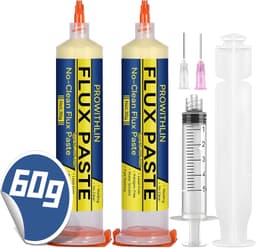
Aim for a thin shine. A rice-grain of paste on a through-hole pad, a short syringe bead on a pin row, or a dip of liquid on the strands is enough. Do not coat the connector housing. Cold flux that never reflows goes grey and sticky. A dirty tool dipped back into the tin contaminates the pot. Flooding a BGA pulls residue under the package. Flux cannot fix a 180 °C iron on lead-free alloy. HELKOX cites 250–320 °C on the listing. Your setting still depends on tip mass and joint size.

Heat, solder and inspect

Touch the iron to the joint, not to the flux puddle. Feed solder when the alloy flows into a concave fillet, then hold the board still. Dull or balled solder after cool-down is a cold joint or the wrong alloy. Charred flux on a board you will coat needs isopropyl or a flux remover. Water-wash chemistry is rare in this set. Assume no-clean unless the supplier sheet says otherwise. LA-CO Regular is larger mass and longer heat, and it stays a trade tin if the line is potable.

Clean-up, residue and storage

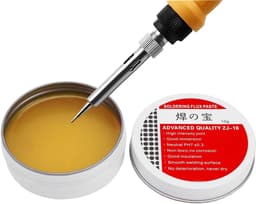
No-clean may leave a clear film. Wipe-test a scrap pad before a conformal coat or a repair you sell. Rosin tack attracts dust, so an alcohol wipe is reasonable on sensitive areas. Reseal tins at once. Cap syringe needles, and store soft paste upright. Yiapinn-sized pots fail in reviews when the lid stays loose on a warm desk. Wash your hands. Read the supplier sheet if skin contact irritates you.

Iron temperature, tip care and second passes

Flux cannot rescue a blackened tip. Tin it with a little paste, then wipe on brass wool. Many hobby stations sit around 350–380 °C for lead-free alloy. Thin pads on plastic connectors need less dwell, not a higher number. If the first pass looks grainy, add flux once. Cooking residue without fresh solder only chars it. After wick, flux the pad again before you feed new wire. A fresh syringe dot beats reheating the failed smear.

When to stop and get help

Call a Gas Safe or WaterSafe professional when the joint is on live gas, or on installed wholesome water you are not certified to alter. Stop soldering and seek medical advice if flux or solder fume triggers wheeze or a rash that repeats each session. HSE documents an occupational asthma risk for rosin exposure at work. Hobby repetition can matter too.

Common questions

Do I need extra flux with rosin-core wire?
For fresh wire on clean copper, often no. For rework, tarnish or a second heat, yes. Add a thin film and heat the metal, not a cold puddle. Core flux does not clear an oxidised pad on its own.
Is no-clean flux safe to breathe?
No-clean refers to residue, not smoke. Ventilate every session and keep your face out of the plume. A window or a small extractor is the home stand-in for the local exhaust HSE expects on a solder line.
Paste or liquid for fine wire?
Liquid wicks along strands if you control the dose. Paste on a brush works on pre-tinned ends. A syringe wins for one pad. Keep runs off the insulation and off the connector housing around it. Hold the wire horizontal.
Can plumbing flux go on a PCB?
Avoid that as a habit. Active plumbing chemistry can attack fine copper and leave residue under a chip. Use electronics flux on boards. LA-CO Regular in this set is the trade copper tin, including solder-ring work at 15 mm.
Why did my paste harden in the tin?
Air and heat. Buy a smaller pot if you solder rarely, and keep the lid on between dips. A dirty tool put back in the tin contaminates the rest of the paste. Syringes dry if the needle stays fitted.
How much flux is too much?
Visible pools on SMD, smoke that chokes you, or residue creeping under chips. A rice-grain of paste on a through-hole pad, or a short syringe bead on a pin row, is the usual hobby dose.
Should I clean before a conformal coat?
Test-wipe a scrap area first. No-clean films vary with the heat profile. A thin clear film can stay on many boards. If you sell the repair or spray a coat, do not assume it will sit quietly underneath.

Related pages

Sources

Sources taken from the research digest. Listings were checked on 20 October 2026.

  1. HSE — INDG249 Solder fume and you (retrieved 20.10.2026)
  2. HSE — SR20 Rosin-cored solder (retrieved 20.10.2026)
  3. HSE — Solderers and asthma (retrieved 20.10.2026)
  4. Water Regs UK — Solders and fluxes (retrieved 20.10.2026)
  5. WaterSafe — Lead-free solder (retrieved 20.10.2026)
  6. GOV.UK — General Product Safety Regulations 2005 (retrieved 20.10.2026)
  7. LA-CO UK (retrieved 20.10.2026)