Store argon cylinder at home: upright and ventilated

Stand an argon cylinder upright and secured, valve shut, in a ventilated garage. Argon will not burn, but a leak can displace oxygen in a small closed room.
On this page

The exchange driver has gone, or the carton is open on the garage floor, and the bottle is still on its side because that was the only way it fitted in the boot. You want to store an argon cylinder at home before the next bracket, and the easy place is the corner behind the mower. Argon will not feed a fire the way acetylene can. It can still push the oxygen out of a small closed space, and the cylinder is a pressure vessel whether the tag says full or empty. Stand it up, shut the valve, and give the room some air before you lock the door.
In short
Store the cylinder upright, secured so it cannot fall, with the valve shut, somewhere air can move. BOC's handling sheet prefers outdoors and keeps full cylinders apart from empty ones. Argon is odourless and heavier than air, so a leak in a shut garage is an oxygen problem you will not smell.
What the gas can do in a small room
Argon is the shielding gas many home MIG and TIG sets use so the weld pool stays clean. It is also the gas that makes a closed room dangerous without a warning smell. Air Liquide's product note for ARCAL Force, an argon-rich shielding gas, describes it as odourless and heavier than air, and names asphyxiation as the hazard. A release can collect low down, in a pit or along the floor, rather than drift out of a high window. HSE's welding page on asphyxiation carries the same warning: shielding gas can displace the air you need.
The cylinder adds pressure. A valve knocked open, or a fitting left loose, can empty gas into the garage while you are indoors. The first sign can be someone who steps into a shut garage or a low space and feels wrong. Welding gas cylinder storage fails when that gas has nowhere to go except the room you walk back into.
HSE leaflet INDG297 is written for oxy-fuel work, so it is easy to file it under acetylene and decide it skips argon. The lines that carry across are the practical ones: do not leave cylinders in a poorly ventilated room or van, and close the valve. Argon shares those two failures even though it will not burn. One garage bottle does not need a factory compound.
Upright, secured, valve shut
BOC's customer sheet on transporting, handling and storing cylinders asks for an upright cylinder, secured, in a ventilated place, preferably outdoors. The base sits on the floor and the valve stays at the top, held by a chain, a strap, or a trolley clamp. A lean against the freezer falls when something bumps it.
Do these before you leave the garage:
- Stand the cylinder upright on a flat floor, and get help if you cannot lift it alone.
- Fasten it so a knock cannot topple it.
- Shut the valve by hand when you finish, and check that it has seated.
- Fit the protection cap if you were given one, and take the regulator off for storage.
- Keep full bottles apart from empty ones, and keep fuel, paint, and solvents out of that corner.
BOC's sheet says not to decant. You do not blow gas into a smaller cylinder, and you do not fit a homemade adaptor. A damaged thread or a stuck cap is a stop: leave the cylinder secured and call the supplier. Taking the valve apart is how a pressure vessel becomes a projectile.
Our argon gas cylinder comparison shows the size gap. The top pick, the SWP WG/1368, is a disposable listed at 60 litres and 1.28 kg for £17.99, with 4.6 from 160 amazon.co.uk reviews, and it does not state the mix or the thread. The Gray Eagle listing is an 8 litre cylinder sold as full of 82/18 at 150 bar, 16 kg full and 673 mm tall, at £169.99, with no review line. The cartridge will not break a foot if it topples. The 16 kg cylinder will, and a real fill keeps releasing if the valve stays open.
Where not to leave it
Preferably outdoors, in BOC's wording, means secure, upright, and open to air: a cage, a ventilated lean-to, or a yard spot where the cylinder cannot roll into the road. Many houses have none of that. The next honest place is a garage or shed you can air, with the bottle restrained and the valve shut.
A car boot overnight is storage. Shut the valve for the drive, stop the cylinder rolling, and unload it when you arrive. A warm, closed boot raises the pressure in the cylinder. If you cannot unload until morning, ask the supplier what they will take back before you treat the boot as the store.
Inside the house, a cupboard, a bedroom, and the space under the stairs share a closed door. Gas that is heavier than air makes a basement or an inspection pit a deeper pocket than a hallway. Keep the cylinder on the floor, restrained, beside a door you can open outside. A garage sealed for winter, with no vent, is that poorly ventilated room.
Keep the cylinder out of the path the car uses, and clear of the consumer unit, the boiler, and a fan heater. A welding helmet and welding gloves are what you wear when you strike an arc. They do nothing for a bottle left open in a closed garage overnight.
Full, empty, and fuel nearby
BOC asks you to keep full cylinders apart from empty ones. At home that can be two spots on the same wall, with a tag or the supplier's collar, so empty is obvious when you are tired. Fitting a regulator to the wrong bottle either wastes the setup or surprises you with pressure. Both stay upright and restrained. An empty shielding-gas cylinder can still hold residual pressure, and it still has a valve you can damage.
Argon will not burn. Petrol, white spirit, aerosol paint, barbecue propane, and acetylene will. A garage fire heats every cylinder in the room. Put the shielding-gas bottle on a wall clear of the mower, the fuel can, and the solvent shelf. Touching the petrol can is already too close, and you do not need a warehouse measurement to see it.
Oxygen plus a fuel gas for cutting is the job INDG297 was written for. Keep that pair apart, with valves shut and caps on, and keep the fuel gas out of the house. Decanting looks tempting when the full cylinder feels too large for the corner. The BOC sheet rules it out. Threads may not match, and the smaller cylinder may not be rated for the pressure. Return empties on the supplier's round. When a disposable is finished, follow the maker's disposal note. Leave it unpunctured and unheated.
When this stops being a DIY decision
BCGA CP 44 covers store design, risk assessment, and segregation for a gas store with quantities and a person responsible. One argon cylinder in a domestic garage is a hobby bottle. A concrete compound for a single 8 litre cylinder misreads that scale. The duty changes if you employ anyone, or if other people work in that garage.
Call the supplier when you have more than a couple of cylinders, when you keep oxygen and a fuel gas, when the only floor is a pit or a sealed room, or when a valve will not close. Leave the cylinder upright and secured. Keep repair work, and any decanting, off the drive.
A qualifying purchase through our link can earn us a commission at no extra cost to you. These bottles have not been leak-tested for this article. Upright storage, ventilation, full cylinders kept apart from empty ones, and the refusal to decant come from BOC's handling sheet. The warning against a poorly ventilated room or van, and the closed valve, come from HSE INDG297. Air Liquide's ARCAL Force note describes argon as odourless and heavier than air. Prices and weights are the amazon.co.uk listing lines in our comparison.
Common questions
Should a welding cylinder stand upright or lie on its side?
Can I keep an argon bottle in the house overnight?
Can an argon cylinder sit in the car overnight?
Should full and empty welding cylinders be stored together?
Should the cap stay on, or can the regulator stay fitted?
Is argon flammable?
What if the garage is small?

Peter F. is the editor for DIY & tools at productscompared.co.uk. Comparisons in this category are checked against amazon.co.uk listings, review evidence and public UK sources.
Related articles
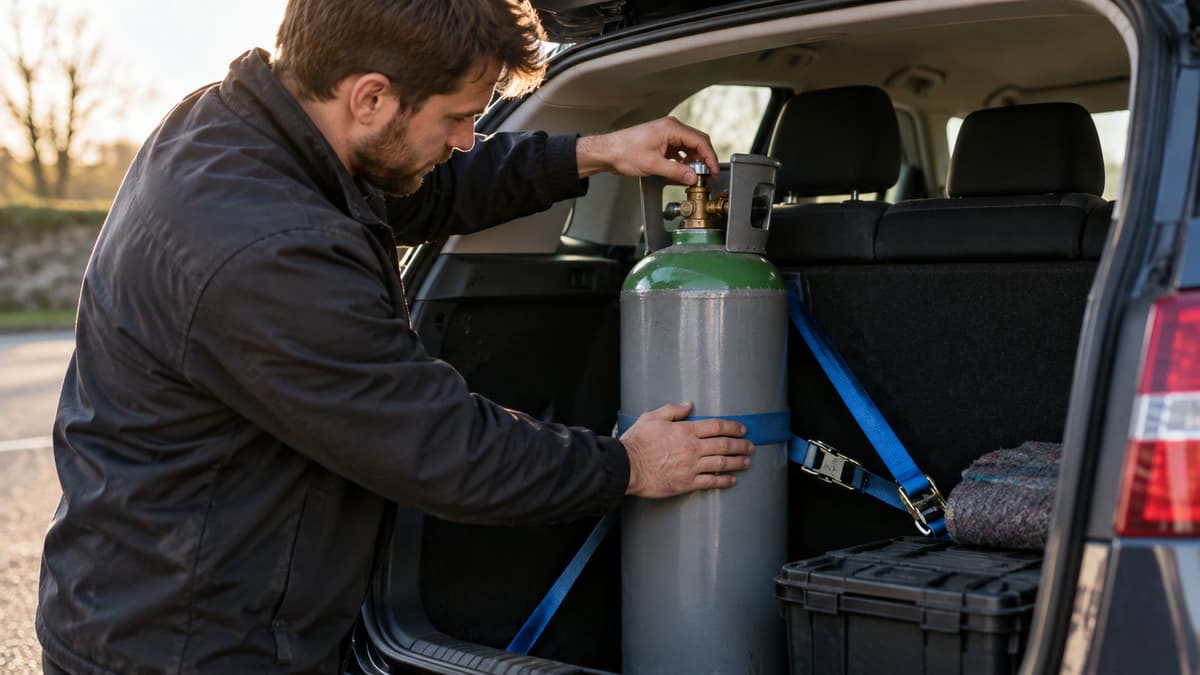
Carrying a welding cylinder in a car
Valve shut and the cylinder secured. A car boot is a journey, not the place you leave the bottle overnight.
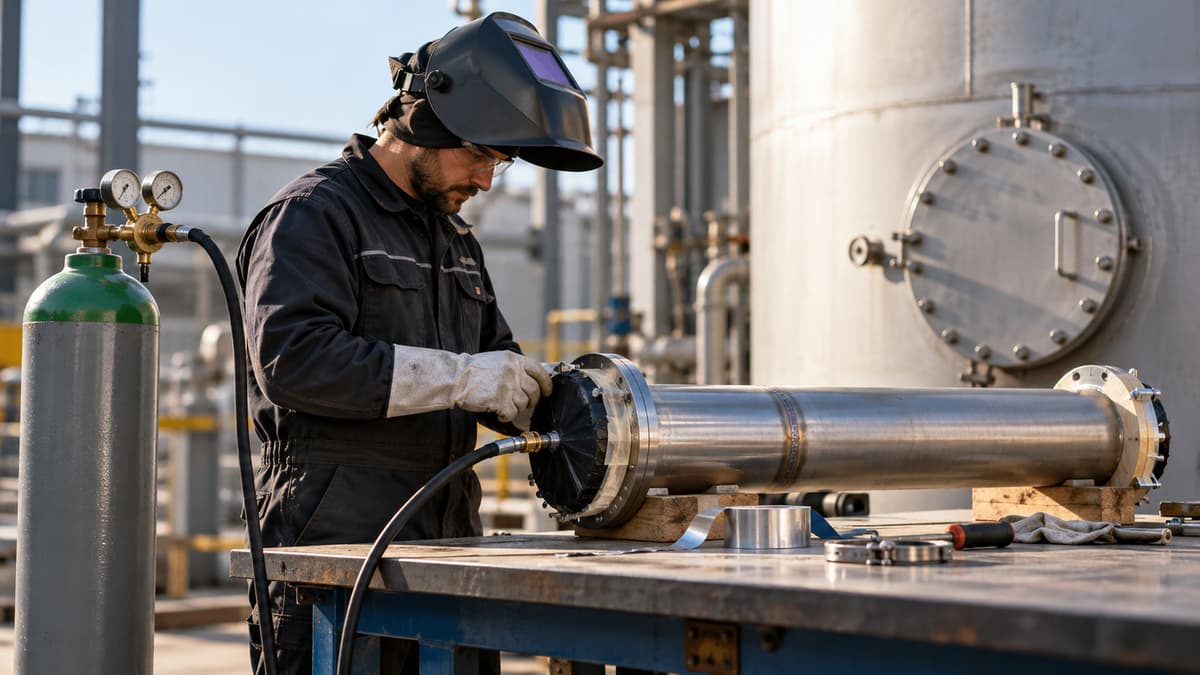
Argon purging and confined spaces
Argon has no smell and it can sit in a low space. Purging a tank is a different risk from one bottle in the garage.

Signs a welding regulator is leaking
You will not smell argon. A hiss or a soapy bubble is the check, and a flame is the wrong tool.